
Three editions in brief
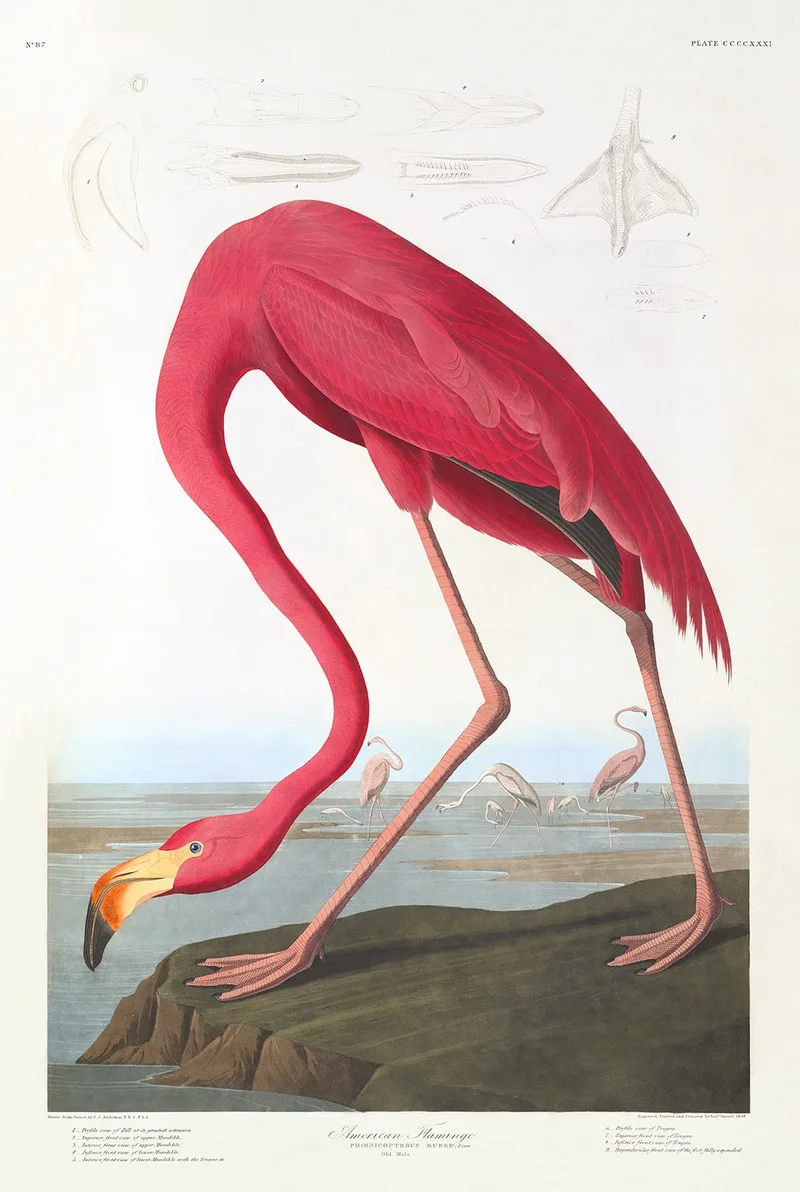
- Havell edition, 1827 to 1838: 435 plates, etched and engraved on copper with aquatint and coloured by hand, on double elephant sheets of about 67 by 100 cm (26½ by 39¼ in). About 200 sets. The text was published separately.
- Royal octavo edition, 1840 to 1844: 500 hand-coloured lithographs by J.T. Bowen of Philadelphia, about 26 by 17 cm (10 by 6½ in), in seven volumes with the text. Reissued several times.
- Bien edition, 1858 to 1860: chromolithographs printed in colour by Julius Bien of New York, at the full double elephant size. One volume was finished before the Civil War ended it.
Anything else, from a twentieth-century reprint to a modern giclée, is a reproduction or a facsimile of one of these three, and should say which edition it is made from and at what size. What is The Birds of America? tells the story of the book itself.
The Havell edition: the original, 1827 to 1838
The first edition is the book Audubon set out to make: every bird at life size, on a double elephant sheet, issued in 87 parts of five plates to subscribers over eleven years. The engraving began in Edinburgh with William Home Lizars, who engraved the first ten plates. In 1827, when the work there stalled, Audubon moved it to Robert Havell Jr. in London, who engraved, printed and coloured the remaining plates and retouched Lizars’s ten. That is why it is called the Havell edition.
Each plate was etched and engraved on copper, with aquatint for the soft tones of sky, water and plumage, printed and then coloured by hand in watercolour. Because the sheets were printed from copper under heavy pressure, they show a platemark: a faint ridge where the edge of the plate was pressed into the paper. About 200 sets were made. The text, Audubon’s Ornithological Biography, appeared separately in five volumes between 1831 and 1839, so the plates carry only the bird’s name, the plate number and the credits.
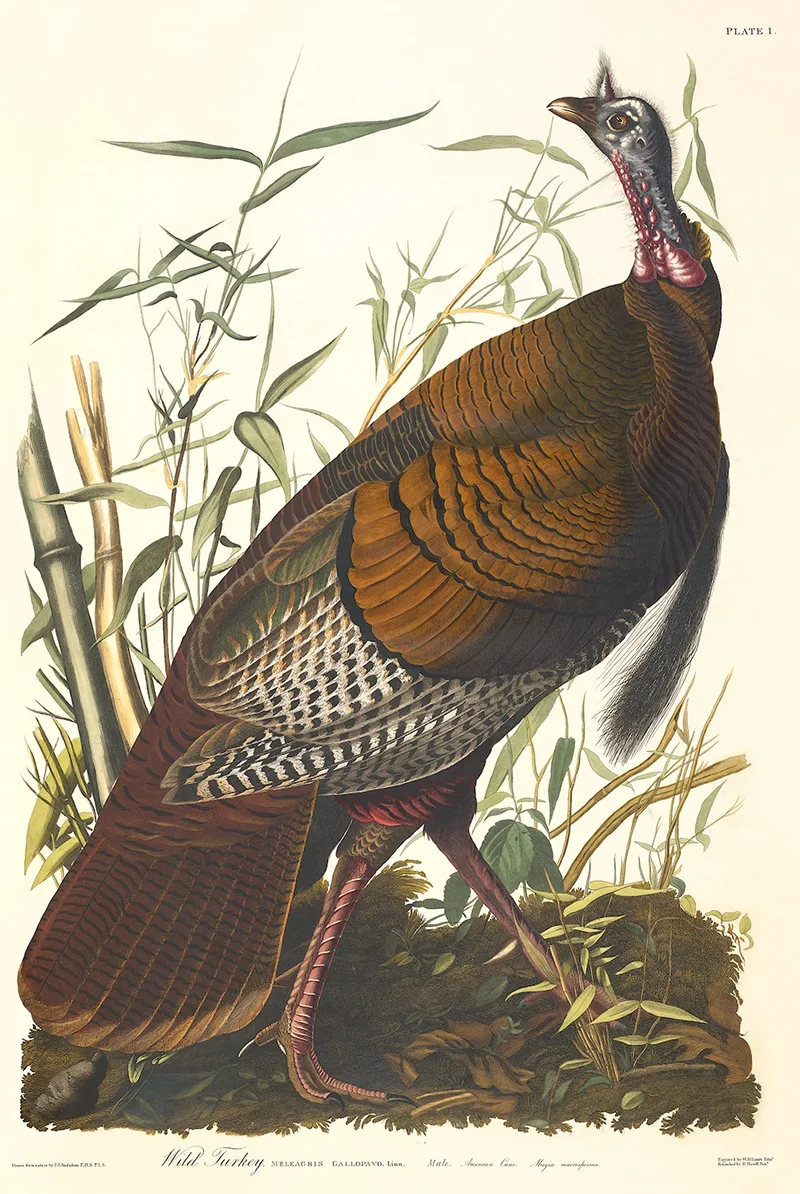
On 26 August 1833, while the parts were still coming out, Audubon’s son Victor Gifford Audubon sold a set to the Teylers Museum in Haarlem for 2,243 guilders. The museum has kept it in its library ever since, and it is the copy our facsimiles are made from.
The royal octavo edition: Audubon for the bookcase, 1840 to 1844
Back in America, Audubon wanted a version that more buyers could afford and that would fit on a shelf. The result was the royal octavo edition of 1840 to 1844: seven volumes, issued in 100 parts, with the text of the Ornithological Biography and 500 plates. His son John Woodhouse Audubon reduced the Havell images, with the help of a camera lucida, and J.T. Bowen of Philadelphia lithographed, printed and coloured them by hand.
It is not a straight reduction. There are 65 more plates than in the Havell edition, because birds that had shared a plate in the folio were given one each and new species were added. The plates are numbered in a new, systematic order, so plate 1 of the octavo is not the Wild Turkey, and many backgrounds were simplified to fit a page of about 26 by 17 centimetres.
The octavo sold far better than the folio and was reissued several times, into the 1870s. For many nineteenth-century Americans it was The Birds of America.
The Bien edition: chromolithographs, 1858 to 1860
After Audubon’s death in 1851, his son John Woodhouse Audubon tried to bring the great plates back at full size. From 1858 he worked with Julius Bien, a lithographer in New York, on an edition in chromolithography: the colours were printed from a series of lithographic stones rather than painted on by hand. It was meant to be cheaper than Havell’s method, and it kept the double elephant size.
The Civil War, which began in 1861, ended it: subscribers, many of them in the South, fell away. Only the first volume was finished, with 105 sheets showing 150 of the Havell subjects, some sheets carrying two birds that had had a plate each in London. The Bien plates are now rare and prized in their own right.
How to tell the editions apart
- Size: Havell and Bien sheets are both double elephant, about 67 by 100 cm; an octavo plate is about 26 by 17 cm.
- Technique: a Havell plate is an engraving with aquatint, coloured by hand, with a platemark. Octavo plates are lithographs coloured by hand, Bien plates lithographs printed in colour; neither has a platemark.
- Lettering: Havell’s plates name Havell as engraver (the first ten also Lizars); the octavo plates name Bowen in Philadelphia; the Bien plates name Bien in New York.
- Numbering: Havell’s numbers run from 1 to 435 in the order of publication; the octavo has its own numbers, 1 to 500, in systematic order.
- Paper: many Havell sheets carry the watermark of the Whatman paper mill, often with a date.
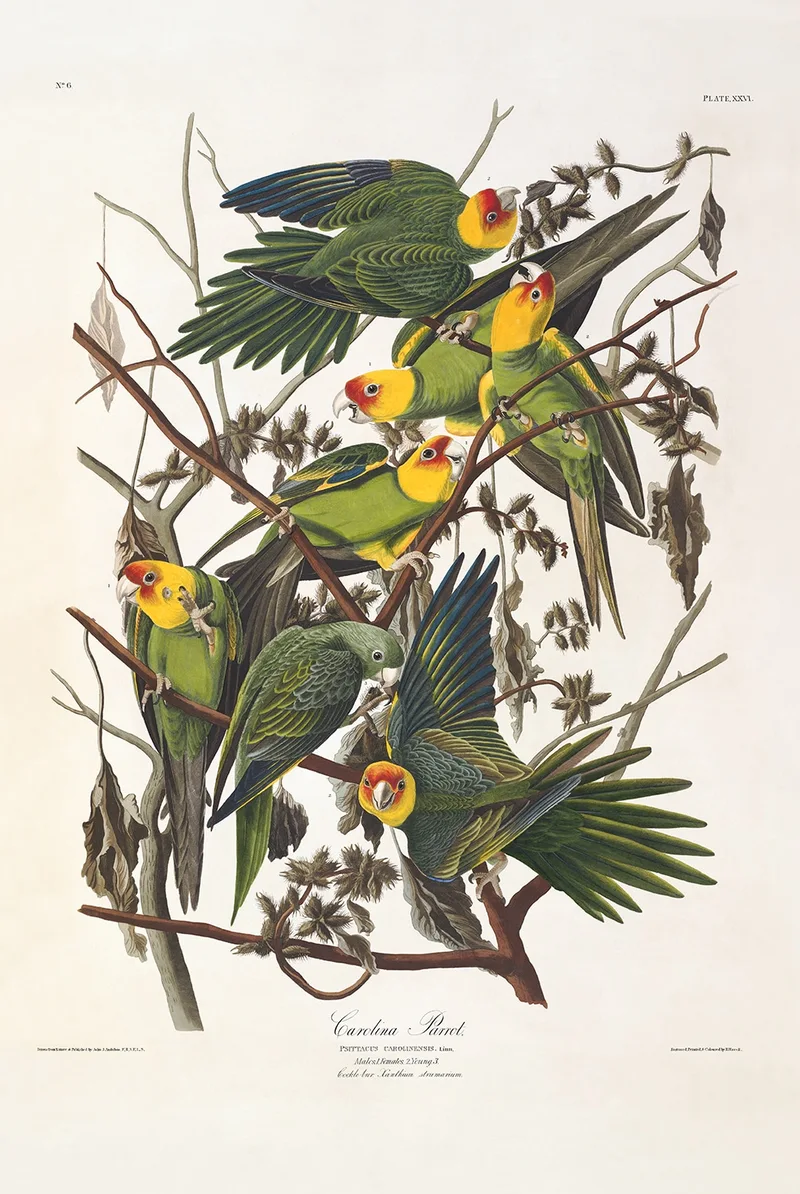
A facsimile is a fourth thing. It reproduces one sheet of one edition, and a good one says which: the edition, the copy it was made from, and the size. Who was John James Audubon? has more on Audubon and his sons.
Our facsimiles: the Havell edition in Haarlem
Every Audubon print we offer is a facsimile of a Havell plate in the Teylers Museum’s copy, photographed with the museum’s cooperation by Re-Art Special Art Productions, who make our prints. Each is printed at the size of the original sheet, 67 by 100 centimetres (26½ by 39¼ inches), with the margins and the engraved lettering, on acid-free etching paper of 270 g/m² with archival inks. The edition is 250 of each plate, numbered in pencil, blind embossed and with a certificate of authenticity. We do not make octavo-size prints, and we do not reproduce the Bien plates.
Browse the plates by number on The Birds of America. Audubon’s Wild Turkey tells the story of plate 1, and Audubon’s largest plates shows how the biggest birds fill the sheet.
Four Havell plates
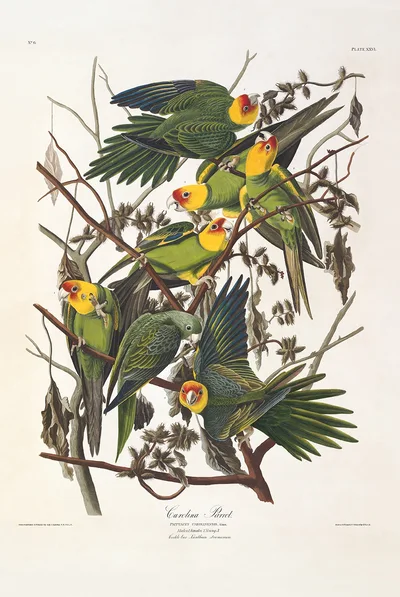
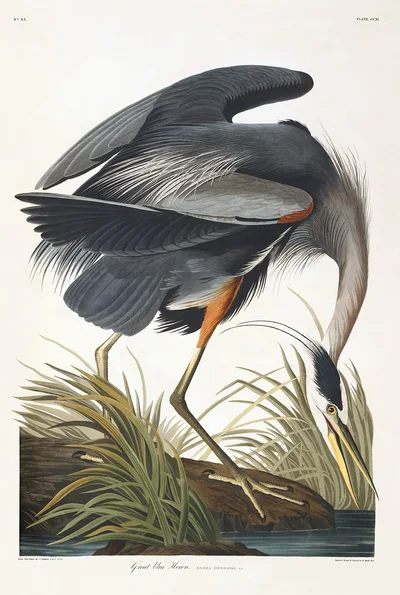
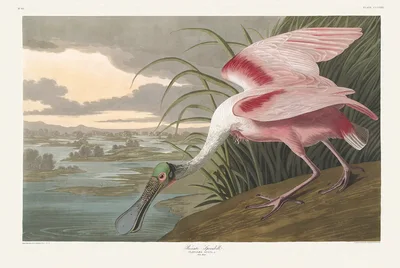
Questions
What is the Havell edition of The Birds of America?
The first edition, published in London from 1827 to 1838: 435 plates engraved, printed and coloured by hand in the workshop of Robert Havell Jr. (the first ten engraved by W.H. Lizars in Edinburgh), on double elephant sheets of about 67 by 100 cm. About 200 sets were made.
What is the difference between the Audubon octavo and folio?
The folio is the Havell edition: 435 life-size engravings on sheets of about 67 by 100 cm. The royal octavo (1840 to 1844) is a small edition of 500 hand-coloured lithographs by J.T. Bowen, about 26 by 17 cm, bound with the text in seven volumes.
What is the Bien edition?
A full-size edition in chromolithography, begun in 1858 by Audubon’s son John Woodhouse Audubon with the New York lithographer Julius Bien. The Civil War stopped it after one volume, finished in 1860.
Which edition are your Audubon prints made from?
The Havell edition, from the copy the Teylers Museum in Haarlem bought from Audubon’s son Victor in 1833. Each facsimile is printed at the size of the original sheet.