The first plate of the first part
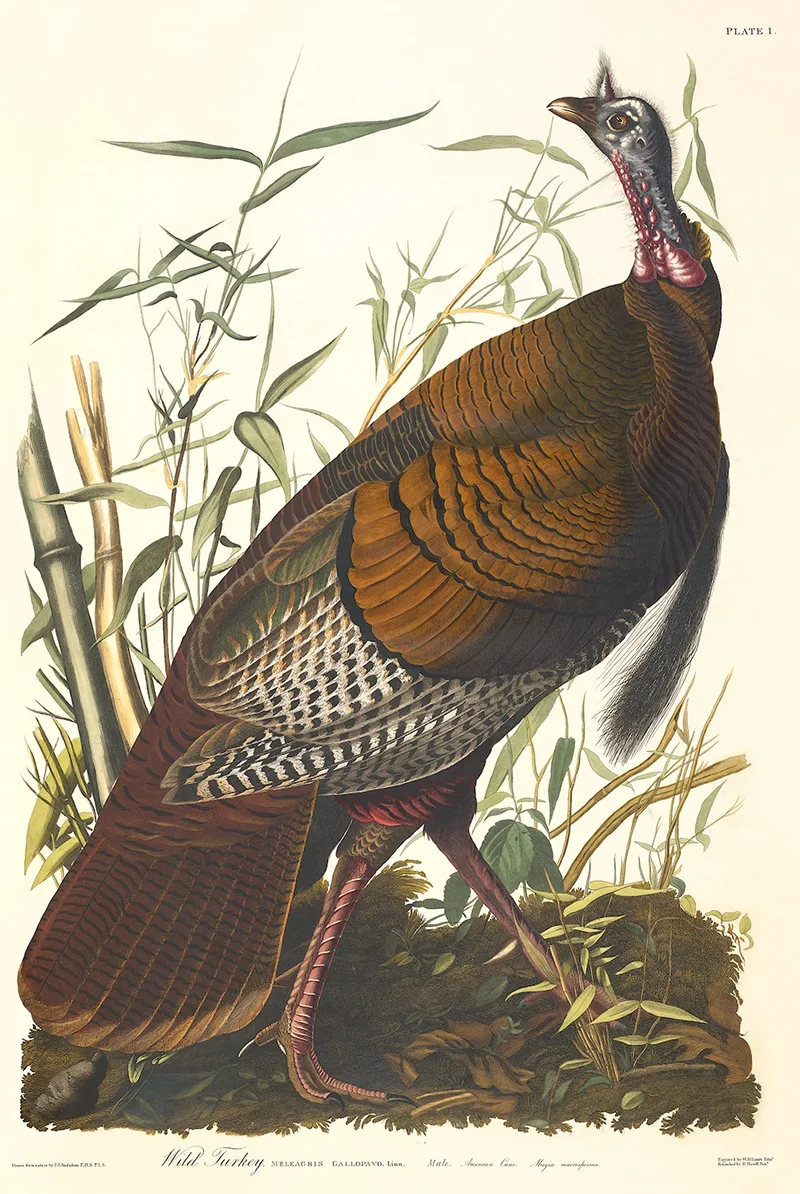
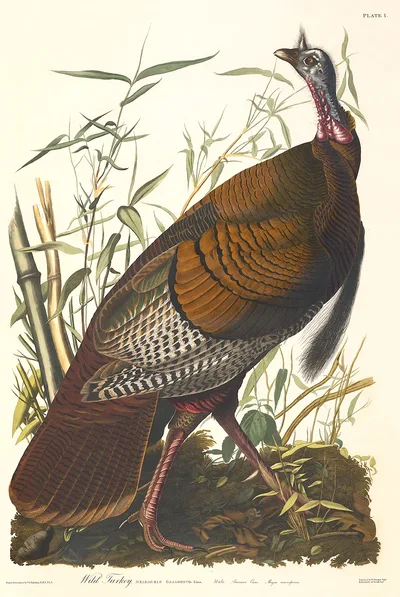
Audubon’s Wild Turkey is plate 1 of The Birds of America: a male turkey at life size on a double elephant folio sheet of about 100 by 67 centimetres, engraved and hand-coloured in London by Robert Havell and issued to subscribers in 1827. Our facsimile is made from the plate in the copy of the Teylers Museum in Haarlem and printed at the same size.
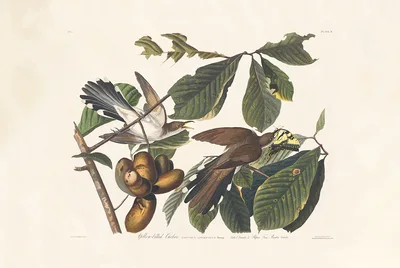
The book went out in 87 parts of five plates: one large bird, one medium and three small. Part 1 set the pattern. With the Wild Turkey came the Yellow-billed Cuckoo (plate 2), the Prothonotary Warbler (3), the Purple Finch (4) and Bonaparte’s Flycatcher (5), a bird Audubon admitted he had never seen in the wild; he drew a wounded one he had caught and “had the pleasure of drawing the bird alive and full of spirit”. Giving the largest and most American bird the opening page was a statement, and it worked. What is The Birds of America? tells how the parts were sold.
Fitting a turkey on the sheet
Audubon wanted every bird at its real size, and a cock turkey tested that rule at once. He set the bird upright, in a proud vertical pose, walking to the right. Left like that it would walk straight out of the picture, so he turned the head back the other way. The bird stays on the page, the eye is held, and the diagonal from tail to beak gives the composition its tension.
The turkey is shown in its own country, among the stems of cane, and the background is kept deliberately plain so that nothing competes with the plumage. That plumage is the point of the plate: the bronze and copper of the breast and back, the black bars on the tail, the bare blue and red head.
The hen and her young: plate 6
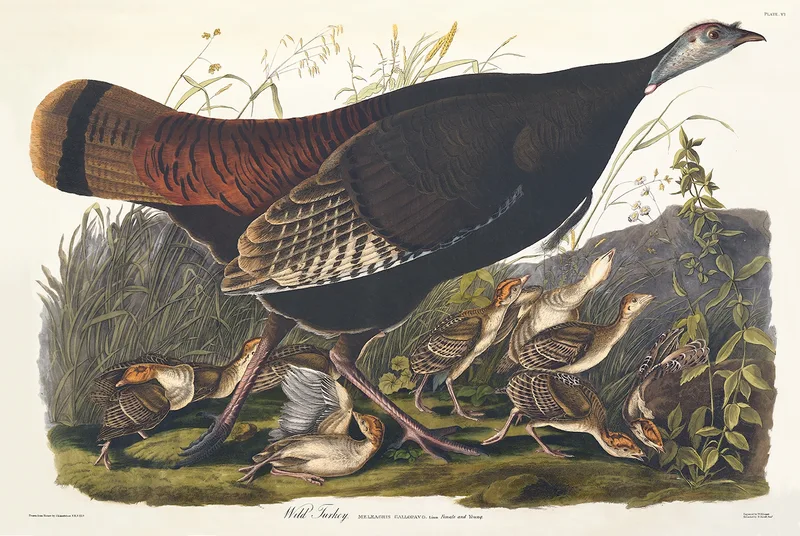
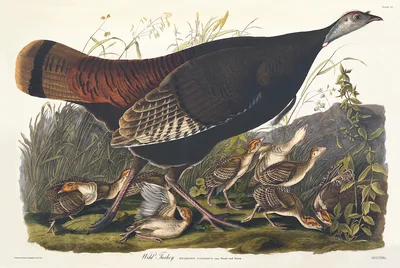
The turkey has a second plate. Plate 6 shows the hen with her brood of young on a horizontal sheet, the chicks scattered in the grass around her feet. Where the cock is all display, the hen is all watchfulness, and the two plates together are one of the best pictures of a family of birds in the book. Audubon knew turkeys well from his years in Kentucky, where they still walked into farmyards, and wrote about them at length.
The gold in the watercolour, and why the print does not sparkle
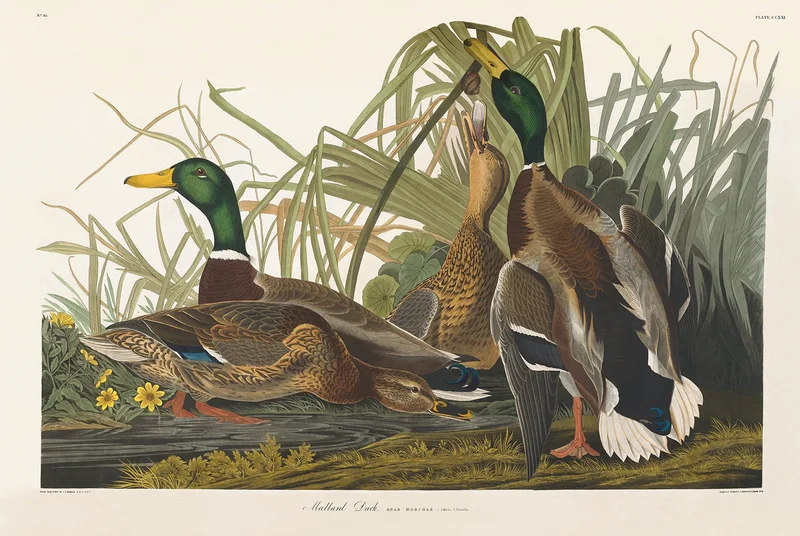
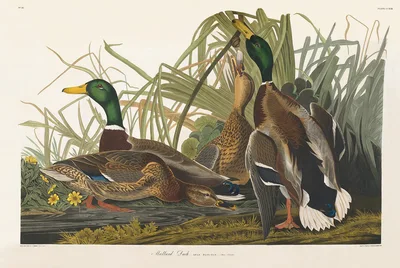
Three of Audubon’s original drawings are unusual: for the Wild Turkey, the Mallard Duck (plate 221) and the hummingbirds of plate 47, he laid a gold-coloured metallic paint on the paper first and then covered it partly with watercolour, so that the metal shows through the colour. Whether he used gold leaf or a powder of bronze or brass is not known; it would take technical examination of the drawings to find out. He used the trick only three times and seems not to have been fully satisfied with it.
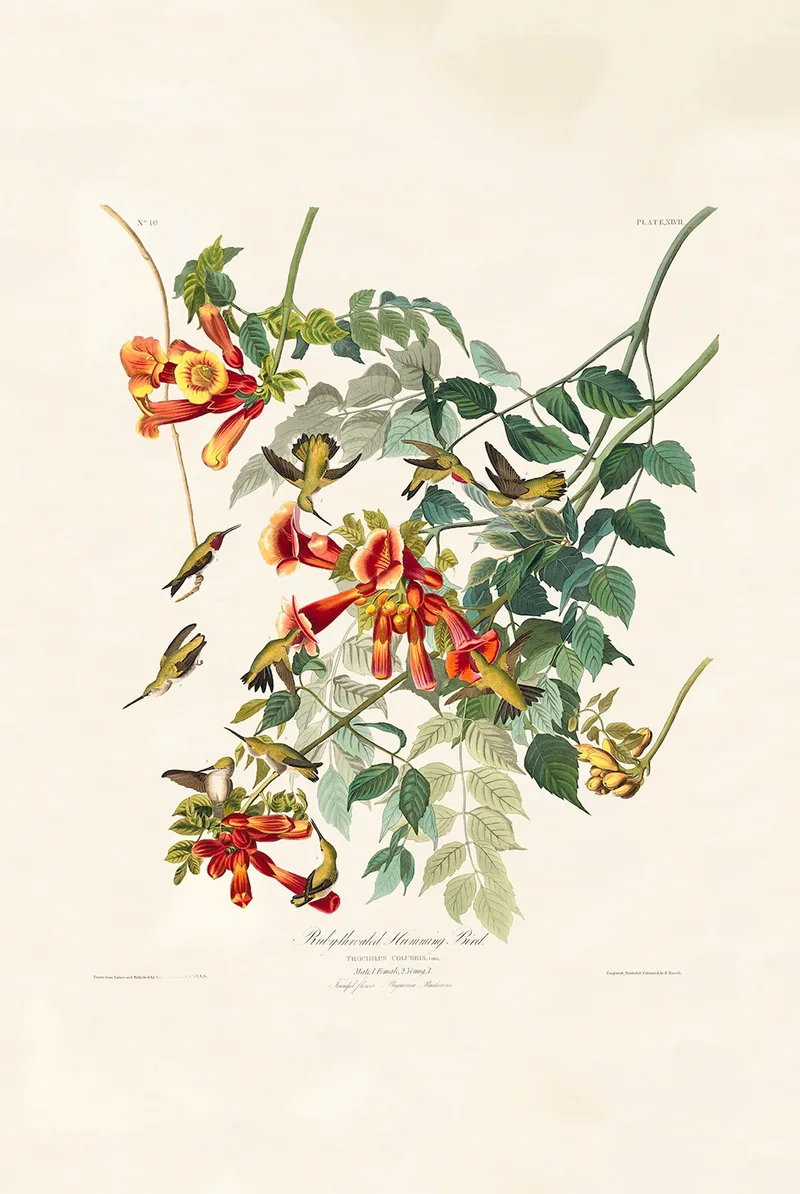
That gold is in the watercolours, which are in a museum in New York. It is not in the book. Havell’s plates were printed in ink and coloured by hand with ordinary watercolour, so the Wild Turkey a subscriber received had no metal in it, and neither does our facsimile, which reproduces the Teylers plate as it is. What you see on the print is Havell’s rendering of that bronze sheen in aquatint and paint, and it is very good.
Audubon’s technique in brief
Audubon was self-taught and kept experimenting. He usually began with a graphite sketch, then painted over it in watercolour or pastel. Later he combined the two, letting the watercolour dry before adding pastel, and later still he laid pastel over wet watercolour, which let him change the intensity and the sheen of a passage. Gouache, oil paint, chalk, ink and even collage all appear in the drawings. The engraver’s job was to turn all of that into lines and tone on copper, and the colourists’ job to put the colour back.
The Wild Turkey is on The Birds of America with the other 434 plates, and Audubon’s largest plates sets it beside the other big birds.
Plate 1 and its companions
Questions
Why is the Wild Turkey plate 1 of The Birds of America?
Audubon opened the book with its largest and most American bird. Each part of five plates began with a large bird, and the Wild Turkey led the first part in 1827.
Does the Wild Turkey print have gold in it?
No. Audubon used a gold-coloured metallic paint in his original watercolour, but Havell’s printed plates were coloured by hand in ordinary watercolour, and our facsimile reproduces the plate. The bronze sheen of the plumage is painted, not metal.
How big is the Wild Turkey print?
67 by 100 centimetres (26½ by 39¼ inches), the size of the original double elephant folio sheet. The bird is shown at life size.