
The family that feeds mankind
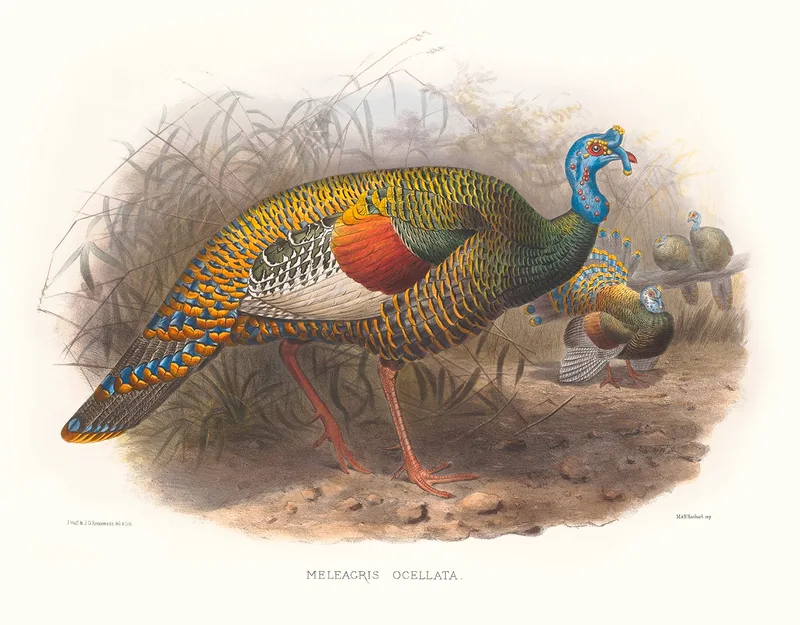
Of all the families of birds, Elliot wrote, 'no one is so important to the human race, containing within it the species that afford food for thousands of mankind, and also those which are the original source of all the domestic poultry met with throughout the civilized world.' The pheasants, as Elliot defined the family, took in the peafowl and the argus pheasants of Asia, the jungle-fowl that became the farmyard hen, the turkeys of America and the guinea-fowl of Africa.
A Monograph of the Phasianidae, or Family of the Pheasants was published in two volumes between 1870 and 1872. It is the third of Daniel Giraud Elliot's six monographs and the biggest: 81 lithographed plates, 79 of them coloured by hand, on large sheets. Who was Daniel Giraud Elliot?
Each bird in its own landscape
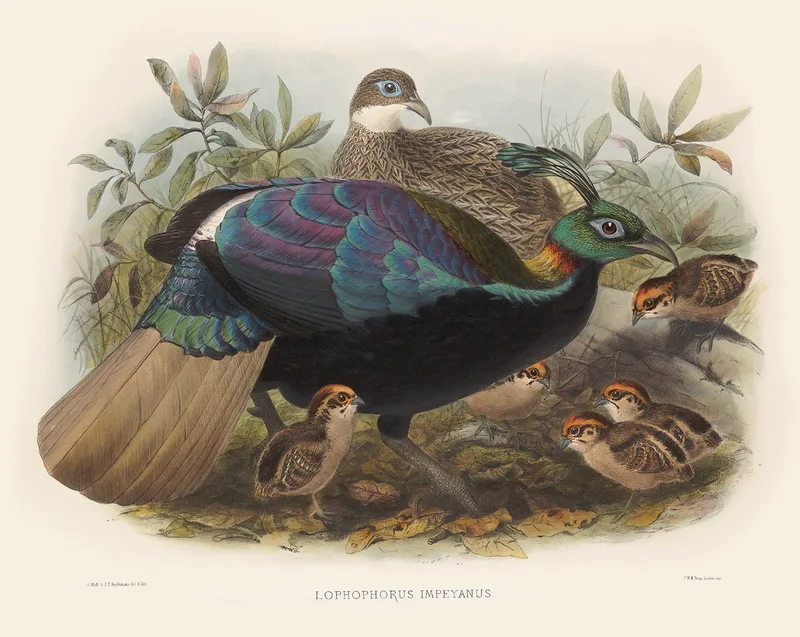
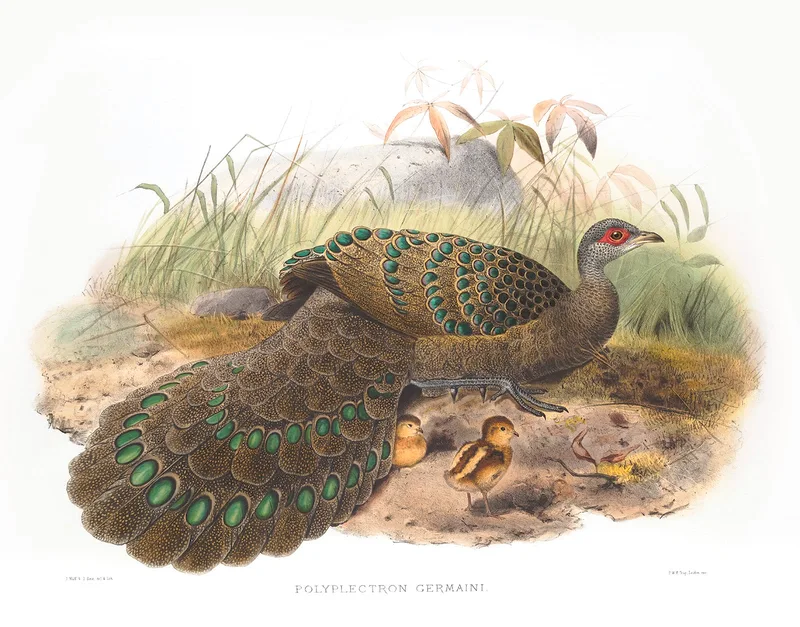
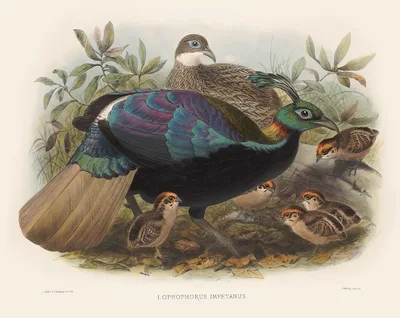
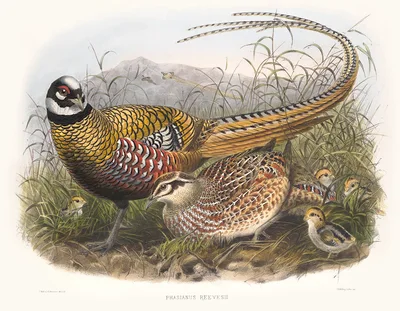
Elliot was taken by the 'extreme attractiveness of the birds composing the family', and the plates are built to show it. Every bird stands in its habitat, the Himalayan monal on a mountainside, the peafowl under forest trees, so that the full plumage is spread against a setting. The size of the plates and the depth of the colouring say what Elliot thought of the family.
Three artists and a dedication to Wolf
Elliot (1835 to 1915) worked with three of the best bird artists in Europe. Joseph Wolf (1820 to 1899), a German who had settled in England in 1848, was the illustrator that explorers and naturalists wanted first, though he only ever worked freelance; many of the pheasants are his drawings, put on stone by the others. Joseph Smit (1836 to 1929), born in Lisse in Holland, had received his first commission from Hermann Schlegel and was invited to England in 1866, where he became Wolf's friend; he drew the two uncoloured plates of generic characters.
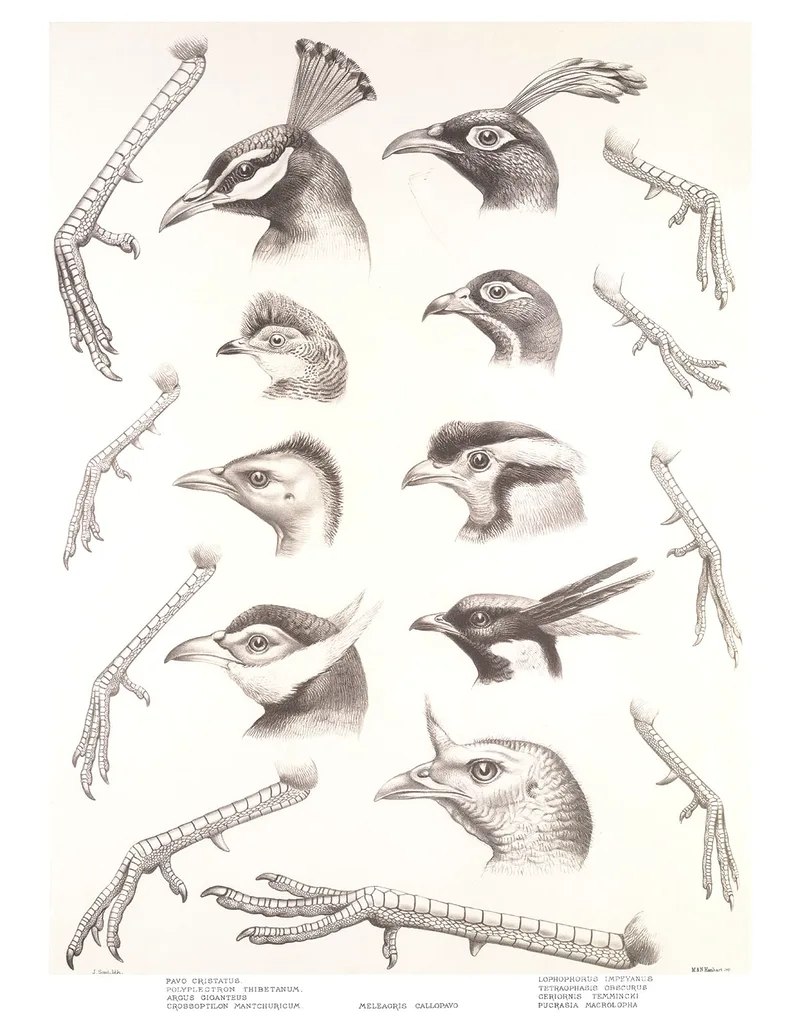
The third was Johannes Gerardus Keulemans (1842 to 1912), known in England as John Gerrard Keulemans. Born in Rotterdam, he lived and worked chiefly in England, drawing for most of the important bird books published between about 1870 and his death in London in 1912. Elliot dedicated the book to Wolf, who drew or coloured many of the plates.
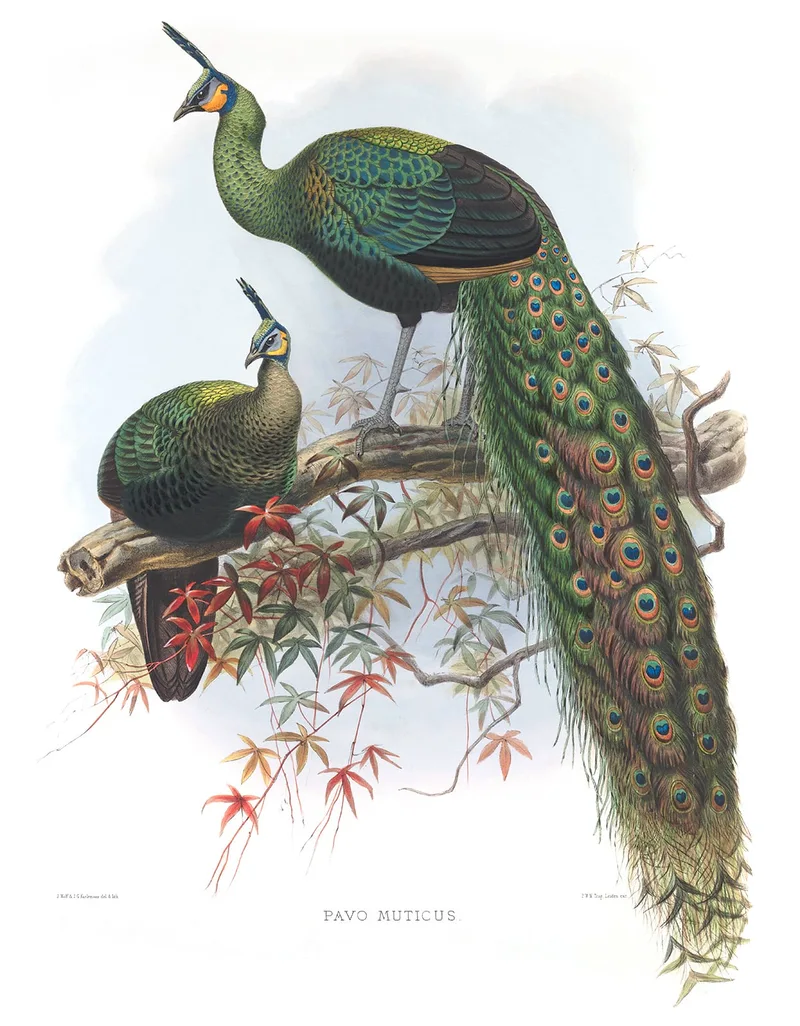
The plates today
Our facsimiles are made from the copy in the library of the Teylers Museum in Haarlem: each plate photographed at the size of the original sheet, retouched by hand and proofed against the original before Re-Art Special Art Productions prints it on acid-free etching paper. How a facsimile is made. All 81 plates are on Family of the Pheasants, by volume and plate number, and together as a complete set in a Solander box.
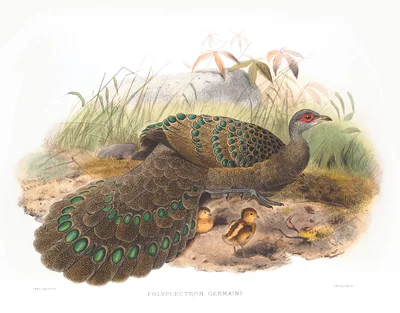
Four plates to start with
Questions
How many plates are in Elliot's Family of the Pheasants?
81 lithographed plates in two volumes, published between 1870 and 1872. Seventy-nine are hand-coloured; the two plates of generic characters are uncoloured.
Who drew the plates?
Joseph Wolf, Joseph Smit and J.G. Keulemans. Many plates are Wolf's drawings put on stone by Keulemans or Smit, and the book is dedicated to Wolf.
Which birds are in the book?
Pheasants in the widest sense: peafowl, polyplectrons, argus pheasants, monals, tragopans, eared pheasants, true pheasants, jungle-fowl, turkeys and guinea-fowl.