
Written while they were still to be found
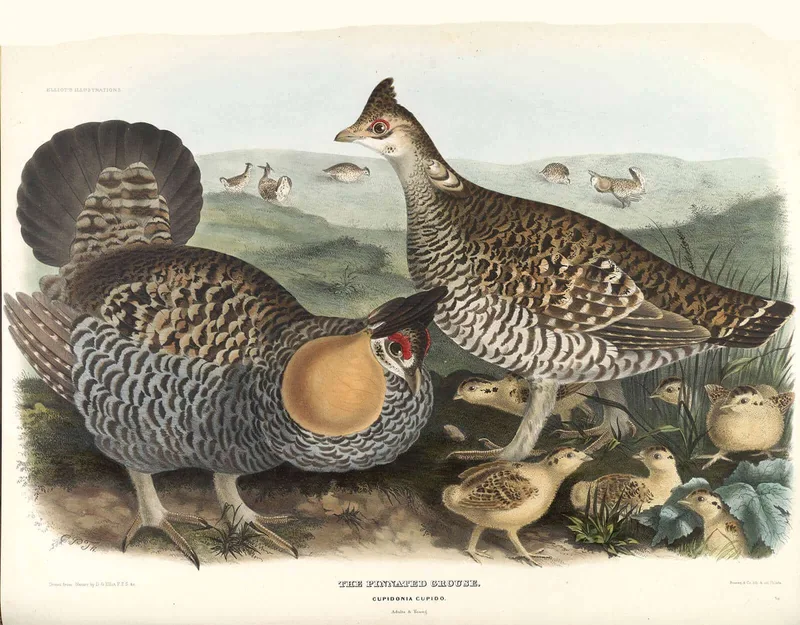
Elliot chose the grouse for his second book for a reason that had nothing to do with their plumage. Most of the species lived in North America, and he could see them going. In the preface to A Monograph of the Tetraoninae, or Family of the Grouse, published in 1864 and 1865, he wrote that many of them, 'through the continued persecution to which they are subjected, and the want of a rigid enforcement of proper laws for their protection, are rapidly disappearing from our land, in a comparatively short space of time to become extinct; and this was an additional reason to write their history while they were still to be found, and their habits observed in their native wilds.'
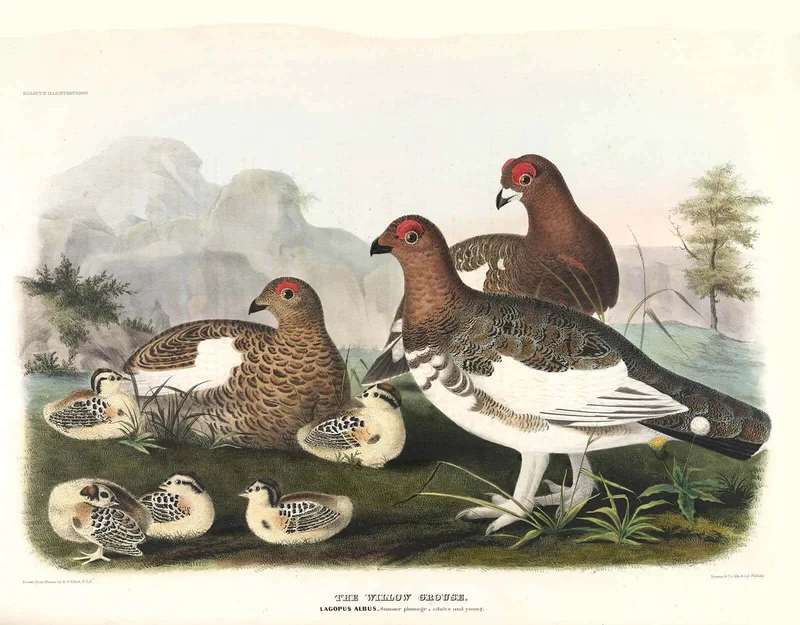
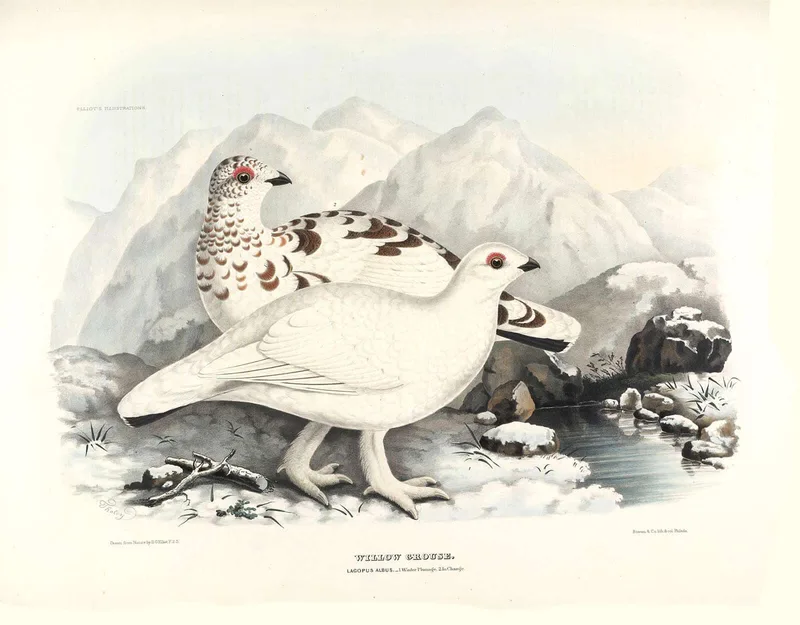
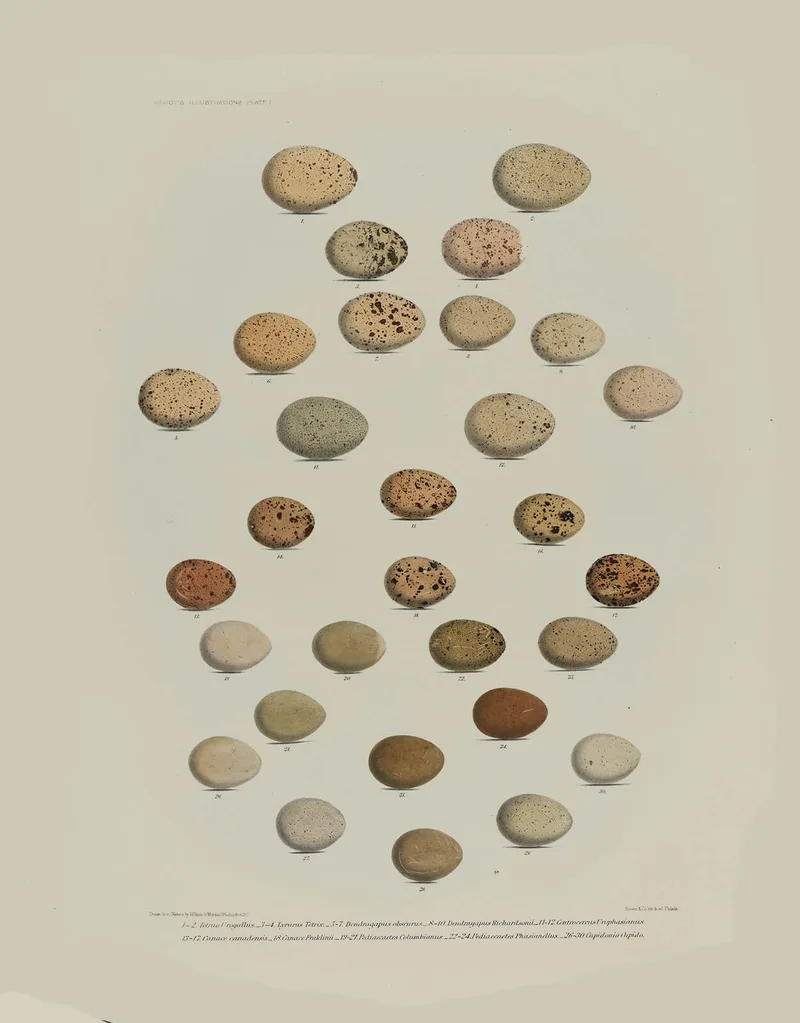
The book has 27 hand-coloured lithographs. Twenty-five are by Joseph Wolf, and the last two show the eggs of the family, drawn by William S. Morgan. It covers every grouse known to ornithologists at the time, from the capercaillie and black grouse of Europe to the sage grouse of the American plains and the ptarmigans of the north. Who was Daniel Giraud Elliot?
Not brilliant in plumage, but admired
Elliot knew the grouse would not dazzle anyone after his pittas. 'Although not brilliant in plumage of varied colors, like the Pittidae,' he wrote, 'still few could witness the graceful forms, erect carriage, and gallant bearing of the members of this family, without having their admiration excited.' Wolf made the most of it: the birds stand in snow, heather and prairie grass, often with their young, and the same species appears twice where its plumage changes with the season.
Wolf's grouse and Morgan's eggs
Joseph Wolf (1820 to 1899) was a German painter of animals who settled in England in 1848 and became the illustrator that explorers and naturalists asked for first, though he would only work freelance. The grouse were his first book for Elliot; the pheasants, the birds of paradise and the cats followed. About William S. Morgan, who drew the two plates of eggs, very little is known.
Audubon had drawn the Pinnated Grouse a generation earlier and watched it vanish from Kentucky within twenty-five years; one of its subspecies, the Heath Hen, is now extinct. Audubon's extinct birds tells that story.
The plates today
Our facsimiles are made from the copy in the library of the Teylers Museum in Haarlem: each plate photographed at the size of the original sheet, retouched by hand and proofed against the original before Re-Art Special Art Productions prints it on acid-free etching paper. How a facsimile is made. All 27 plates are on Family of the Grouse, and together as a complete set in a Solander box.
Four plates to start with
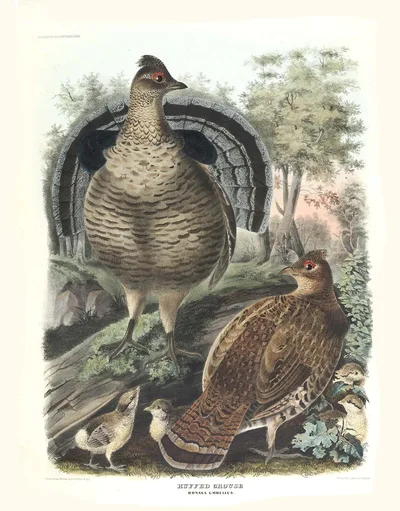
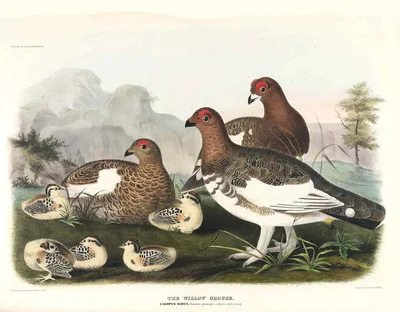
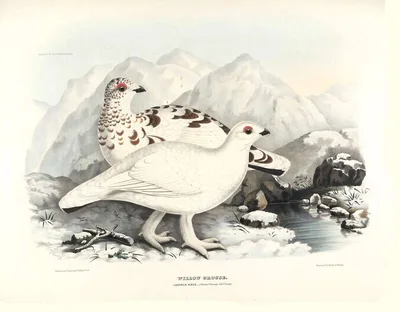
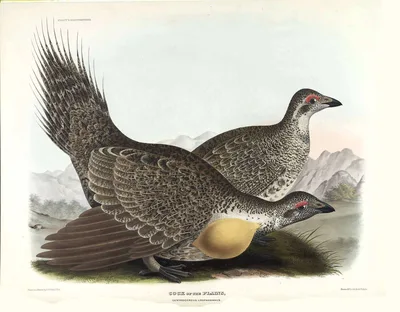
Questions
How many plates are in Elliot's Family of the Grouse?
27 hand-coloured lithographs, published in 1864 and 1865: 25 of birds by Joseph Wolf and two of eggs by William S. Morgan.
Why did Elliot write a book on the grouse?
Most species lived in North America, and he wrote in the preface that many were 'rapidly disappearing from our land'. He wanted to record them while they could still be observed in the wild.
Which grouse are in the book?
Every species known at the time, from the capercaillie and black grouse of Europe to the ruffed grouse, prairie grouse and ptarmigans of North America, several shown in both summer and winter plumage.