
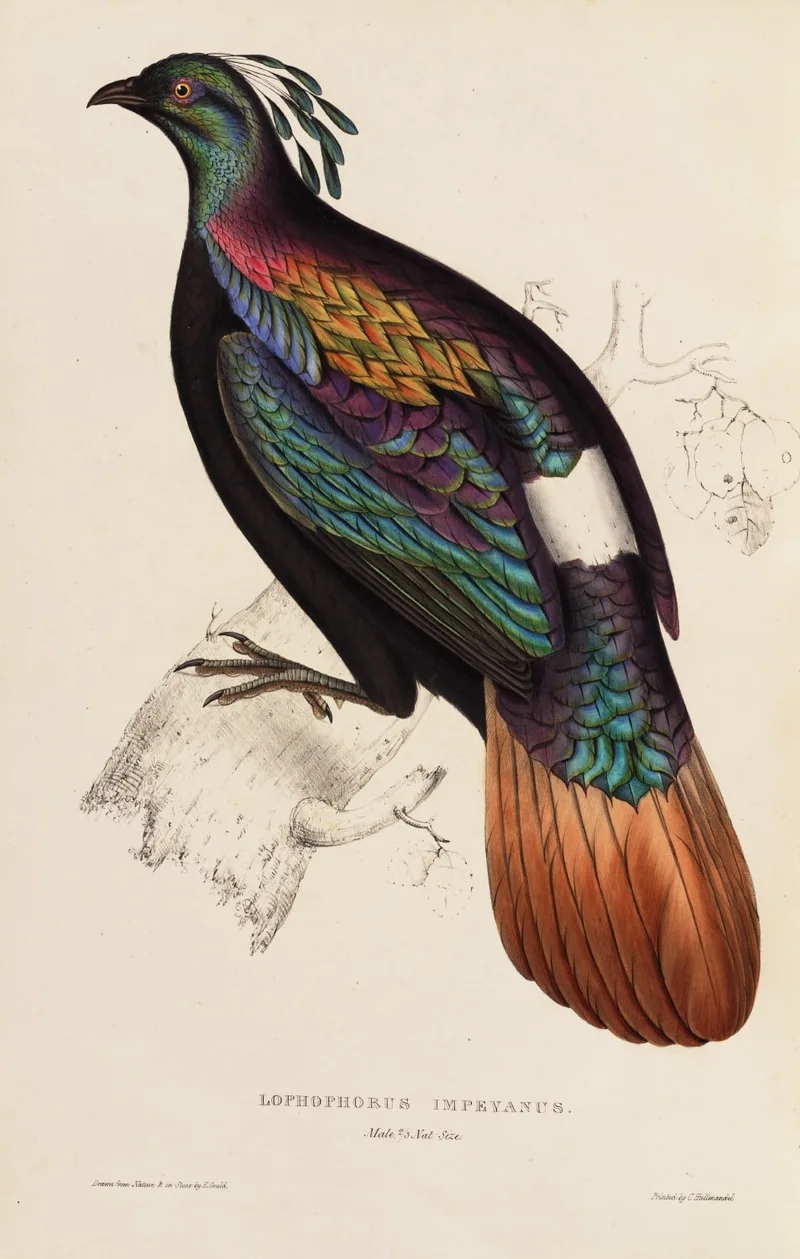
A parcel of skins
In 1830 a consignment of bird skins arrived at the Zoological Society of London from the foothills of the Himalaya. Nobody in Europe had seen most of them. The Society's curator, a 26-year-old taxidermist named John Gould, unpacked them, and instead of writing a paper he decided to make a book.
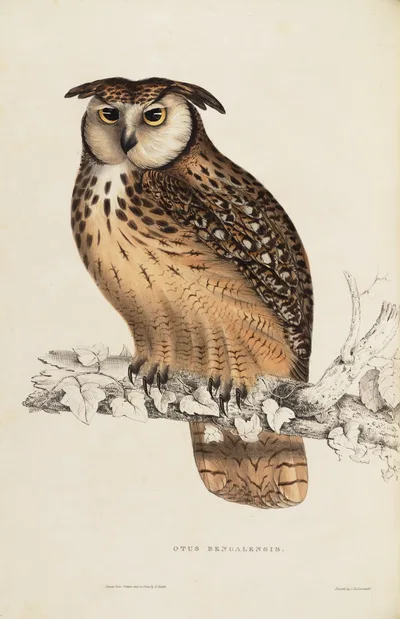
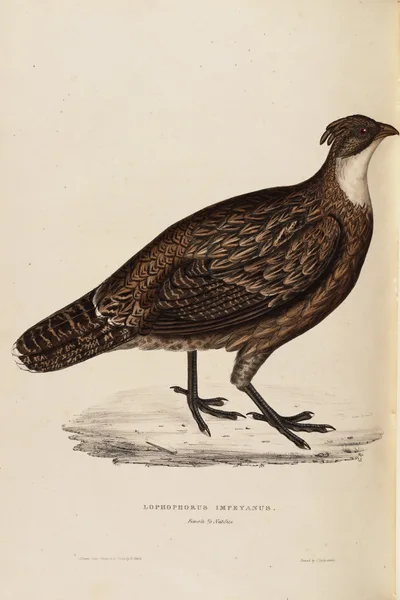
A Century of Birds from the Himalaya Mountains was the result: 80 plates showing a hundred species, a 'century', published in 20 monthly parts between 1830 and 1833. It is Gould's first book and the one that set the pattern for the forty-odd volumes that followed.
Published by Gould himself
No publisher would take the risk of a book of expensive coloured plates by an unknown curator, so Gould took it himself. He sold the work by subscription, part by part, and subscribers had the parts bound when the last one was out. It sold at once. The money and the reputation it brought paid for The Birds of Europe, the toucans and, in the end, Australia. Gould never used a publisher again.
The text was written by Nicholas Aylward Vigors, the Society's secretary, who described the new species; Gould supplied the skins and the plates.
Elizabeth Gould draws the plates
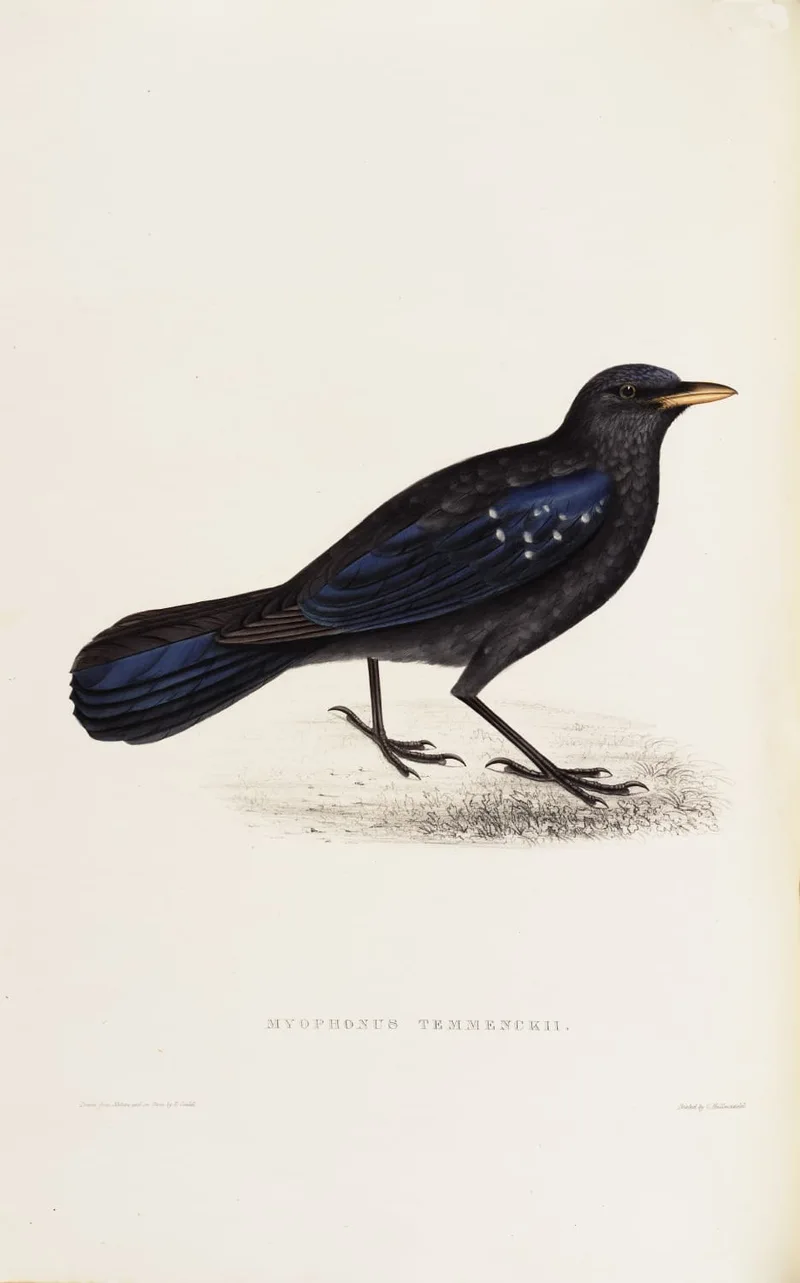
Gould could describe a bird with great precision and catch its attitude in a few lines of pencil, but he was not a finished draughtsman. His wife was. Elizabeth Gould (1804 to 1841) took her husband's pencil and watercolour sketches, with their notes on colour and pose, worked them up into the finished pictures, and drew them on the lithographic stone herself.
The birds were drawn from skins, not from life, and it shows: the poses are a little stiff and the compositions simple, a bird on a branch against a faint wash of ground. Her later plates for The Birds of Australia, drawn after two years of watching the living birds, have far more movement. Still, the plates were admired, and her name is on them.
Edward Lear and the lithographic stone
The plates are lithographs, and in Britain in 1830 that was still a new way to make a picture. The artist draws with a greasy crayon or ink straight onto a slab of fine-grained limestone. The stone is wetted; printing ink clings to the drawing and runs off the wet stone; paper is pressed on, and the drawing prints. Compared with engraving on copper it was quick, cheap and forgiving. The artist could make the drawing without a professional engraver, and the stone could be ground down and used again.
Elizabeth had to learn it. She did so with help from Edward Lear (1812 to 1888), then eighteen, who was drawing the parrots of the Zoological Gardens from life and publishing them as lithographs. Lear became Gould's friend and collaborator and drew plates for his next books; he is better remembered now for his nonsense verse than for his birds. Every impression was then coloured by hand in watercolour, by colourists working from the finished drawing.
The Teylers copy and our prints
The copy we work from is in the library of the Teylers Museum in Haarlem, the oldest museum in the Netherlands. Re-Art Special Art Productions in Almere photographed its plates one by one for us, at the size they are printed, retouched them only where time had left a mark, and proofed each against the original. We offer 79 of the 80 plates, each at the size of the original sheet, about 38 by 56 centimetres, in an edition of 250, numbered in pencil, blind embossed and with a certificate of authenticity. They ship unframed, rolled in a tube.
Browse the plates by number on A Century of Birds from the Himalaya Mountains, or see the complete set. For what Gould published next, see What books did John Gould publish?.
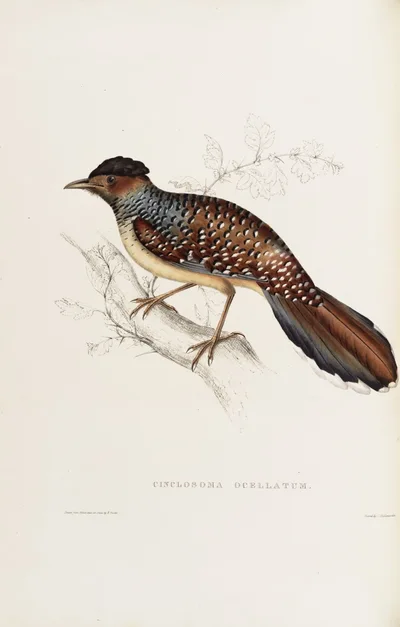
Four plates from the Himalaya
Questions
When was A Century of Birds from the Himalaya Mountains published?
In 20 monthly parts between 1830 and 1833. It was John Gould's first book, and he published it himself after no publisher would take it.
Who drew the plates of A Century of Birds?
Elizabeth Gould, John Gould's wife, from his sketches. She drew them on the lithographic stone herself, having learned the technique with help from Edward Lear; the printed plates were coloured by hand.
How many plates does it have?
80 hand-coloured lithographs showing a hundred species, which is what 'century' means in the title. We offer 79 of them.