
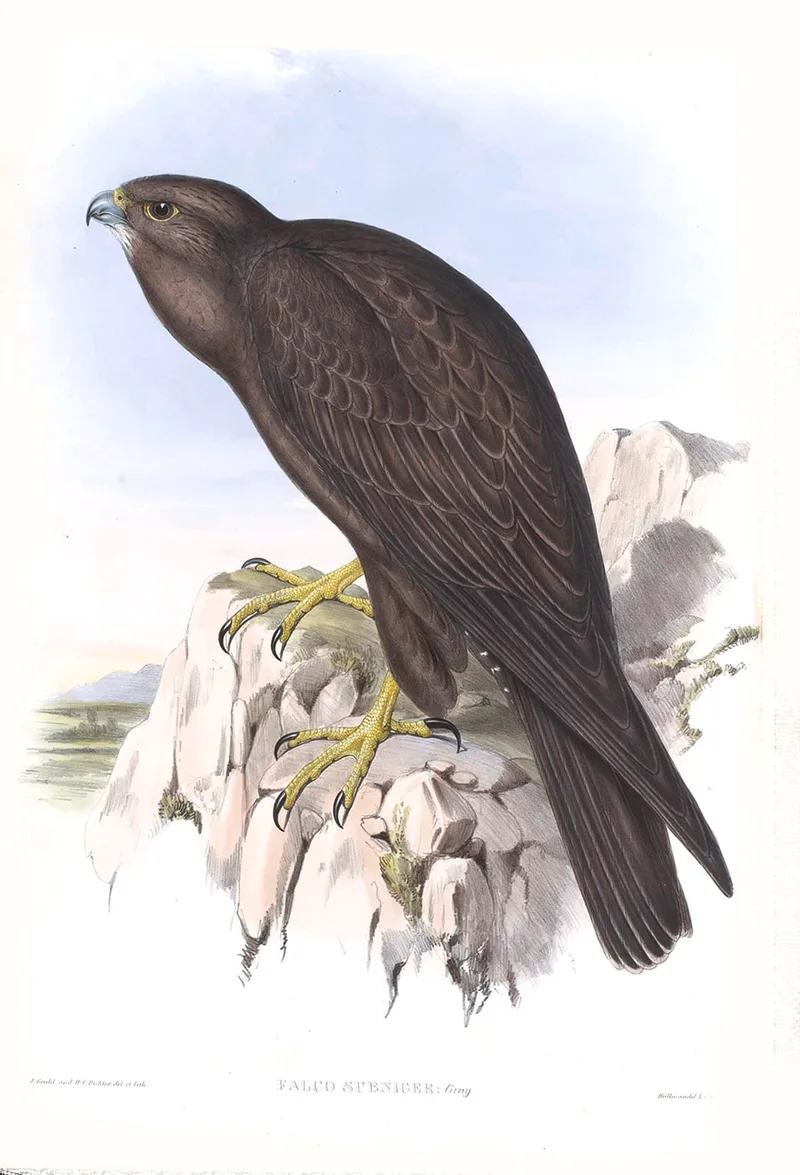
A box of birds from the Galápagos
On 4 January 1837, three months after HMS Beagle came home, Charles Darwin presented the mammals and birds he had collected on the voyage to the Zoological Society of London. The birds went to the Society's curator, John Gould, for identification. Gould put aside his paying work.
Darwin was no ornithologist. He had labelled the small birds from the Galápagos as he saw them: some blackbirds, some grosbeaks, some finches and a wren. He had not written down which island each came from. At the time it had not seemed to matter.
Twelve species of ground finch
At the Society's next meeting Gould reported his finding. The birds Darwin had taken for blackbirds, 'gross-bills' and finches were, he said, 'a series of ground finches which are so peculiar' as to form 'an entirely new group, containing twelve species'. The story made the newspapers.
The bills were the point. Gould had sorted the birds by the shape and size of the bill and seen that behind the differences they were one family. A few months later Darwin learned from him that his 'Galápagos Wren' was another finch, and that the mockingbirds he had labelled by island were separate species, not varieties, with relatives on the South American mainland. Gould also decided that the smaller southern rhea, a bird the crew had rescued half-eaten from a Christmas dinner, was a species of its own, and named it Rhea darwinii.
Why the islands mattered
If the finches were separate species, where each one lived became the question. Darwin had not kept his finches by island, but Captain Robert FitzRoy and others on the Beagle had taken more care, and Darwin now went to their specimens. From them he could establish that several species were confined to particular islands: a small group of islands, a few hundred miles from the mainland, each with birds of its own.
That was an important step. In the notebooks he opened that summer, Darwin was already asking how one ancestral species could become several, island by island. The finches, the mockingbirds and the two rheas were evidence that it could. Gould himself kept his distance from the theory that followed.
The Zoology of the Beagle
Gould's descriptions of the birds appeared between 1838 and 1842, in five numbers, as Part 3 of The Zoology of the Voyage of H.M.S. Beagle, edited by Darwin. Elizabeth Gould drew all the plates of Part 3, the finches among them.
Twenty years later, in On the Origin of Species (1859), Darwin cited Gould's work, and the finches went on to become the textbook case for how species form. They still are.
Where to see Gould's birds
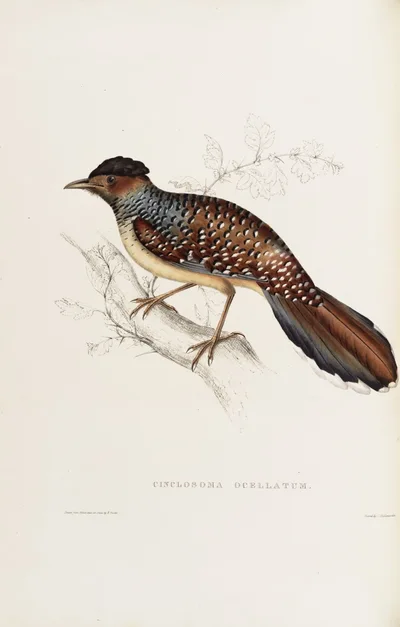
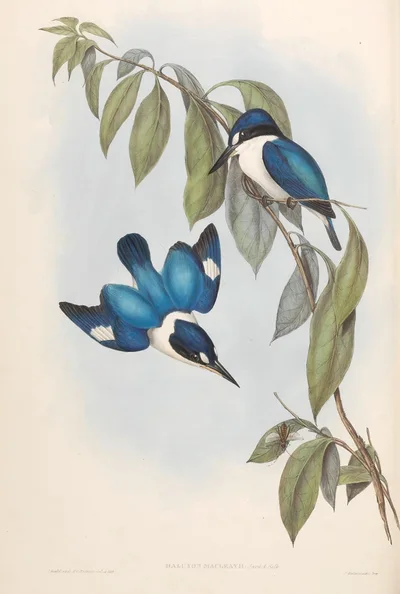
We do not print the plates of the Beagle volume. What we do print are the books Gould went on to make: The Birds of Australia, begun the year after the finches, and the toucans, the hummingbirds, The Birds of Asia and The Birds of Great Britain. What books did John Gould publish? lists them, and Who was John Gould? tells the rest of his story.
Two plates from Gould's own books
Questions
Did John Gould discover Darwin's finches?
Darwin collected them in 1835; Gould identified them in January 1837 as twelve new species of a single group of ground finches found only on the Galápagos. The name 'Darwin's finches' came later.
How did Gould help Darwin's theory?
By showing that the Galápagos finches and mockingbirds were distinct species, not varieties, Gould gave Darwin the first hard evidence that one kind of bird could become several on a group of islands.
Can I buy a print of Darwin's finches?
Not from us: the Beagle plates are not in our collection. We offer plates from Gould's own books, from The Birds of Australia to The Birds of Great Britain.