
The sheet: one size for every plate
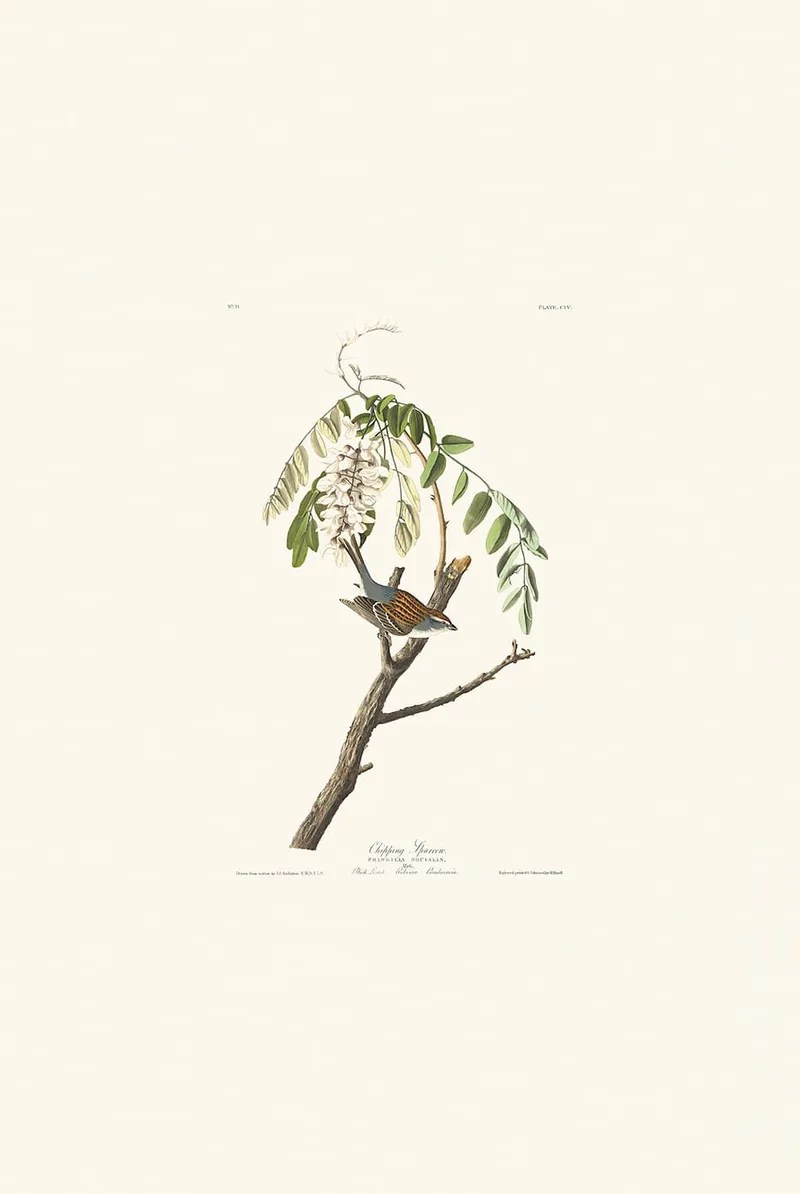
Every plate of The Birds of America was printed on the same double elephant sheet, and our facsimiles keep that size: 67 by 100 centimetres (26½ by 39¼ inches), with the full margins and the engraved lettering below the bird. A warbler on a branch comes on the same sheet as the flamingo; only the amount of paper around the bird changes. That makes one part of framing simple. Whatever the plate, the frame is the same, and a row of Audubons can hang in identical frames.
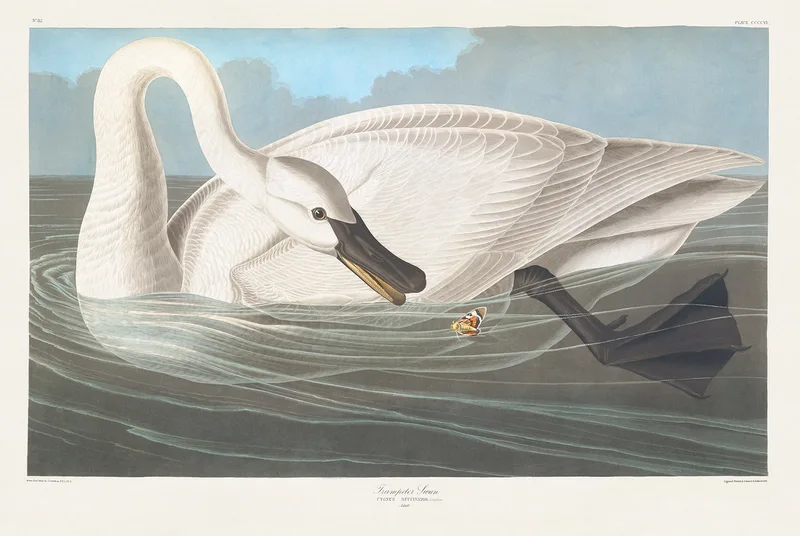
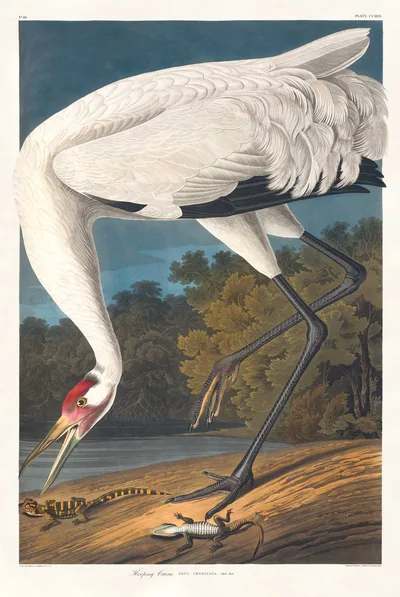
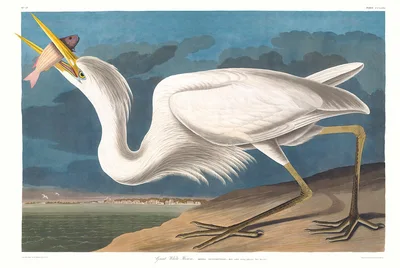
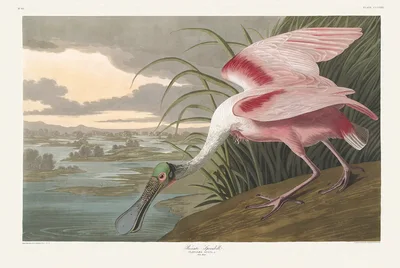
About three plates in five are upright; the rest lie on their side, like the Trumpeter Swan, the Roseate Spoonbill and the Great White Heron. Check which way yours runs on its page before you plan the wall: an upright sheet wants height, a horizontal one wants width.
Unrolling the print
Prints ship unframed, rolled in a sturdy tube. Take the print out with clean, dry hands, holding it by the margins, and unroll it on a clean table. Let it relax flat for a day or two under clean sheets of paper with light weights on the corners. Never iron it and never tape it down; if it still curls, leave the flattening to the framer. Keep the tube: it is the safest way to carry the print to the workshop.
Mat, float or both
There are three common ways to present a sheet this size, and each gives a different frame. The sizes below assume a mat border of 7.5 centimetres (3 inches), which suits a sheet this large; your framer may suggest more.
- Window mat over the margins: the mat overlaps the sheet by about a centimetre on each side and frames the plate and its lettering. Mat and frame opening about 80 by 113 cm (31½ by 44½ in).
- Whole sheet floated in a window mat: the sheet is hinged onto the backing and the mat window is cut larger than the paper, so that a strip of about 2.5 cm (1 in) shows all round its edge. Opening about 87 by 120 cm (34¼ by 47¼ in).
- Float mount without a mat: the sheet is hinged onto a backing board that shows about 5 cm (2 in) around it, and spacers hidden in the frame keep the glazing off the paper. Opening about 77 by 110 cm (30¼ by 43¼ in).
Whichever you choose, the rules of our general guide apply: an acid-free mat and backing, the sheet hinged along the top edge only, with Japanese paper or acid-free tape, so that it can move with the seasons, and never glued or dry-mounted. On a sheet this size a thicker or double mat keeps the glazing a little further from the paper. How to frame and hang your print goes through those basics.
The frame: a strong moulding and a deep rebate
On a frame more than a metre tall the moulding does structural work. Ask for a moulding at least 3 to 4 centimetres (1¼ to 1½ inches) wide, with a rebate deep enough to take the glazing, the mat or spacers and the backing, and with corners that are glued and reinforced, not only pinned. Then add the moulding to the opening on both sides: with a 3 cm moulding, the 80 by 113 cm opening becomes a frame of about 86 by 119 cm (34 by 47 in) on the outside, and the floated sheet in its window mat about 93 by 126 cm (36½ by 49½ in).
The style is yours. A wide dark frame with a gold slip gives a large Audubon the weight of a painting; plain natural wood keeps it light. On the page of every print, See it in a room shows the sheet at approximate scale in three frames, as an example; the frame is not included.
Glass or acrylic
Light is the one thing that works on a print over the decades, so whichever you choose should filter ultraviolet light, and a low-reflection finish lets you see the print rather than the window behind you. Both are made in glass and in acrylic.
At this size the difference is weight and safety. Glass 2 to 3 millimetres thick for a frame opening of about 87 by 120 centimetres weighs roughly 5 to 8 kilograms (11 to 17 pounds) on its own; acrylic of the same thickness weighs less than half as much and does not shatter, which matters above a sofa or a bed and every time the frame is moved. Glass is harder to scratch and stays perfectly flat. Acrylic scratches more easily and holds a little static: dust it with a soft, lightly damp cloth and never use glass cleaner on it.
For a sheet this size we would choose UV-filtering acrylic.
Weight, hooks and height
With moulding, mat, backing and glazing, a frame this size is heavy, and heavier still with glass. Fix two D-rings to the back of the frame, one on each side, and hang them on two hooks rather than a single wire: two points keep a wide frame level and share the load. Use hooks and wall plugs rated for well above the weight of the frame, fixed into masonry or a stud rather than plasterboard alone. A picture rail with two cords works as well, if the rail and the cords are rated for the weight.
Hang it with the centre about 150 centimetres (60 inches) from the floor, the height museums use. For a frame about 120 centimetres tall that puts the top edge at about 210 centimetres, so check the ceiling first. Above a sofa or a sideboard, go lower, with the bottom of the frame a hand’s width or two above the furniture; a horizontal plate is the natural choice there. An upright plate suits a narrow wall, a stairwell or the end of a corridor, where it can be seen from a distance.
Keep it out of direct sunlight and away from damp and radiators. Framed with acid-free materials and hung like this, the print lasts more than 100 years under good conditions.
Big plates for a big wall
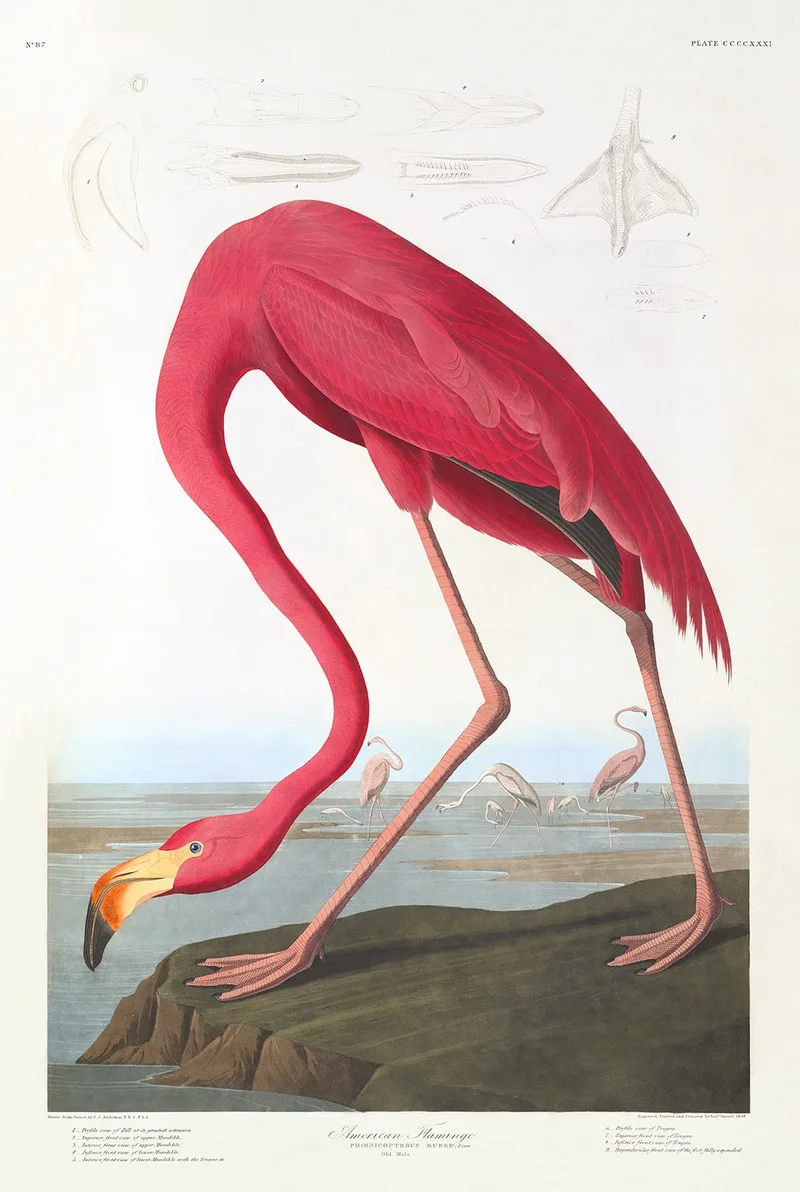
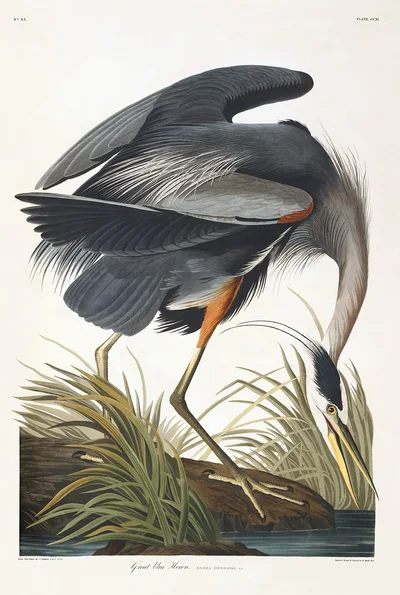
The plates on which the bird fills the sheet make the most of a full-size frame: the Great Blue Heron, the Whooping Crane, the Trumpeter Swan, the Roseate Spoonbill and the Great White Heron among them. Audubon’s largest plates lists them one by one, and What is The Birds of America? explains why every bird is life-size. All the plates we offer are on The Birds of America.
Four big plates for a big wall
Questions
What size frame do I need for a full-size Audubon print?
The sheet is 67 by 100 cm (26½ by 39¼ in), so the frame must be made to measure. With a 7.5 cm (3 in) mat over the margins the opening is about 80 by 113 cm (31½ by 44½ in); floated without a mat, about 77 by 110 cm (30¼ by 43¼ in). Add the width of the moulding on each side for the outside size.
Glass or acrylic for a large Audubon print?
UV-filtering acrylic, in most cases. At this size the glass alone weighs roughly 5 to 8 kg (11 to 17 lb); acrylic of the same thickness weighs less than half as much and does not shatter. Glass is harder to scratch.
How high should I hang a large Audubon print?
With the centre about 150 cm (60 in) from the floor. A frame about 120 cm tall then reaches about 210 cm, so check the ceiling; above a sofa or a sideboard, hang it lower.
Do you sell Audubon prints framed?
No. Every print ships unframed, rolled in a sturdy tube, so you can choose the frame. On the page of every print you can see it in a room and in three frames, as an example; the frame is not included.