
Compelled to turn draughtsman
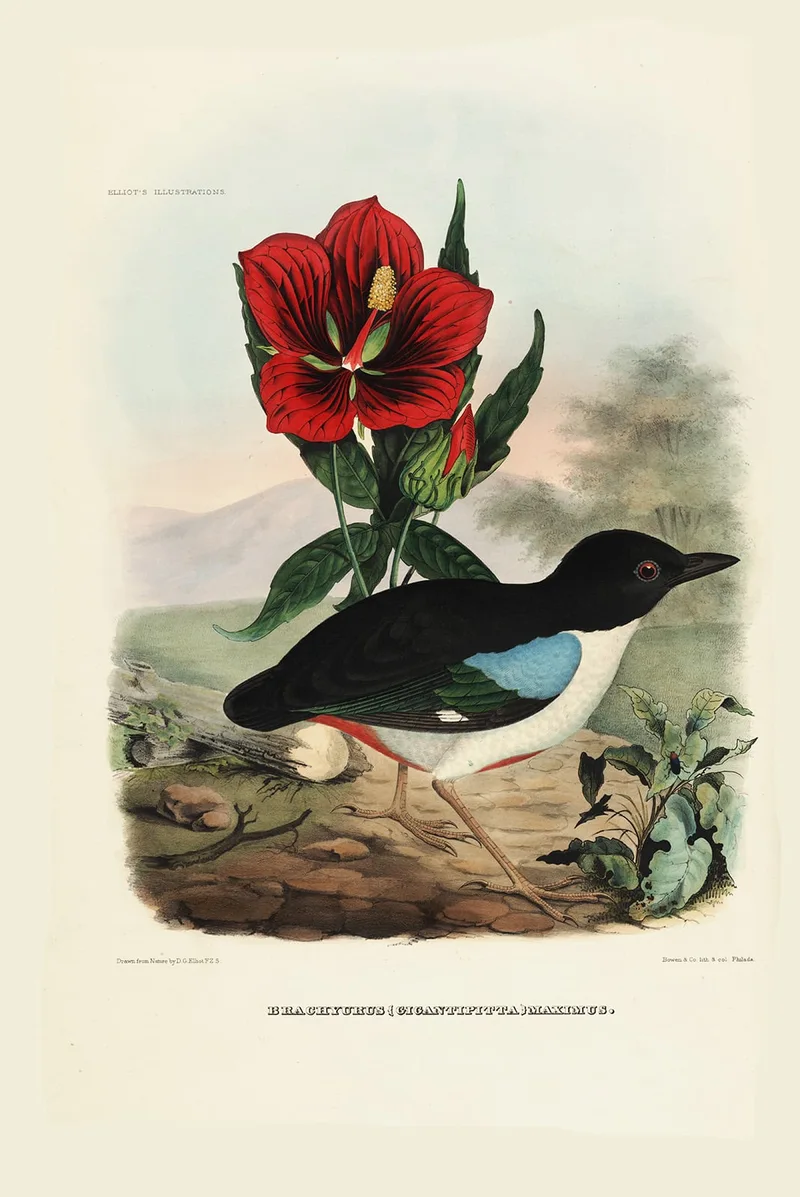
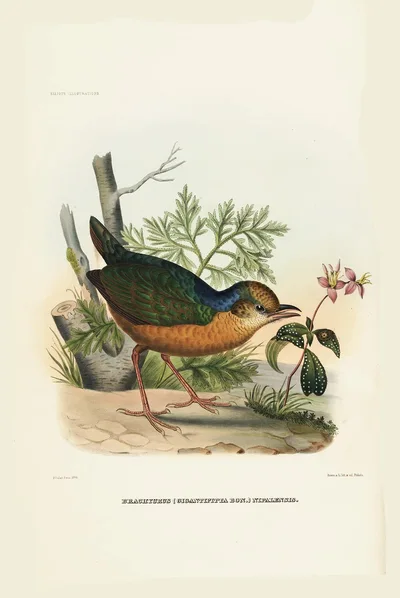
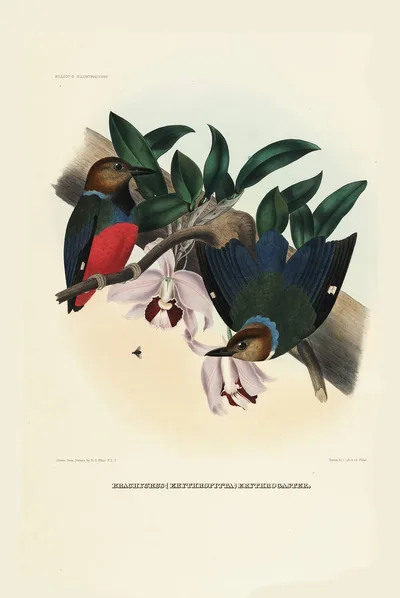
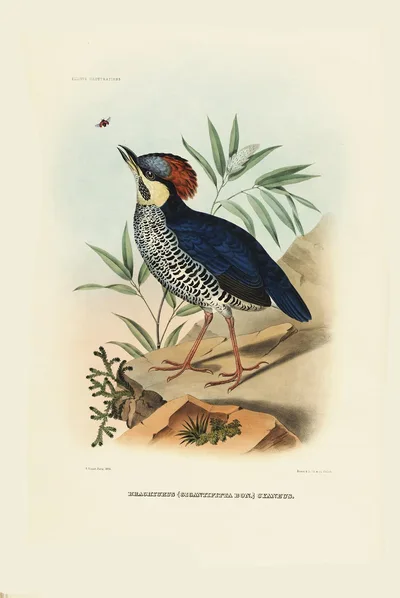
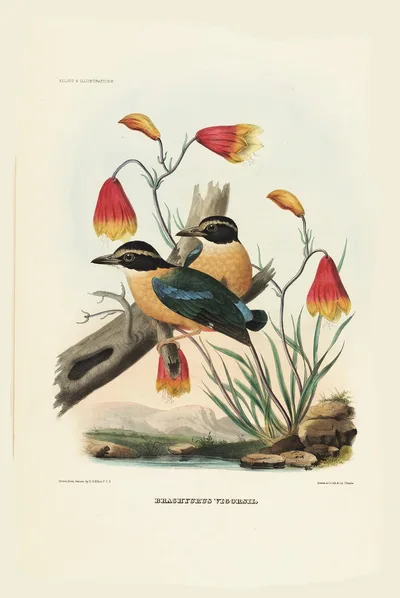
On plate 13 a Blue Pitta recoils from a pink-and-black snake. On another a pitta chases a shining beetle, on a third one takes off after a fly. The birds in Elliot's first book are never still, and most of them were drawn by the author. In the preface he explained that he had 'felt compelled to turn draughtsman', and 24 of the 31 plates carry his name.
A Monograph of the Pittidae, or Family of Ant Thrushes was published in parts between 1861 and 1863, when Daniel Giraud Elliot (1835 to 1915) was in his mid-twenties. It is the only one of his six monographs with his own drawings; for the others he commissioned Joseph Wolf, Joseph Smit and J.G. Keulemans. Who was Daniel Giraud Elliot?
What a pitta is
Pittas are plump, short-tailed birds of the forest floor, found from Nepal and Bengal through the Malay islands to New Guinea and Australia, with one species in Angola. They hop rather than fly, feed on insects and snails in the leaf litter, and carry colours that seem to belong to a hummingbird: cobalt, scarlet, emerald, buff. In Elliot's day they were called ant thrushes, hence the second half of his title.
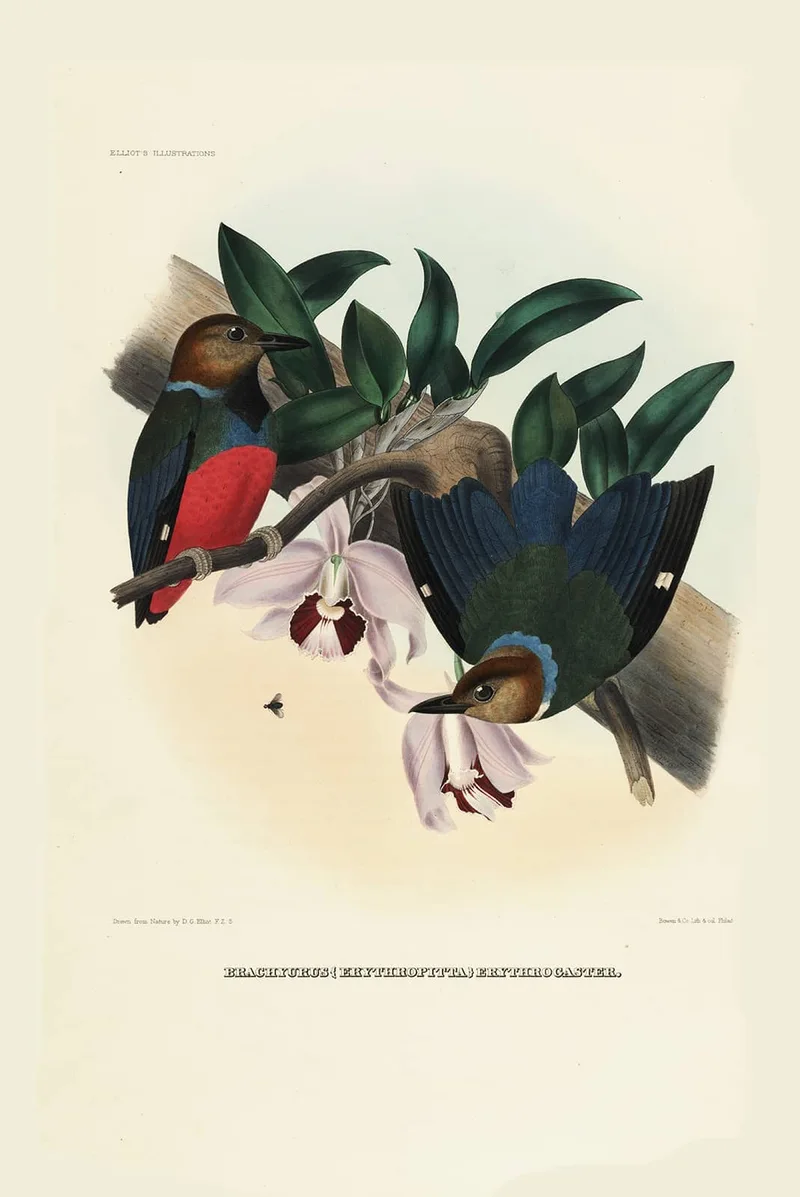
Elliot gave every plate a showy flower, usually in shades that set off the bird, and the result is a book of tropical exuberance rather than the stiff profiles of most bird books of the time.
The other hands: Maubert, Mesnel and one unsigned plate
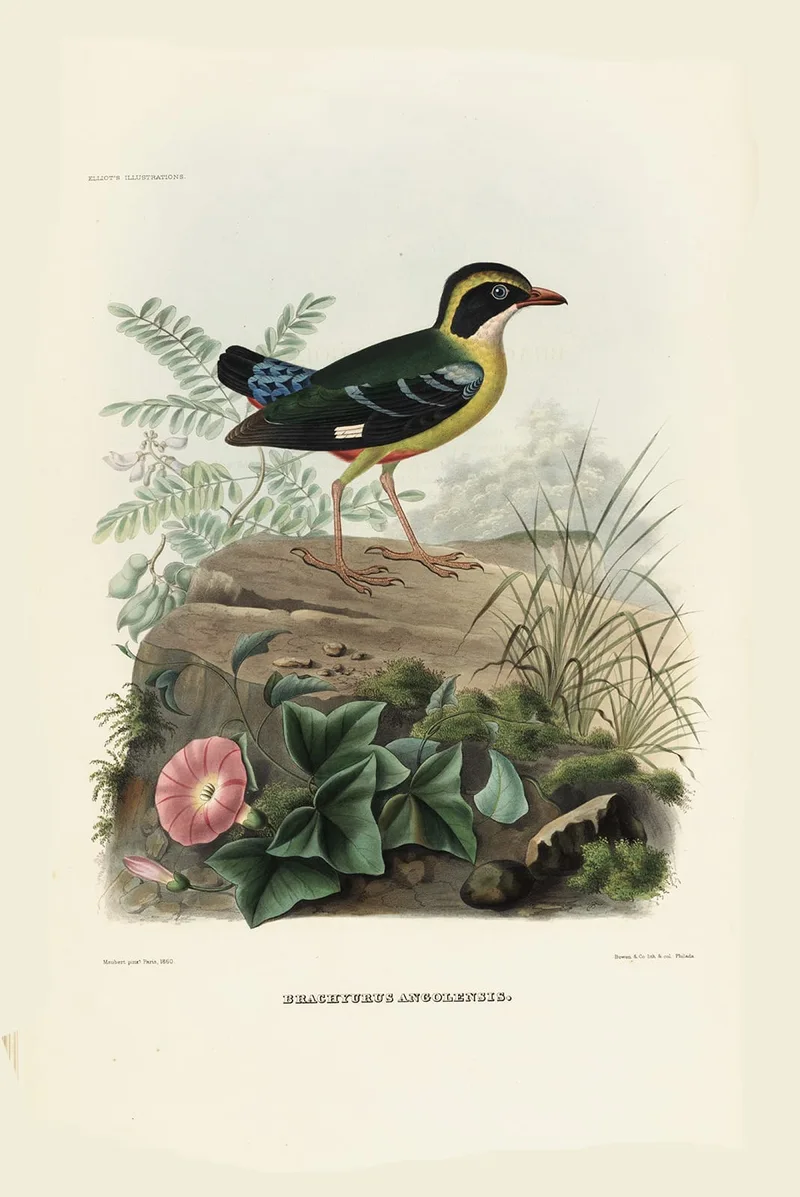
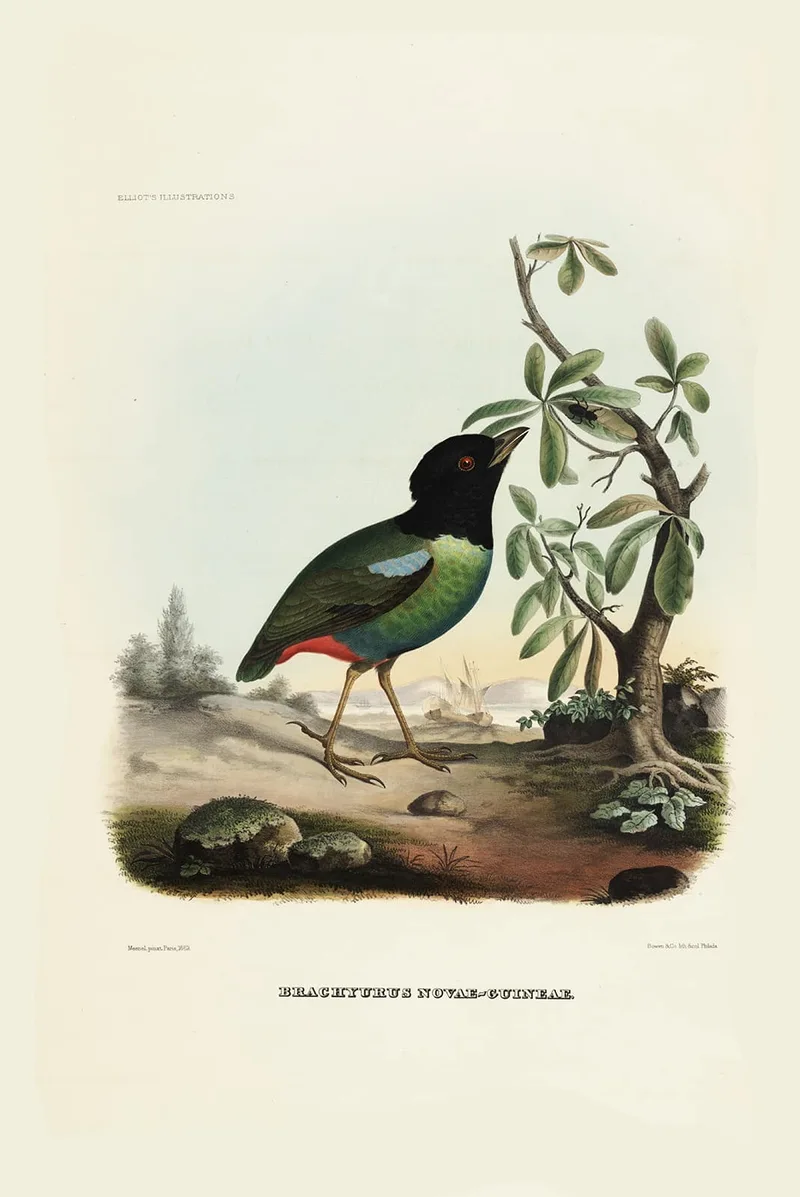
Seven plates are by other artists. The Angola Pitta (plate 5) was drawn by the French artist Édouard Maubert and the New Guinea Pitta (plate 27) by Albin Mesnel (1830 to 1875). The Caerulean Pitta of plate 2 is unsigned. Rather than look for another artist to finish the book, Elliot drew the rest himself.
The plates today
Our facsimiles are made from the copy in the library of the Teylers Museum in Haarlem: each plate photographed at the size of the original sheet, retouched by hand and proofed against the original before Re-Art Special Art Productions prints it on acid-free etching paper. How a facsimile is made. All 31 plates are on Family of the Ant Thrushes, and together as a complete set in a Solander box.
Four plates to start with
Questions
How many plates are in Elliot's Family of the Ant Thrushes?
31 hand-coloured lithographs, published between 1861 and 1863. Elliot drew 24 of them himself; the others are by Édouard Maubert, Albin Mesnel and other hands.
Why is it called Family of the Ant Thrushes?
Ant thrush was the nineteenth-century English name for the pittas, the colourful ground birds of Asia, Australia and Africa that the book describes. The Latin title is A Monograph of the Pittidae.
Did Elliot really draw the plates?
Yes. It is the only one of his six monographs with his own drawings. In the preface he wrote that he 'felt compelled to turn draughtsman'.