
Forty-three cats in a box
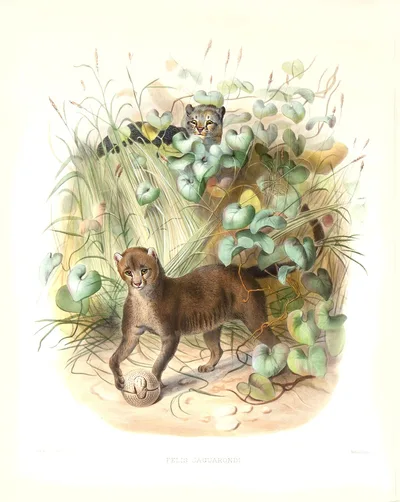
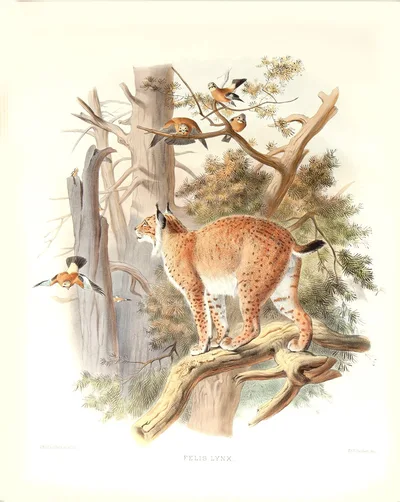
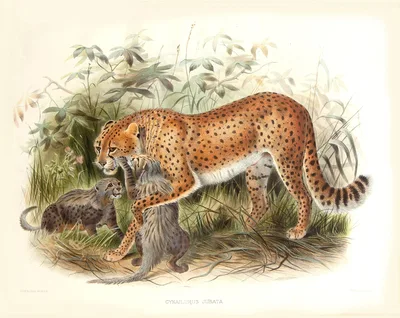
The box opens on a title page, a plate with two leopards, a certificate and a pair of white cotton gloves. Underneath lie forty-two more plates: the lion, the tiger, the snow leopard, the jaguar, the ocelot, the serval, five lynxes, the cheetah, and a long run of small spotted cats from Borneo, Bengal and the pampas. It is the complete A Monograph of the Felidae, or Family of the Cats, which Daniel Giraud Elliot (1835 to 1915) published between 1878 and 1883 with 43 hand-coloured lithographs by Joseph Wolf and Joseph Smit, on sheets of about 60 by 49.5 cm.
We had delivered single plates from the book for years. A collector asked for all of them, as a set, and this is what that took. The four steps are the same for every print we sell, and The making of explains them in general; here is what they meant for forty-three cats.
Photographed inside the Teylers Museum
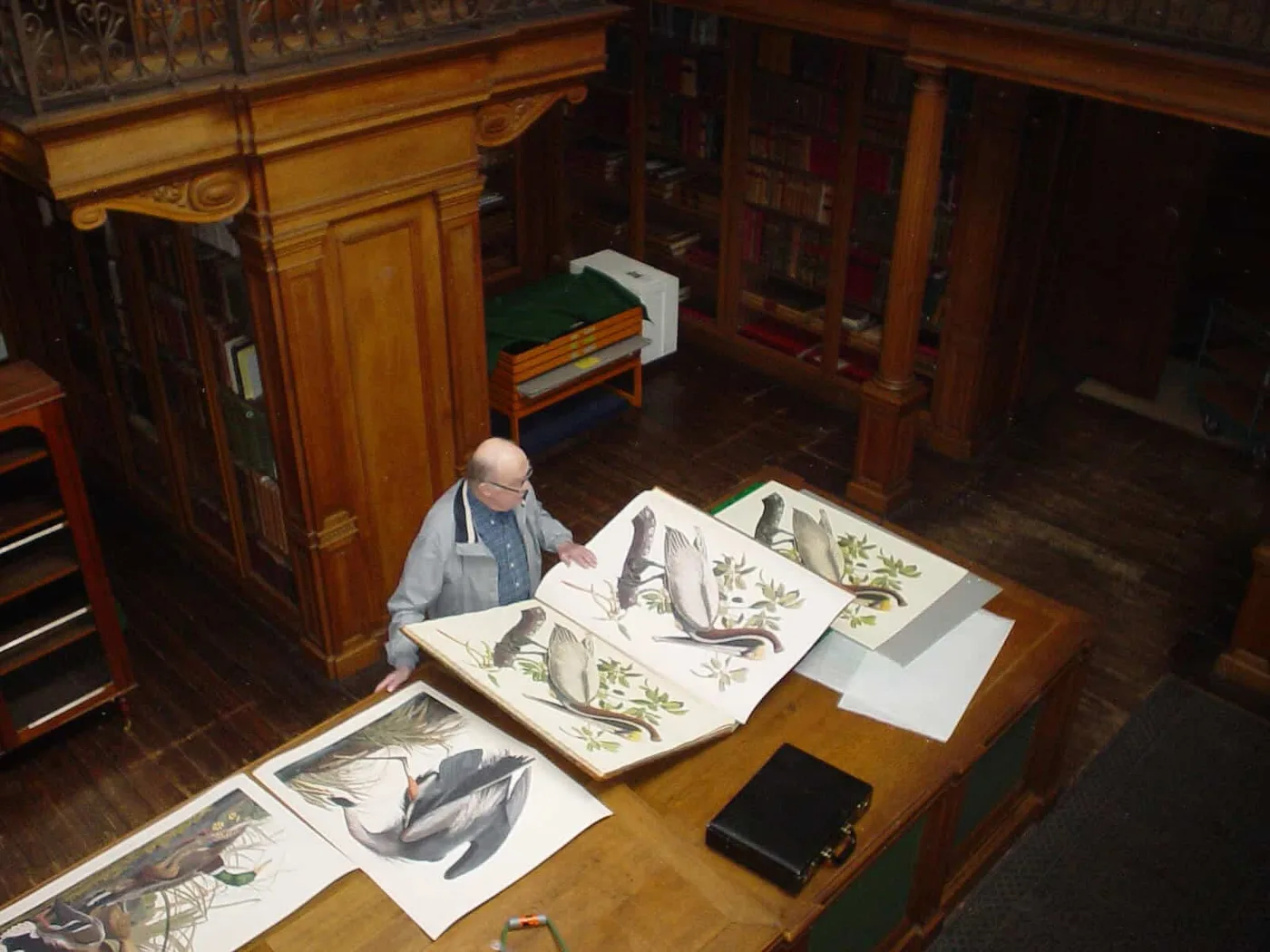
The original is in the library of the Teylers Museum in Haarlem, the oldest museum in the Netherlands, and it does not leave the building. Re-Art photographed it there, under the museum's rules, with the plates still bound. Each sheet was recorded on a Cruse fine art scanner, which lights the whole sheet evenly, at 308 megapixels and at the size the print will be. That last point matters more than the pixel count: when the file is made at the output size, nothing has to be invented or stretched later.
Retouching what a century left behind
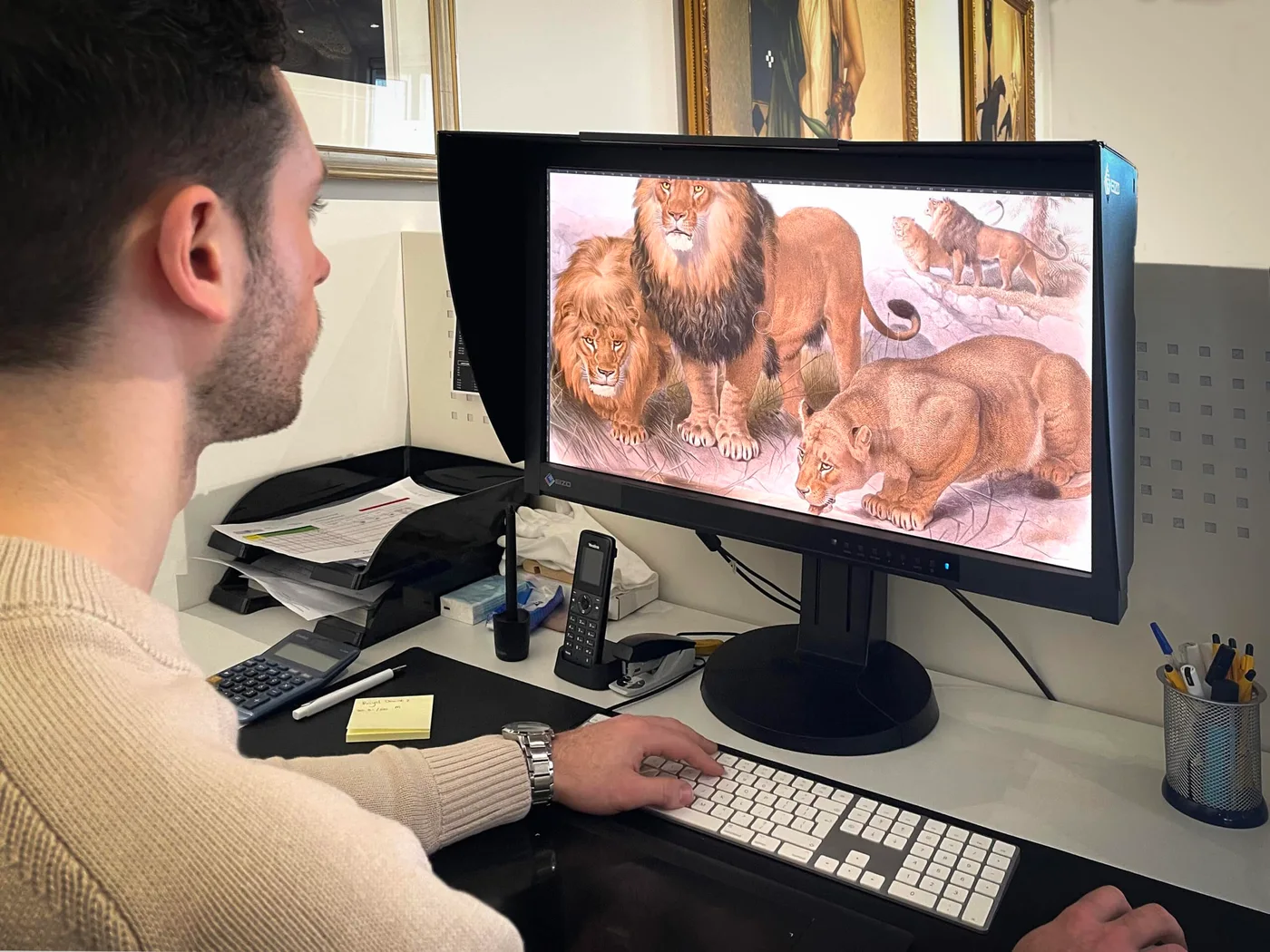
Even in a museum, a hundred and forty years leave marks: small brown spots of acid in the paper, a scratch that was in the lithographic stone, and the gentle curve of a sheet that is bound into a book and cannot lie flat. On a calibrated screen Re-Art removes the spots and the scratches and straightens the curve, and keeps everything else: the grain of the paper, the hand colouring, the lettering under each cat.
Proofing forty-three plates against the original
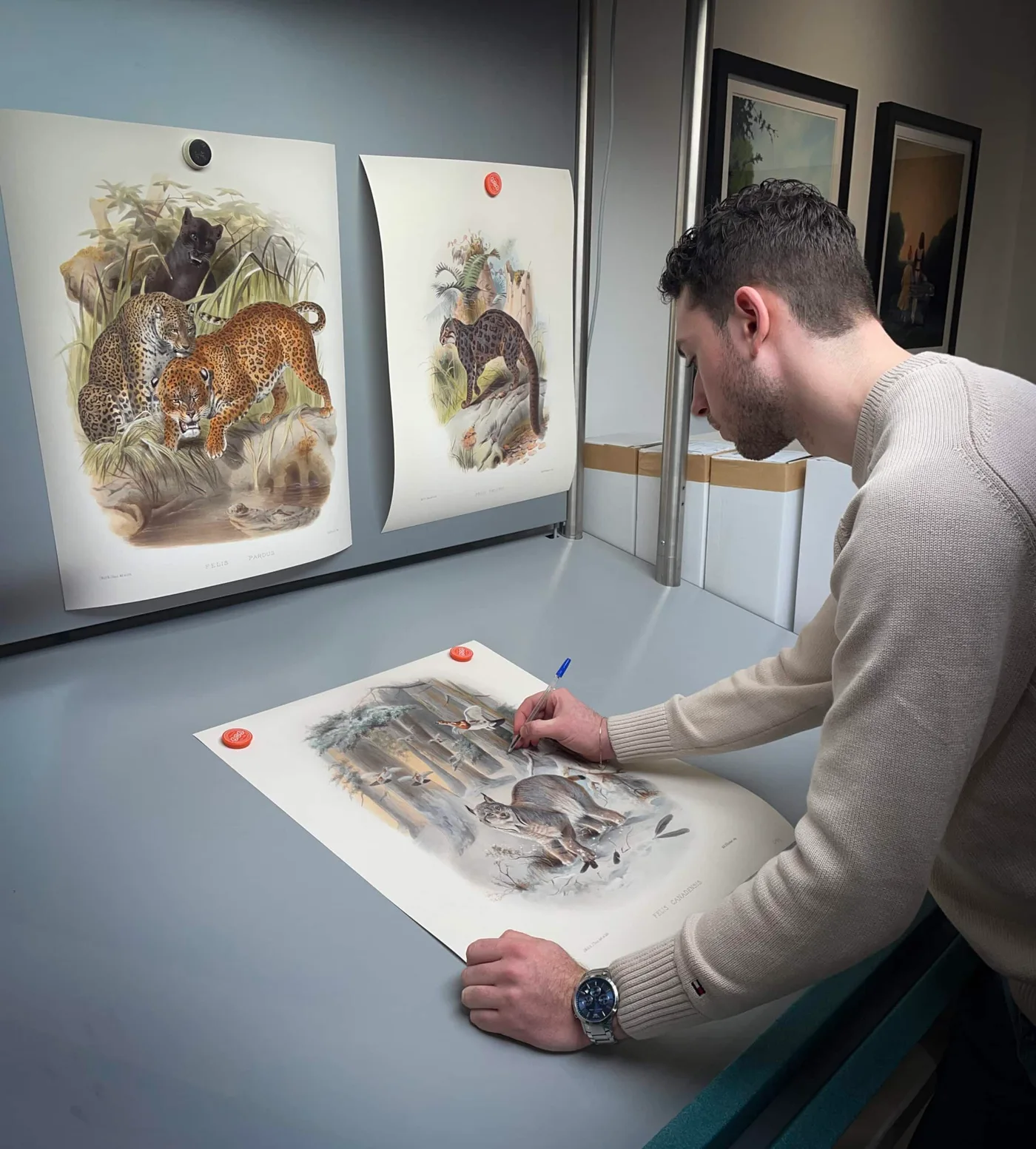
Proofing is where the eye of the colour lithographer decides. Hand-coloured plates contain pigments a camera does not record faithfully, and the cats are full of them: the tawny of a lion against grey rock, the cold blue-grey of a snow leopard, the warm spots of an ocelot. A proof of each plate is printed on the paper of the edition and compared with the original under daylight; every difference is marked, corrected in the file and proofed again. For a set, the proofs go up on the wall side by side, so that the lynxes match the lynxes and the lions the lions. Only when the colour lithographer approves is the master file of a plate ready.
Printing and finishing by hand
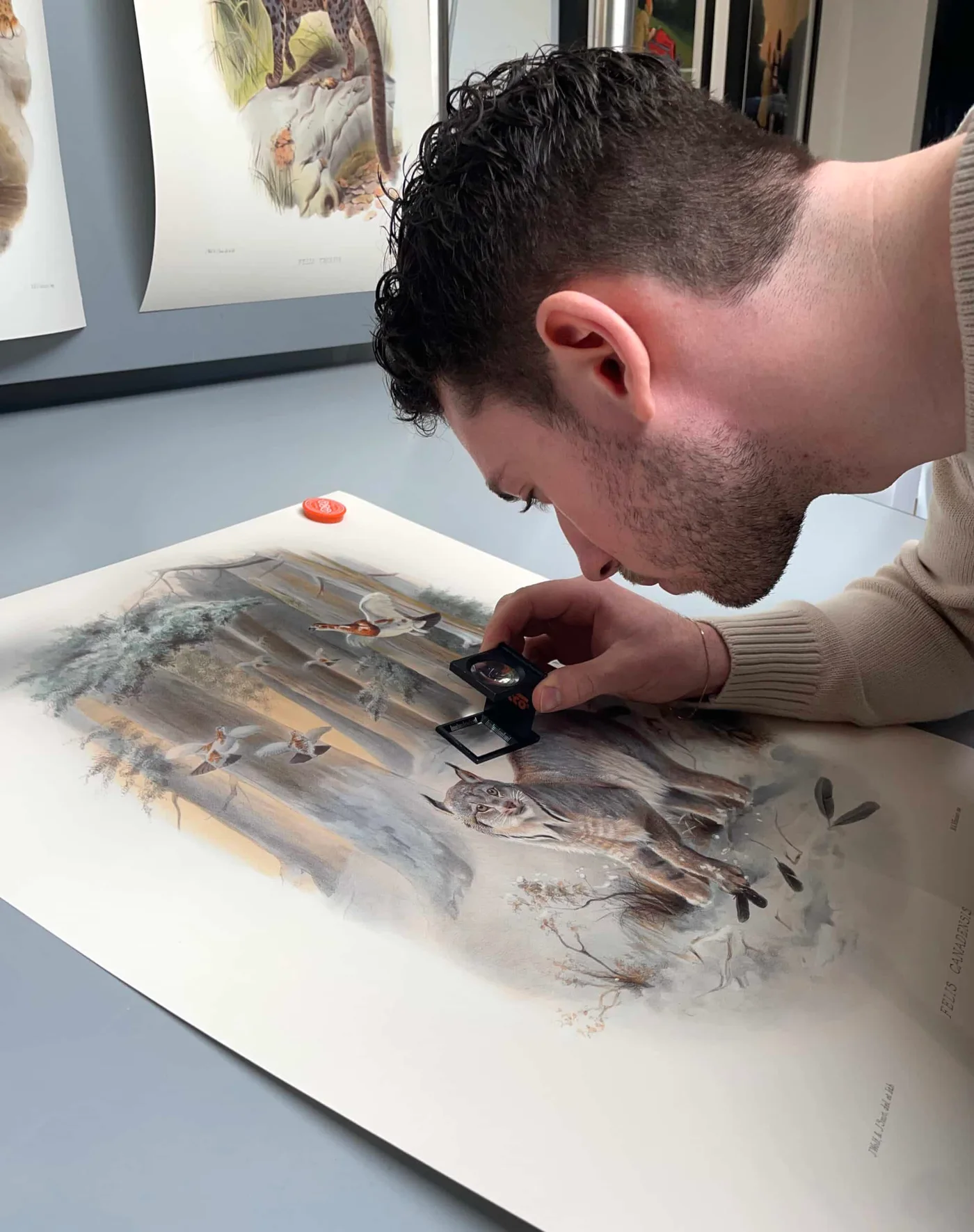
Re-Art prints on Epson printers, which place 2,880 drops of water-based archival ink per inch on acid-free white etching paper of 270 g/m², the paper that gives the prints their velvety surface. One sheet takes 25 to 45 minutes, so the printing of a set of 43 is a matter of days, not hours. Each print is then checked by hand, and where a fibre of the paper has lifted it is touched up with a Faber-Castell graphite pencil. Under good conditions, out of direct sunlight and away from damp, the prints last more than 100 years.
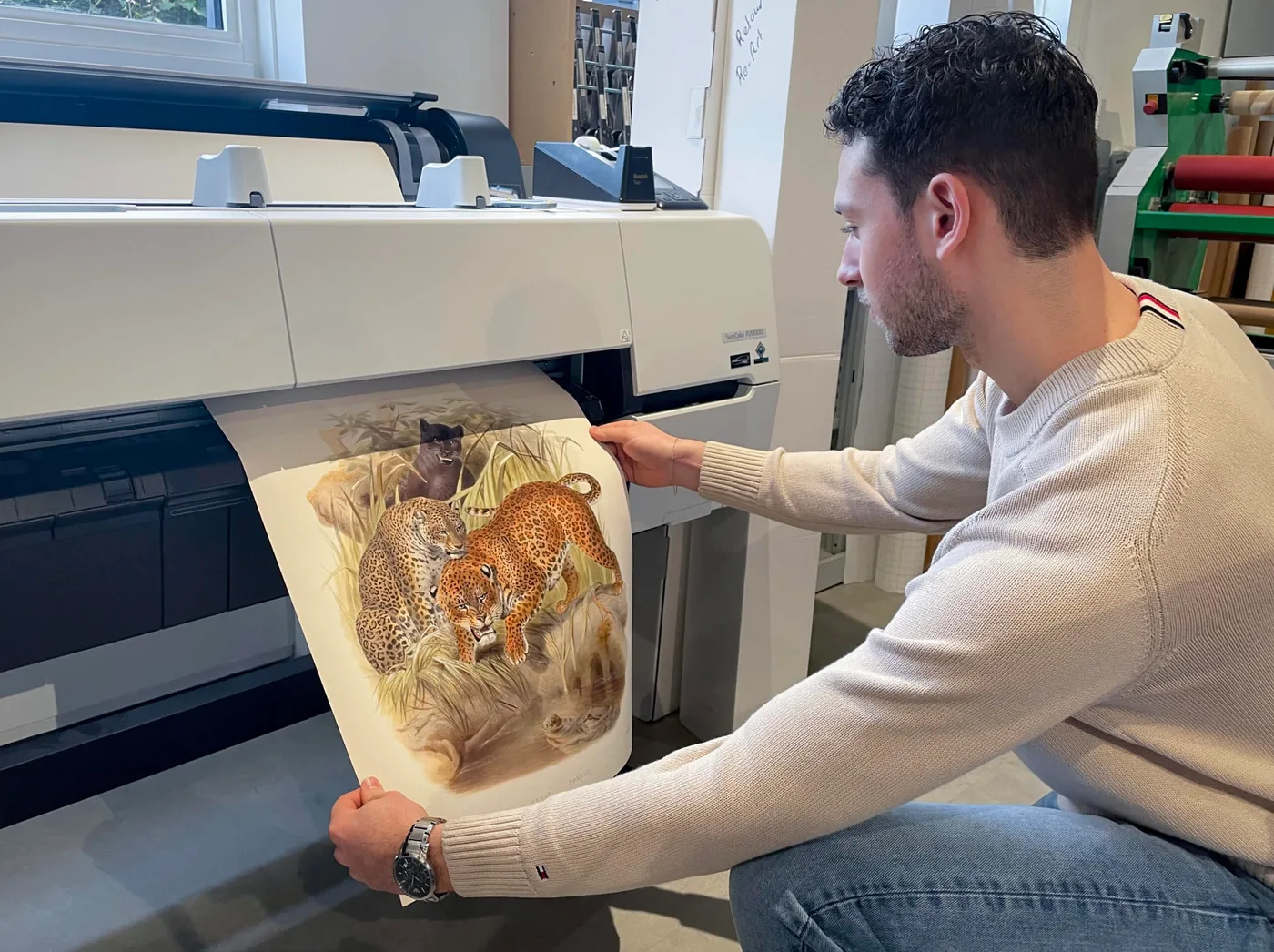
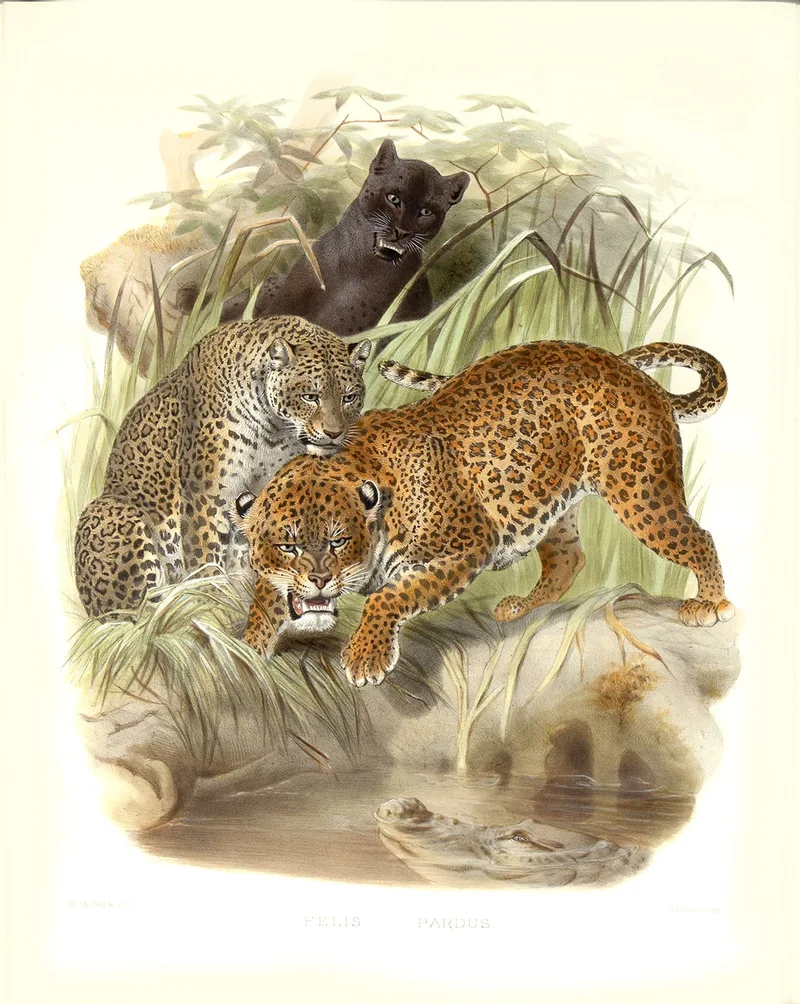
Every approved print is numbered in pencil, embossed with our blind stamp and given its certificate of authenticity, exactly as a single plate would be.
The Solander box
A complete set is not a stack of prints. The 43 plates go into a Solander box made by hand by a bookbinder, with a title page, a contents page listing every cat, and the certificate. Acid-free tissue lies between the plates, and the box travels inside a second box. We make 50 sets of each publication at most, each on request, and agree the price and the delivery time with you.
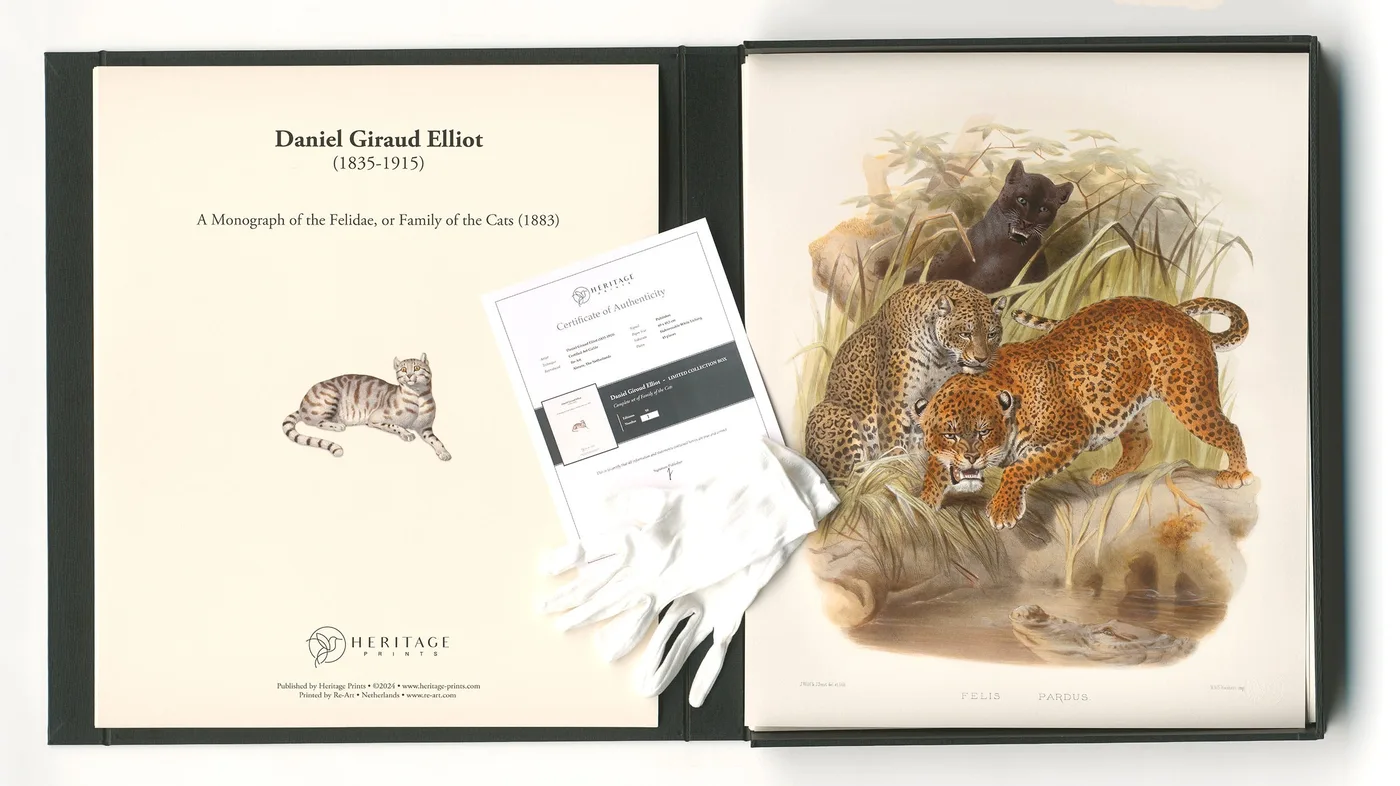
Ask about the complete set of A Monograph of the Felidae, browse the single plates on A Monograph of the Felidae, or put together your own collection of Elliot's cats. Who was Daniel Giraud Elliot?
Four cats from the set
Questions
How many plates are in Elliot's A Monograph of the Felidae?
43 hand-coloured lithographs of wild cats, drawn by Joseph Wolf and Joseph Smit and published by Daniel Giraud Elliot between 1878 and 1883, on sheets of about 60 by 49.5 cm.
Where is the original that the prints are made from?
In the library of the Teylers Museum in Haarlem. Re-Art photographed the complete copy inside the museum, plate by plate, at the size of the prints.
Can I order the complete set?
Yes. Each set is made on request in a Solander box with a title page, a contents page and a certificate, limited to 50 sets. Ask us for the price and the delivery time, or choose your own plates for a collection in your name.