
The first book on the hornbills
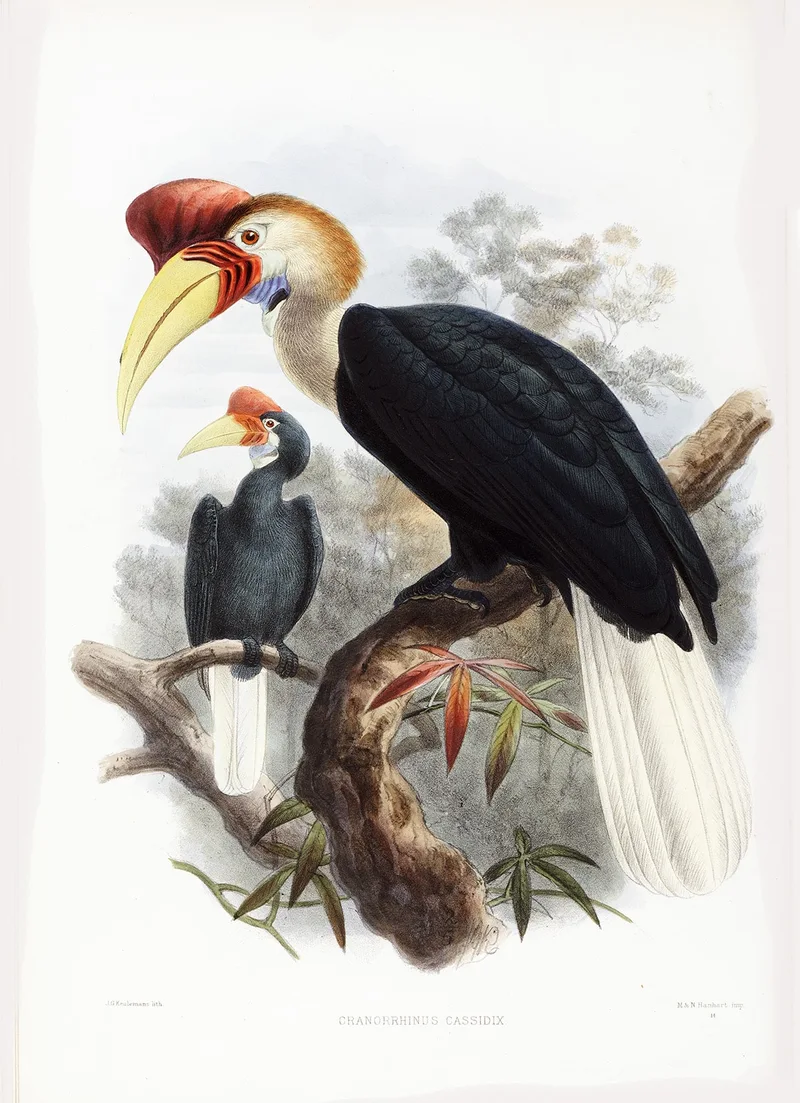
A hornbill carries a bill longer than its head, often with a second storey on top called the casque, and many species have long eyelashes, a bare patch of throat and a tail that seems too long for the body. By the 1870s the family had been described species by species but never gathered in one book. Daniel Giraud Elliot (1835 to 1915) did it between 1877 and 1882 in A Monograph of the Bucerotidae, or Family of the Hornbills, the fifth of his six monographs and the first on this widely scattered family. Who was Daniel Giraud Elliot?
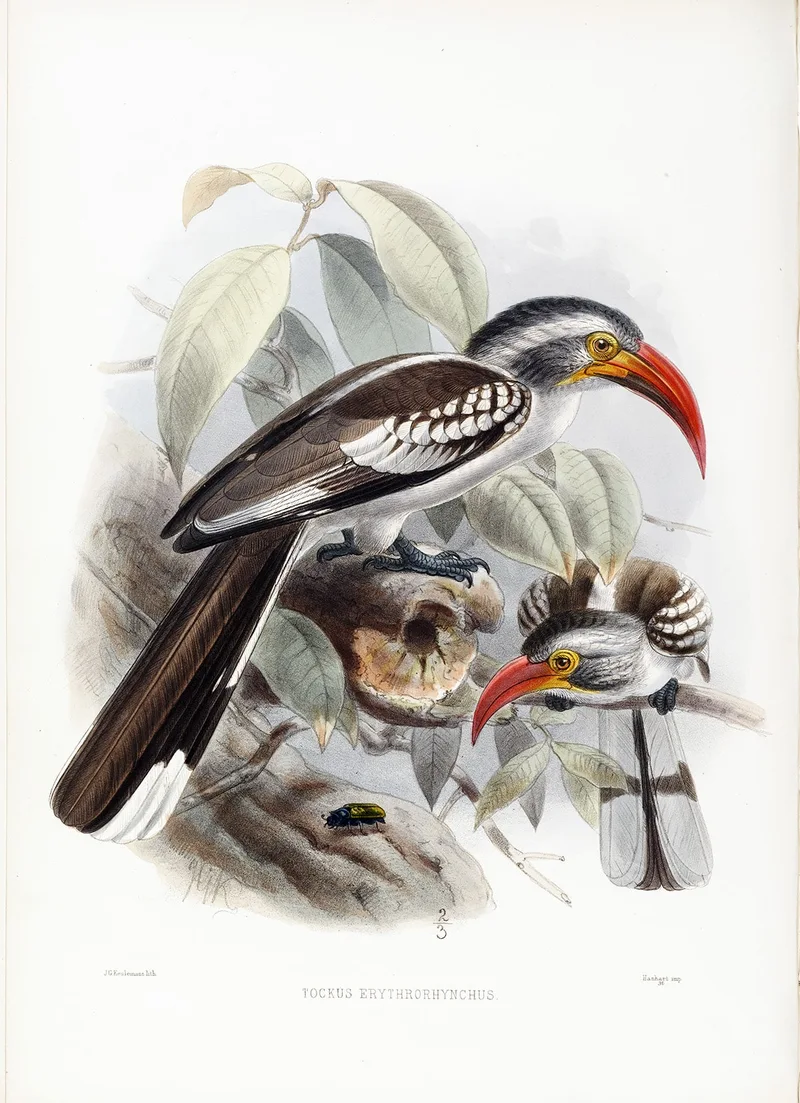
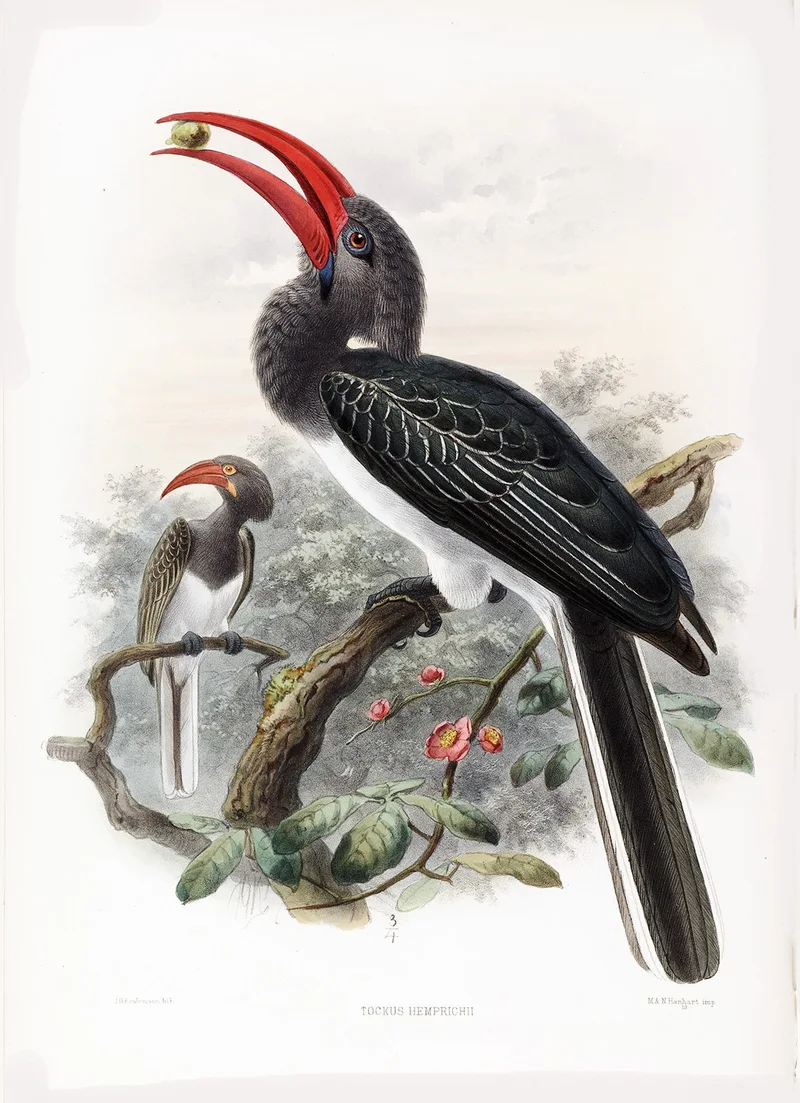
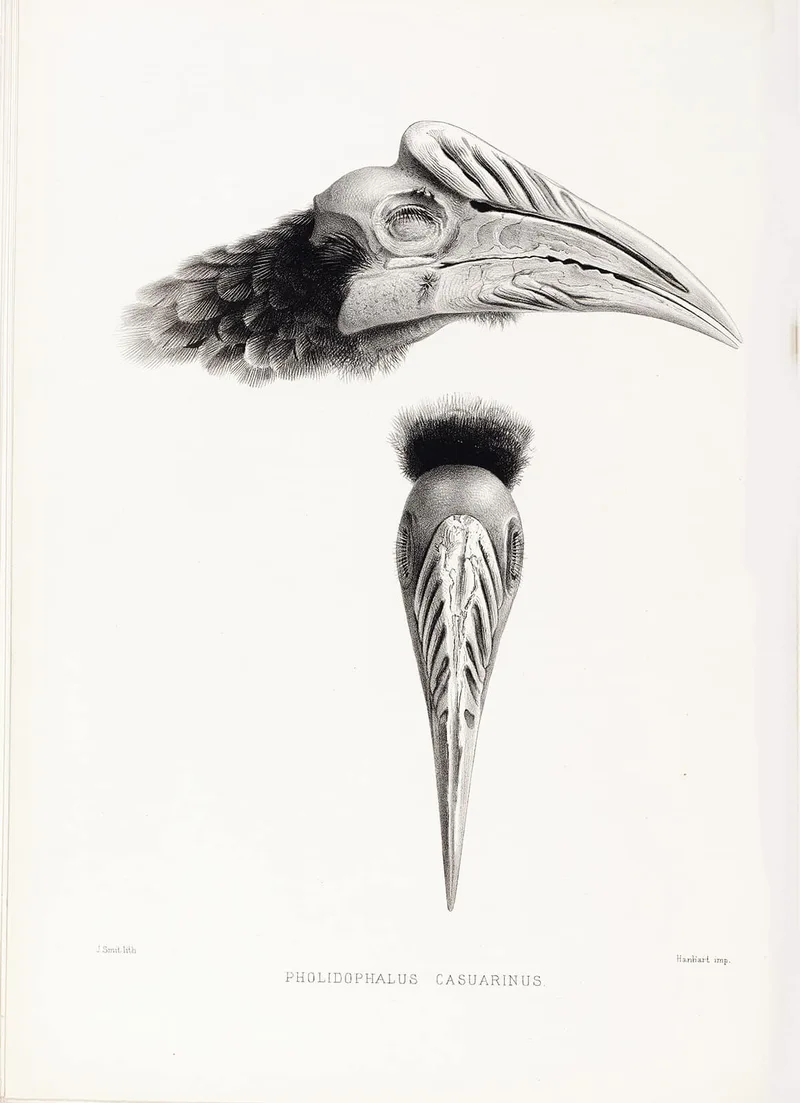
The book has 60 lithographed plates. Fifty-seven are hand-coloured, after drawings by the Dutch bird painter J.G. Keulemans, and three uncoloured plates of generic characters are by Joseph Smit. The birds come from Africa, India, South-east Asia, the Philippines, Celebes and New Guinea: ground hornbills, rhinoceros hornbills, wreathed hornbills, and the small red-billed and yellow-billed hornbills of the African bush.
A nest sealed with mud
What makes hornbills extraordinary is not only how they look but how they breed. The female of most species nests in a hollow tree and walls herself in, plastering the entrance with mud and droppings until only a narrow slit is left. For weeks she sits sealed inside with the eggs while the male feeds her through the slit. In many species she breaks out once the young are part grown, and the chicks reseal the wall behind her until they are ready to fly.
Elliot's generation read this the other way round and thought the male imprisoned the female. The wall is her own work, and the male's part is to keep her and the chicks fed, sometimes for months.
Keulemans and Smit, two Dutch artists in England
Johannes Gerardus Keulemans (1842 to 1912), known in England as John Gerrard Keulemans, was born in Rotterdam and lived and worked in England for most of his life, drawing for most of the important bird books and journals published between about 1870 and his death in London in 1912. His hornbills are closely observed, down to the eyelashes and the ridges on the casque.
Joseph Smit (1836 to 1929) was born in Lisse, received his first commission from Hermann Schlegel, and was invited to England in 1866, where he became a friend of Joseph Wolf and worked with him for both Elliot and John Gould. For the hornbills he drew the three uncoloured plates.
Sixty plates and one that was never drawn
The contents of the original list a plate 44, Anorrhinus austeni, that does not exist: no specimen could be obtained, so the bird was described but never figured. The plates are also smaller than those of Elliot's other monographs; our sheets measure 28.4 by 37.5 cm.
Our facsimiles are made from the copy in the library of the Teylers Museum in Haarlem: each plate photographed at the size of the original sheet, retouched by hand and proofed against the original before Re-Art Special Art Productions prints it on acid-free etching paper. How a facsimile is made. All the plates are on Family of the Hornbills, and together as a complete set in a Solander box.
Four plates to start with
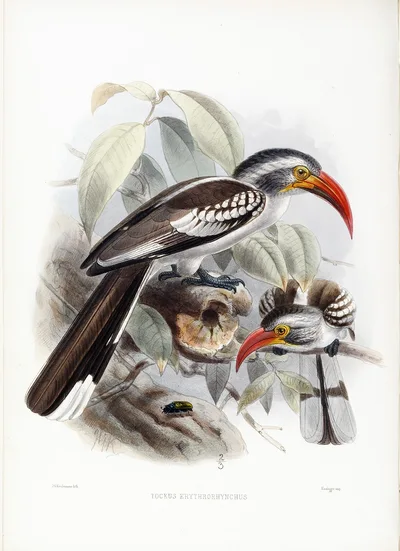
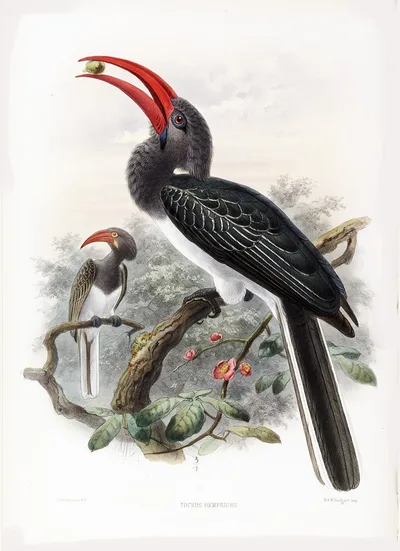
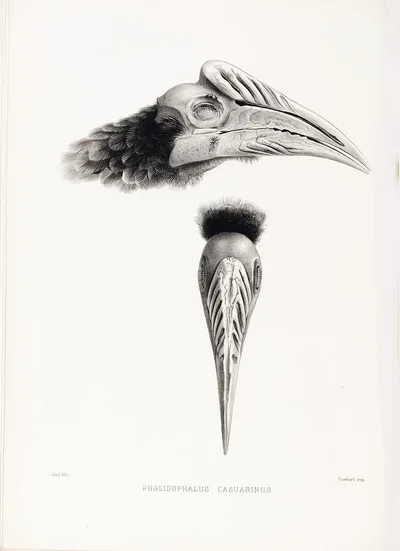
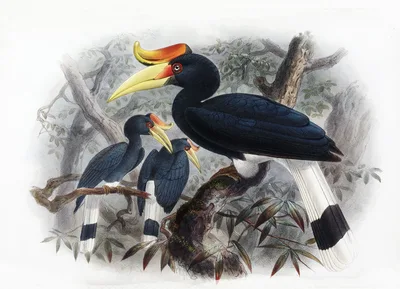
Questions
How many plates are in Elliot's Family of the Hornbills?
60 lithographed plates, 57 of them hand-coloured after J.G. Keulemans and three uncoloured by Joseph Smit. Plate 44, Anorrhinus austeni, is listed in the contents but was never drawn.
Was it really the first book on hornbills?
Yes. Species had been described in journals and general works, but Elliot's monograph of 1877 to 1882 was the first devoted to the whole family.
Do hornbills really wall the female into the nest?
Yes, but she does it herself: she seals the entrance of the tree hole with mud and droppings, leaving a slit through which the male feeds her and, later, the chicks.