
Painting a bird that shines
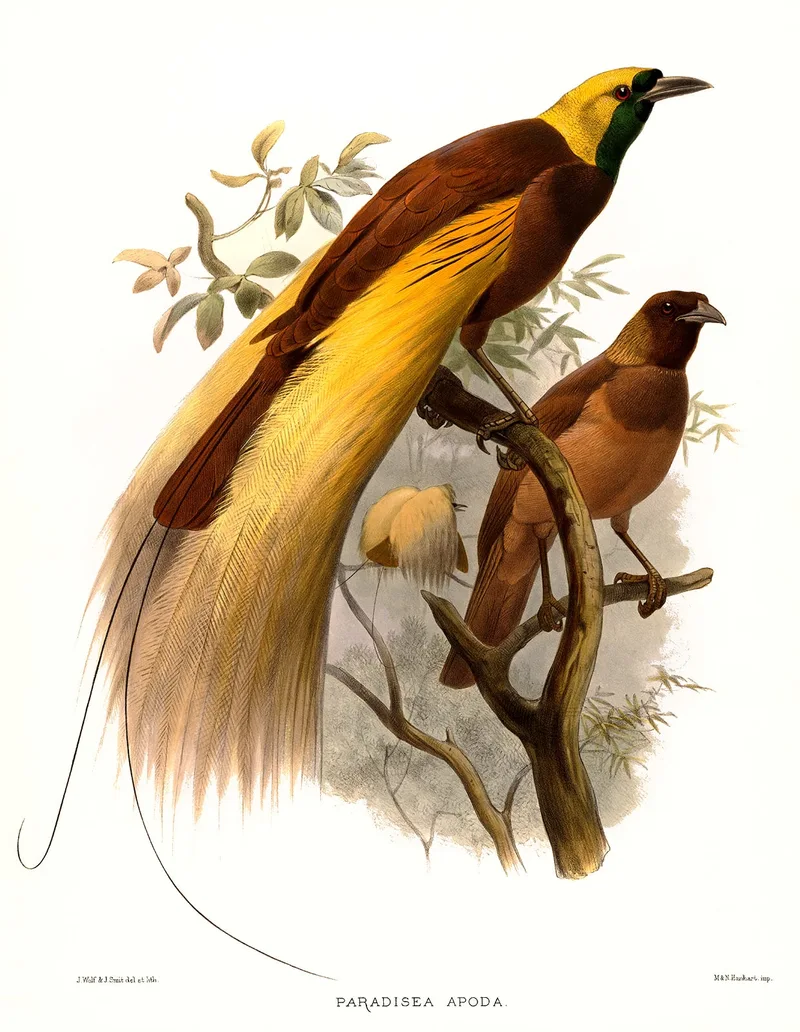
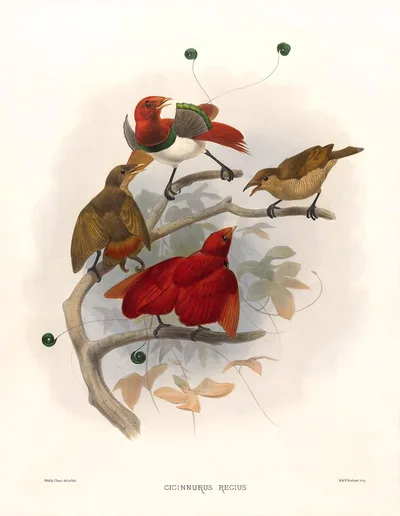
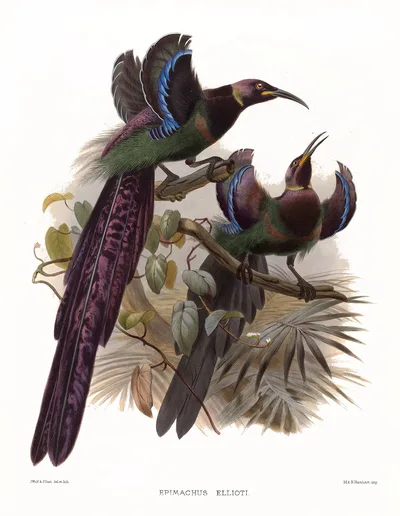
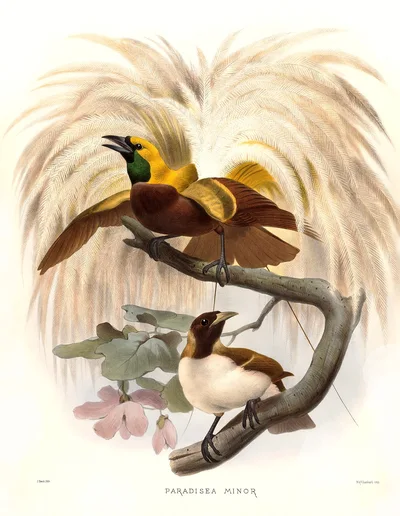
The breast shield of a Superb Bird of Paradise is not a colour. It is a metallic green that flashes and goes black as the bird turns, and in 1873 no printing ink could do it. Daniel Giraud Elliot's answer was the oldest one: every plate was printed as a lithograph in black, and then coloured by hand, feather by feather, by the colourist J.D. White.
A Monograph of the Paradiseidae, or Birds of Paradise is the result: 36 hand-coloured plates, published in London in 1873, of the birds of paradise, riflebirds, manucodes, bowerbirds and catbirds of New Guinea and eastern Australia. It is the fourth of Elliot's six monographs and, with the pheasants, the one most often called his best. Who was Daniel Giraud Elliot?
Wolf, Smit and White: three hands on every plate
Elliot (1835 to 1915) did not draw this book. Joseph Wolf (1820 to 1899), the German animal painter who had settled in England in 1848, made the drawings. Joseph Smit (1836 to 1929), a Dutch illustrator from Lisse who had come to England in 1866 and become Wolf's friend, transferred them to the lithographic stone. White coloured the printed sheets. Elliot thanked all three in his preface.
The drawings of Mr. Wolf will, I am sure, receive the admiration of those who see them; for, like all that artist's productions, they cannot be surpassed, if equalled, at the present time. Mr. J. Smit has lithographed the drawings with his usual conscientious fidelity, and in his share of the work has left me nothing to desire. In the colouring of the plates Mr. J.D. White has faithfully followed the originals; and in the difficult portions where it was necessary to produce the metallic hues, he has been very successful.
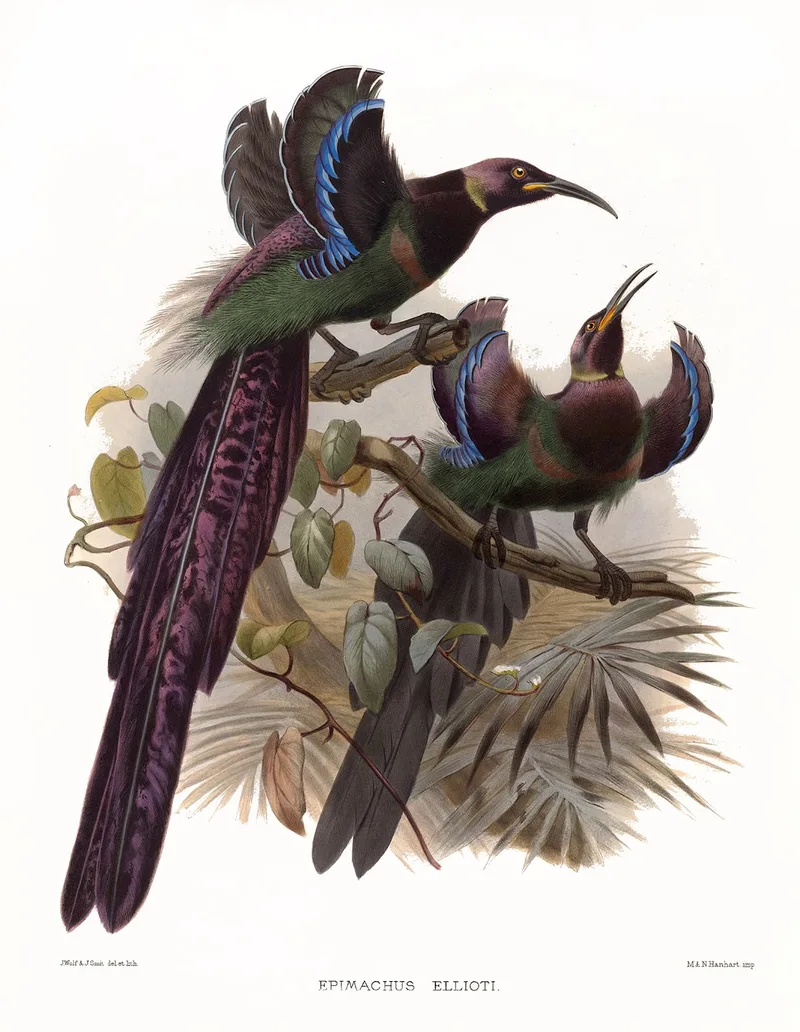
Peter Dance, in The Art of Natural History, put it more briefly: the plates, 'almost as magnificent as the birds they portray, were the fruits of Elliot's considerable wealth, Wolf's great artistry and both men's profound knowledge and love of birds.'
Dedicated to Alfred Russel Wallace
Few Europeans had seen a living bird of paradise in 1873. The skins reached Europe through the trade, often without feet, which is how the birds got their name and their reputation for living in the air. The man who had watched them display in the forests of the Aru Islands and New Guinea was Alfred Russel Wallace, and Elliot dedicated the book to him, acknowledging his debt 'for nearly all our information regarding the habits of many species'.
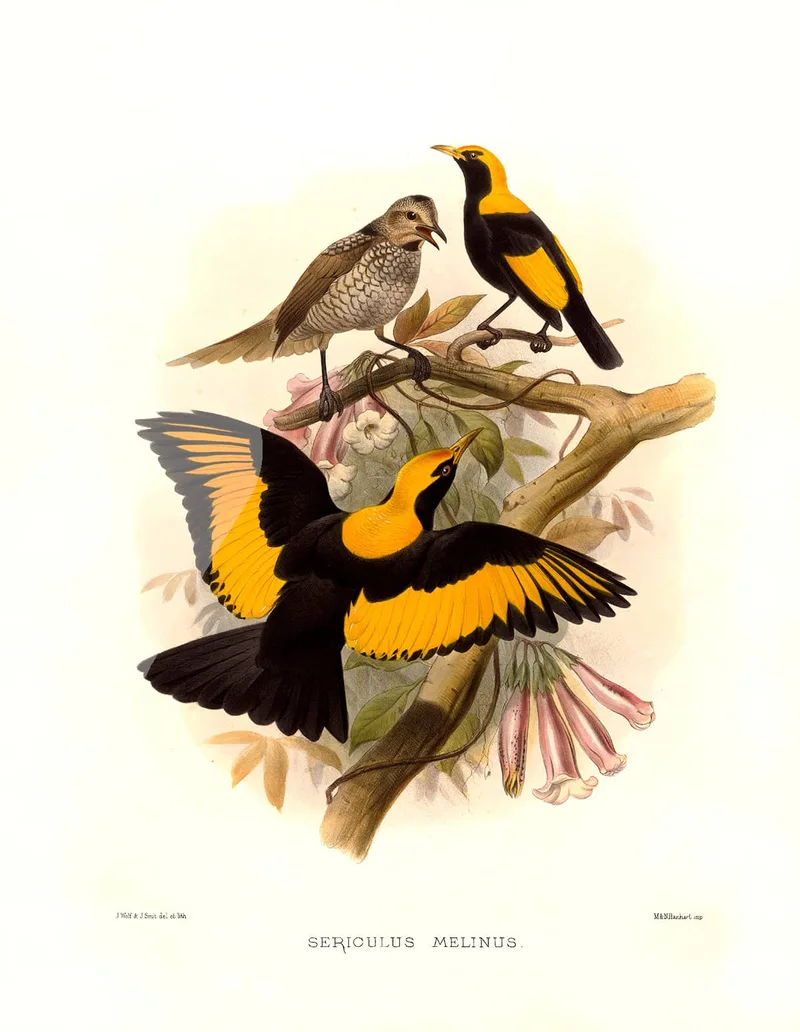
That is why the plates show the birds as Wallace described them: in the tree, in display, with the plumes spread, rather than as the flat skins the artists had on the table.
The plates today
Our facsimiles are made from the copy in the library of the Teylers Museum in Haarlem, each plate photographed at the size of the original sheet, retouched by hand and proofed against the original before Re-Art Special Art Productions prints it on acid-free etching paper. How a facsimile is made. All 36 plates are on Birds of Paradise, by plate number, and together as a complete set in a Solander box.
Four plates to start with
Questions
How many plates are in Elliot's Birds of Paradise?
36 hand-coloured lithographs, published in London in 1873, of birds of paradise, riflebirds, manucodes, bowerbirds and catbirds.
Who drew the plates of Elliot's Birds of Paradise?
Joseph Wolf made the drawings, Joseph Smit put them on stone and J.D. White coloured the printed sheets by hand. Elliot wrote the text and paid for the book.
Why is the book dedicated to Alfred Russel Wallace?
Wallace had watched the birds alive in New Guinea and the Aru Islands; Elliot wrote that he owed him 'nearly all our information regarding the habits of many species'.