
A young man who turned draughtsman
In 1861 a New Yorker of twenty-six published the first part of a monograph on the pittas, the jewel-coloured ant thrushes of Asia and Africa, and drew 24 of its 31 plates himself. He did it, he wrote in the preface, because he 'felt compelled to turn draughtsman'. It was the only time Daniel Giraud Elliot drew his own book. For the five that followed he hired the best bird artists in Europe and paid for the largest formats and the costliest colouring of his day.
Elliot was a zoologist and ornithologist, not an artist, and he knew it. Although he could draw, he preferred to commission others to bring his ideas to life: Audubon's ambition, carried on with other people's hands.
Travels, wealth and two museums
As a young man Elliot travelled through Europe and Asia in pursuit of new birds and animals, often staying away from home for years at a time, studying and collecting specimens. He was born into wealth, and he used it. At a time when many publishers were choosing smaller pages and cheaper colour techniques, Elliot kept to large sheets, lithography and colouring by hand.
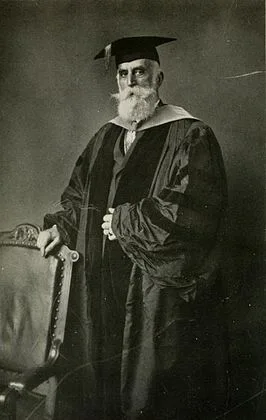
He was one of the founders of the American Museum of Natural History in New York, and later moved to Chicago to become curator of zoology at the Field Museum of Natural History. He died in New York of pneumonia at the age of 80. He is credited with reviving the lavish colour-plate book on nature at the moment it seemed to be dying out.
The influence of Audubon
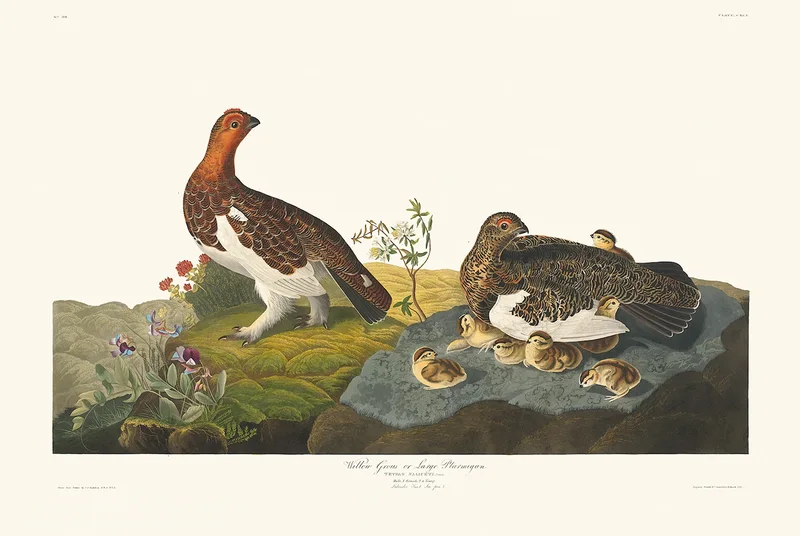
Elliot's work is often compared with that of John James Audubon, and he invited the comparison himself. In the preface to one of his books on American birds he explained why he had taken on a life-size work at all.
Since the time of Wilson and Audubon, no work has been published upon American Ornithology, containing life-size reproductions of the various species that have been discovered since the labors of those great men were finished. It was, therefore, with the desire to contribute, as might be in my power, towards the elucidation of the comparatively little known species of the Birds of North America, their habits and economy, as well as to render their forms familiar so far as life-size representations of them might serve to do, that I undertook the present publication.
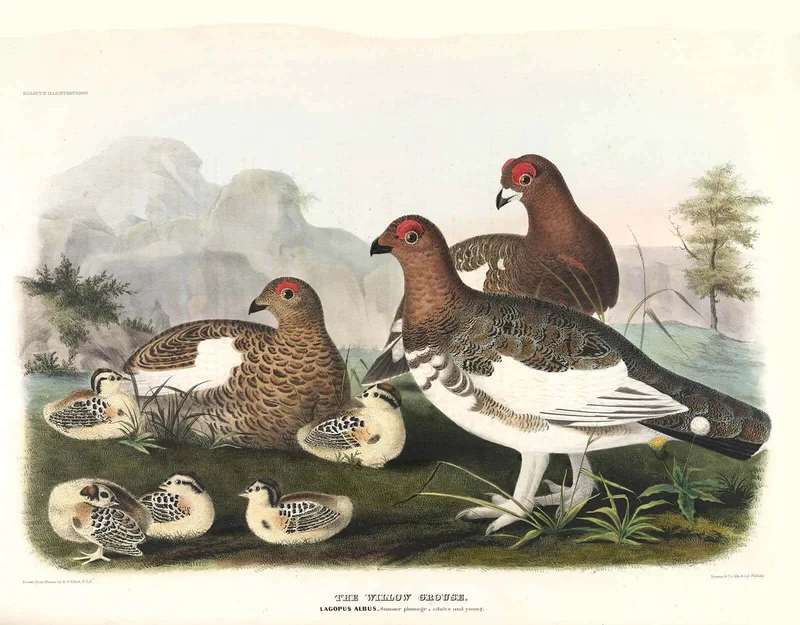
Put a grouse by each man side by side and the kinship is plain: the same bird at its real size, in its own landscape, with its young. More about Audubon.
The artists: Wolf, Smit, Keulemans and Morgan
Two artists worked for Elliot again and again, and both had worked for John Gould before him. Joseph Wolf (1820 to 1899) was a German painter of animals who moved to England in 1848 and became the illustrator that explorers and naturalists wanted first, though he would only work freelance. Joseph Smit (1836 to 1929) was born in Lisse in Holland, received his first commission from the ornithologist Hermann Schlegel, and was invited to England in 1866, where he became Wolf's friend and put many of Wolf's drawings on stone.
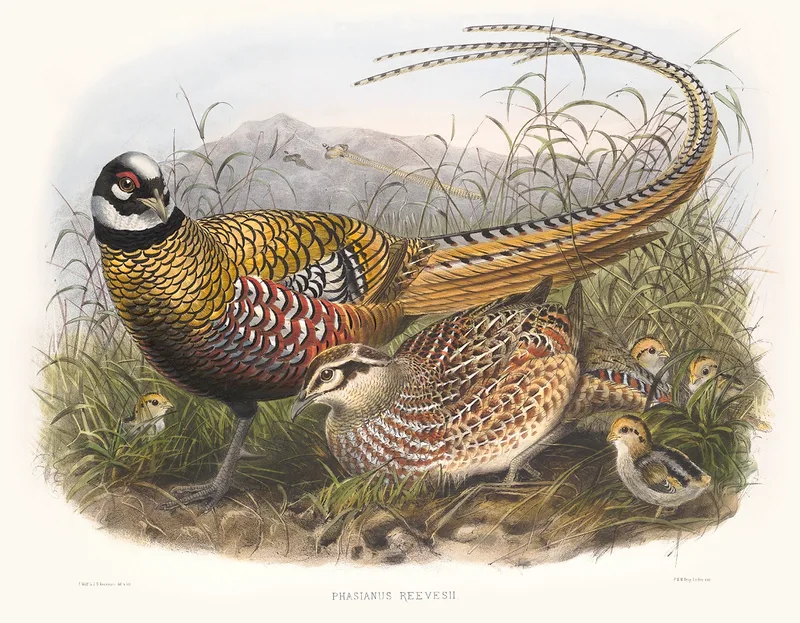
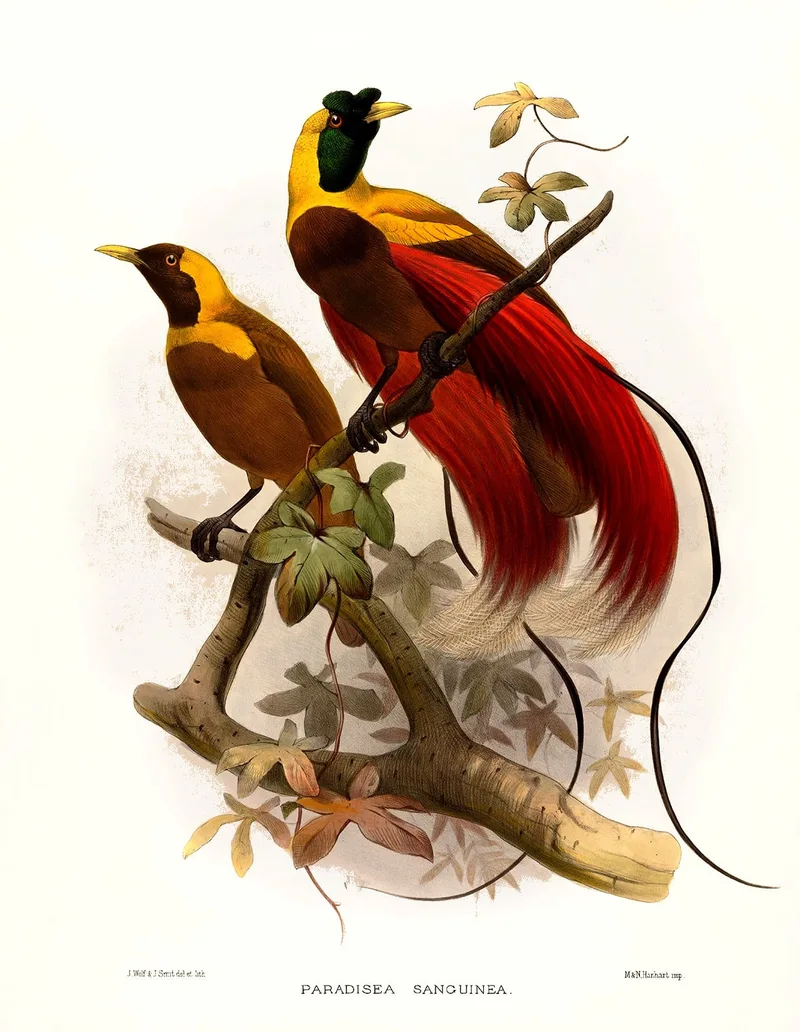
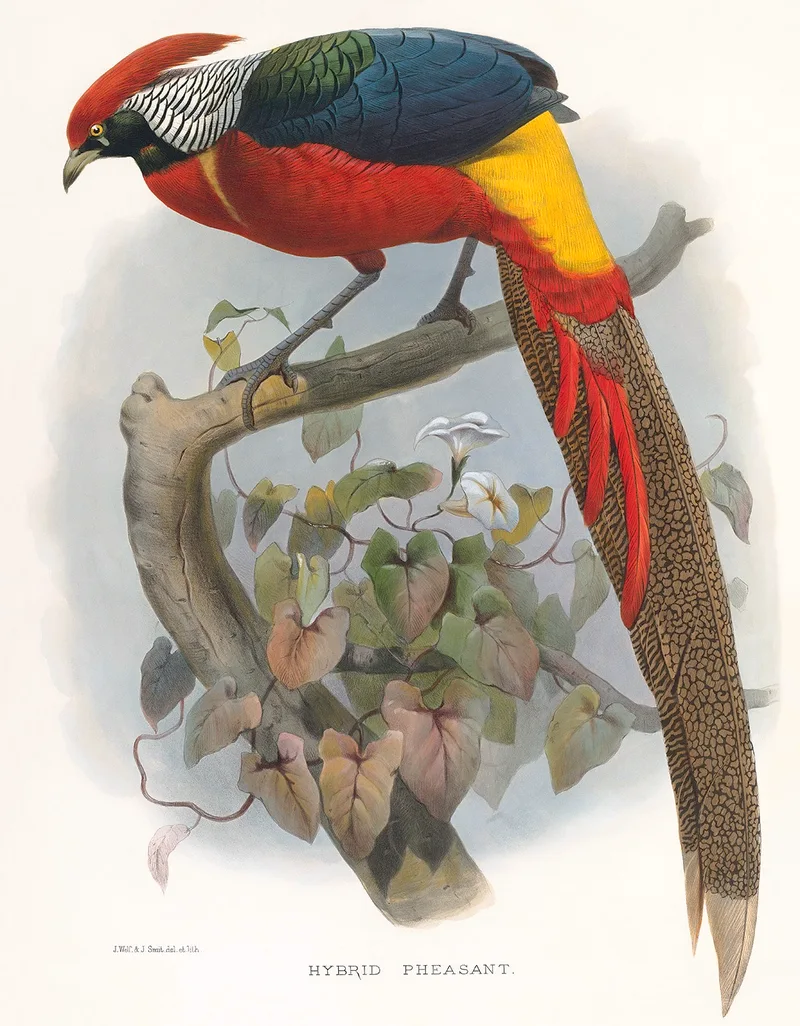
Wolf drew the grouse (1864 to 1865), with two plates of eggs by William S. Morgan, about whom little is known; Wolf and Smit shared the pheasants (1870 to 1872); Wolf drew the birds of paradise (1873) for Smit to lithograph; and the two of them drew the cats (1878 to 1883).
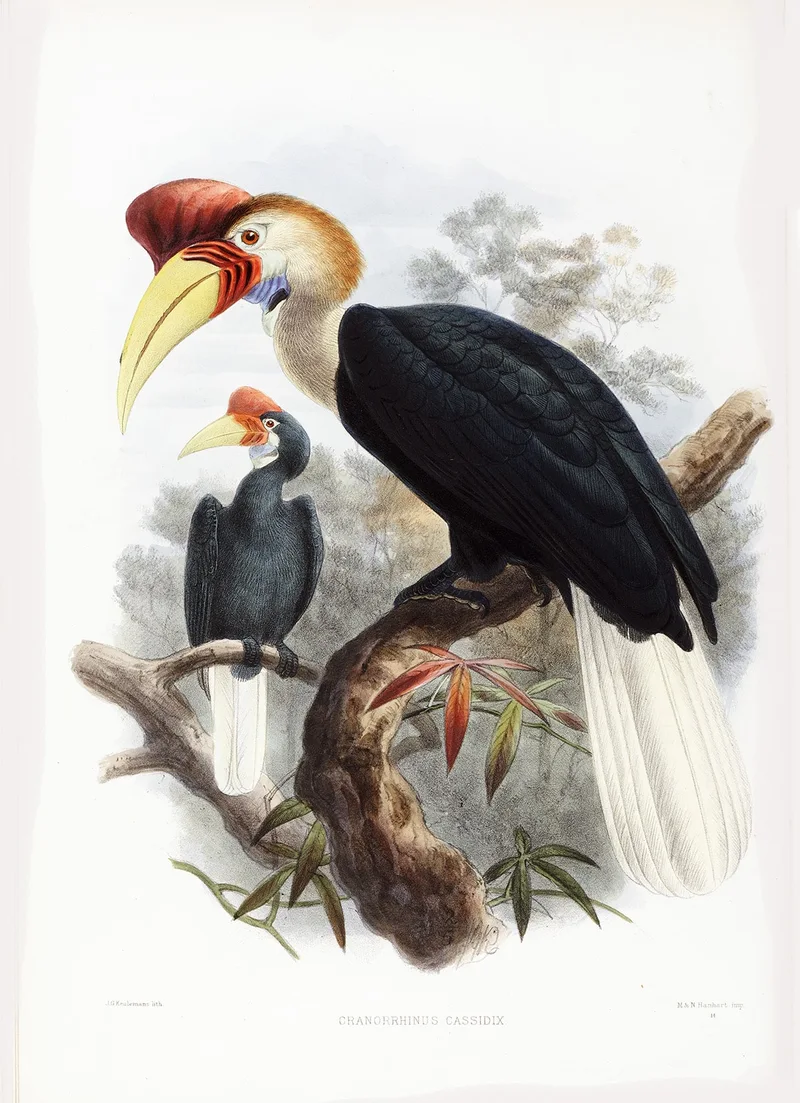
The third artist was Johannes Gerardus Keulemans (1842 to 1912), known in England as John Gerrard Keulemans. Born in Rotterdam, he lived and worked in England for most of his life and drew for many of the best-known bird books of the century. For Elliot he put Wolf's pheasants on stone and drew nearly all of the hornbills (1877 to 1882).
The six monographs, 1861 to 1883
Elliot's commissions are distinctive in colour and size, and they nearly always show the bird in its habitat. The six works, with the number of plates in each:
- A Monograph of the Pittidae, or Family of Ant Thrushes (1861 to 1863): 31 plates, 24 of them drawn by Elliot. What is Elliot's Family of the Ant Thrushes?
- A Monograph of the Tetraoninae, or Family of the Grouse (1864 to 1865): 27 plates by Wolf and Morgan. What is Elliot's Family of the Grouse?
- A Monograph of the Phasianidae, or Family of the Pheasants (1870 to 1872): two volumes, 81 plates, 79 of them hand-coloured, by Wolf, Smit and Keulemans. What is Elliot's Family of the Pheasants?
- A Monograph of the Paradiseidae, or Birds of Paradise (1873): 36 plates by Wolf and Smit, coloured by J.D. White. What is Elliot's Birds of Paradise?
- A Monograph of the Bucerotidae, or Family of the Hornbills (1877 to 1882): 60 plates, 57 of them hand-coloured after Keulemans. What is Elliot's Family of the Hornbills?
- A Monograph of the Felidae, or Family of the Cats (1878 to 1883): 43 plates by Wolf and Smit. Making the complete set
His last large work, A Review of the Primates (1913), is a text and not among our prints.
Elliot's plates as facsimiles
The Teylers Museum in Haarlem holds Elliot's monographs, and our facsimiles of them are made from those copies: each plate photographed at the size it is printed, retouched by hand, proofed against the original and printed by Re-Art Special Art Productions in Almere on acid-free etching paper. How a facsimile is made. All 278 Elliot plates in our collection are on Daniel Giraud Elliot, by work and plate number; the hornbills and cats are also available as complete sets.
Four plates to start with
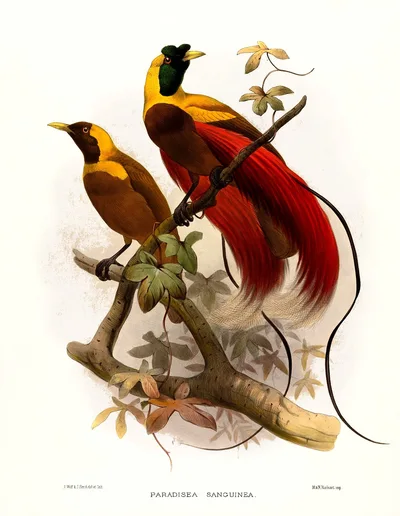
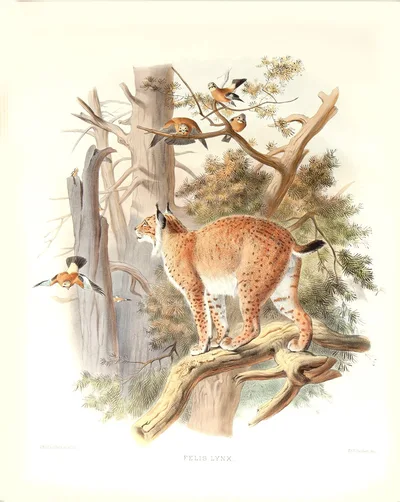
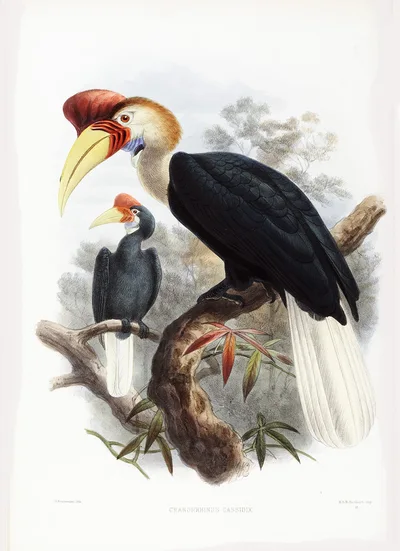
Questions
Who was Daniel Giraud Elliot?
An American zoologist and ornithologist (1835 to 1915) from New York who published six large monographs of birds and cats between 1861 and 1883, drawn by Joseph Wolf, Joseph Smit and J.G. Keulemans. He helped found the American Museum of Natural History and was curator of zoology at the Field Museum in Chicago.
Did Elliot draw his own plates?
Only for his first book, the ant thrushes of 1861 to 1863, for which he drew 24 of the 31 plates. For the other five he commissioned Wolf, Smit, Keulemans and Morgan.
Which Elliot plates does Heritage Prints offer?
Plates from all six monographs, 278 in all, made from the copies in the Teylers Museum in Haarlem: ant thrushes, grouse, pheasants, birds of paradise, hornbills and cats.