
Birds of paradise prints
Birds of paradise from Daniel Giraud Elliot’s monograph of 1873 and John Gould’s Birds of New Guinea (1875–1888). Every print is a facsimile giclée at the size of the original sheet, limited to 250.
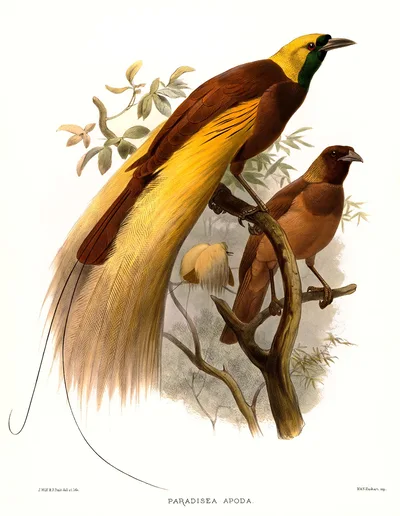
Greater Bird of Paradise
$225
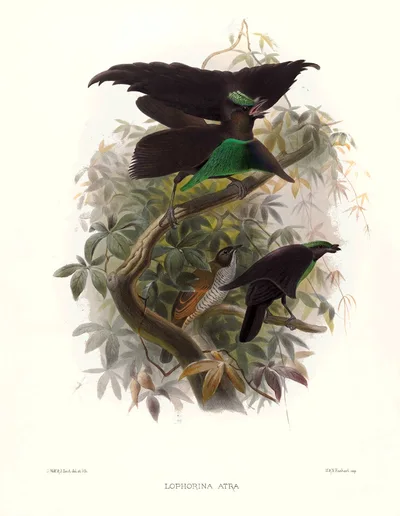
Superb Bird of Paradise
$225
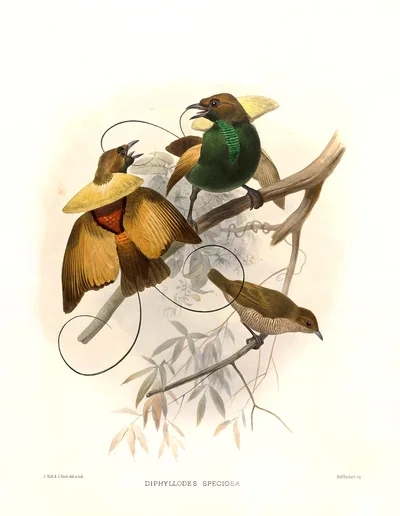
Magnificent Bird of Paradise
$225
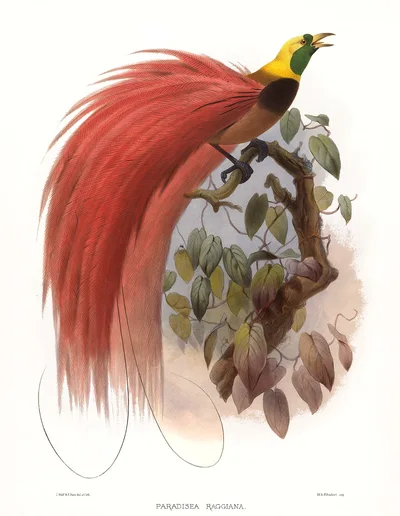
Marquis Raggi’s Bird of Paradise
$225
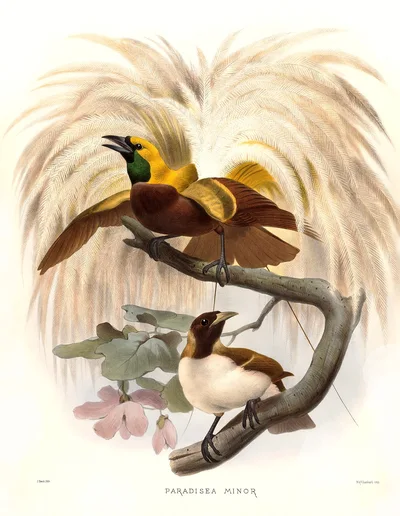
Lesser Bird of Paradise
$225
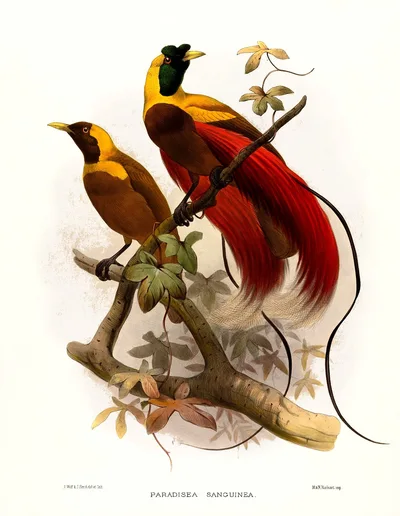
Red Bird of Paradise
$225
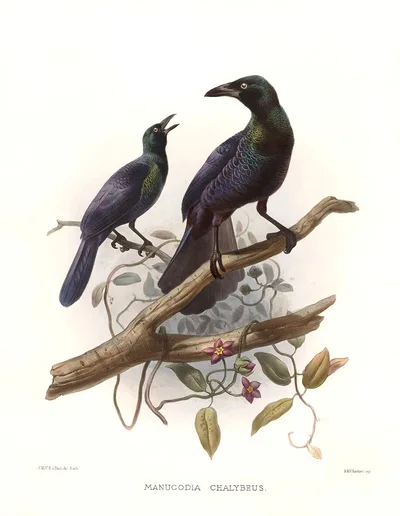
Green Manucode
$225
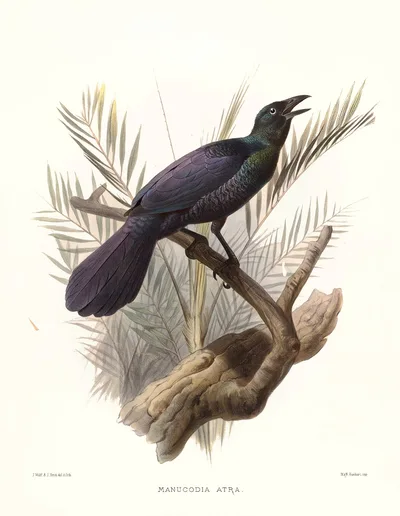
Glossy-mantled Manucode
$225
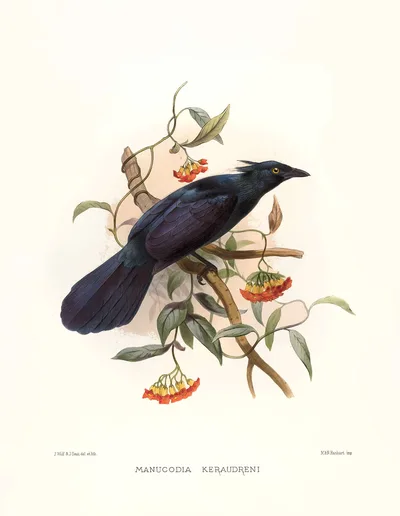
Keraudrens Manucode
$225
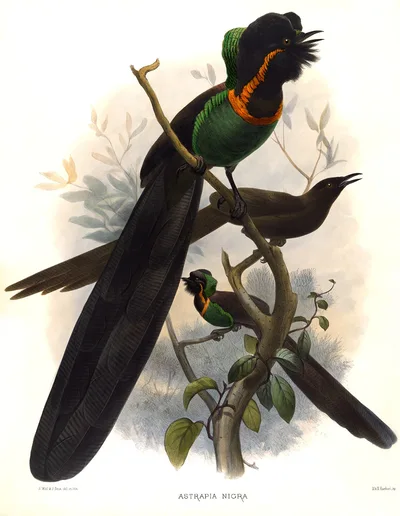
Arfak Astrapia
$225
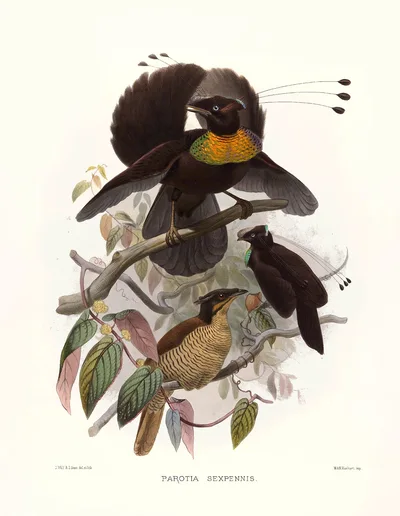
Six-plumed Bird of Paradise
$225
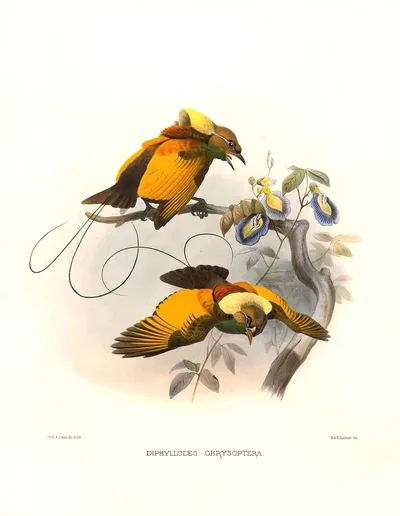
Golden-winged Bird of Paradise
$225
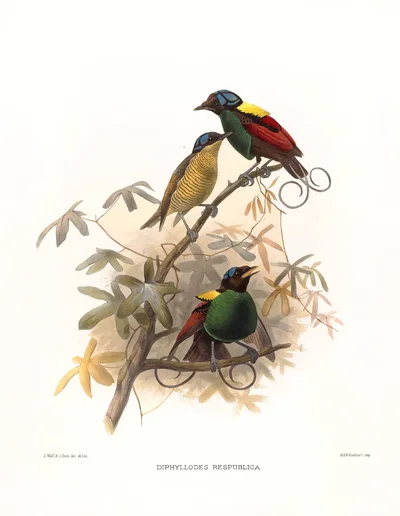
Wilson’s Bird of Paradise
$225
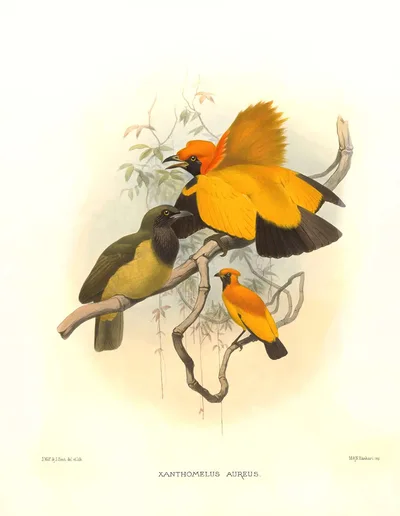
Golden Bird of Paradise
$225
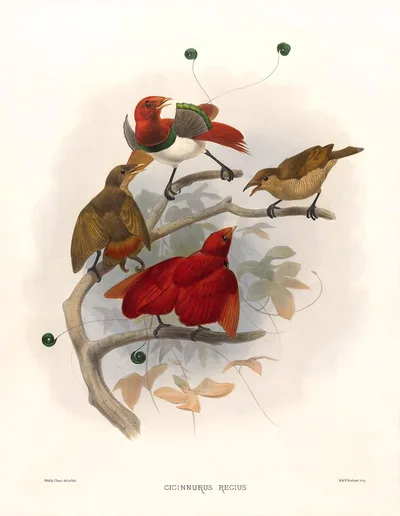
King Bird of Paradise
$225
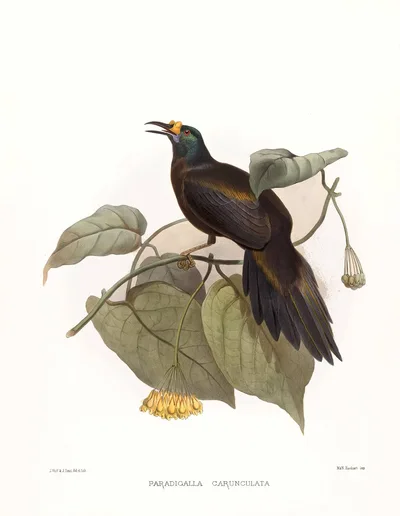
Long tailed Paradigalla
$225
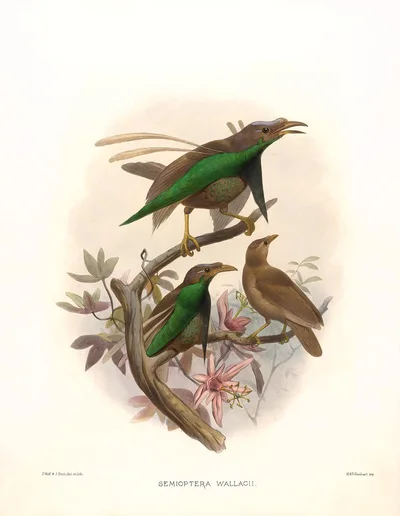
Wallaces Standardwing
$225
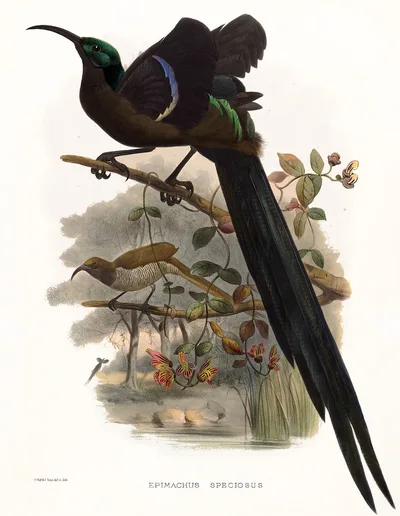
Great Sickle-bill bird
$225
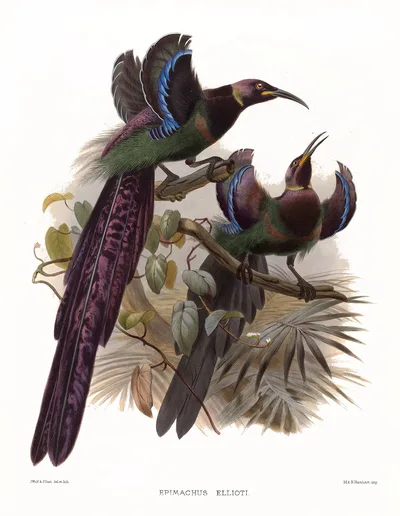
Elliot’s Sicklebill
$225
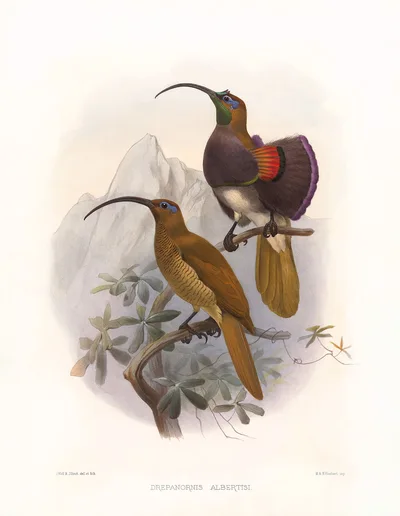
D’Albertis Bird of Paradise
$225
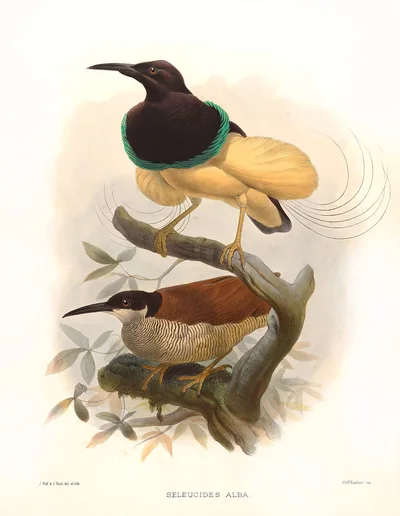
Twelve-wire Paradise Bird
$225
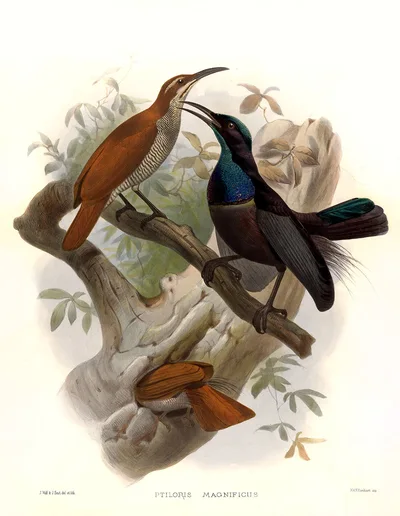
Magnificent Riflebird
$225
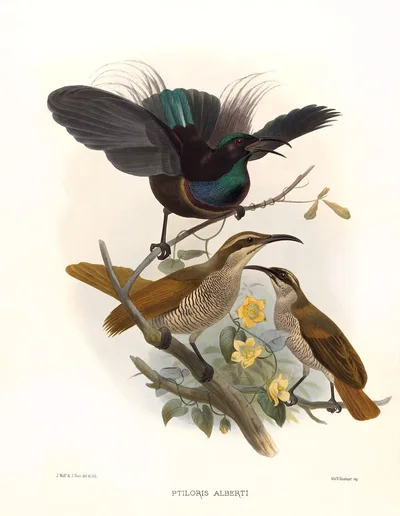
Prince Albert’s Rifle Bird
$225
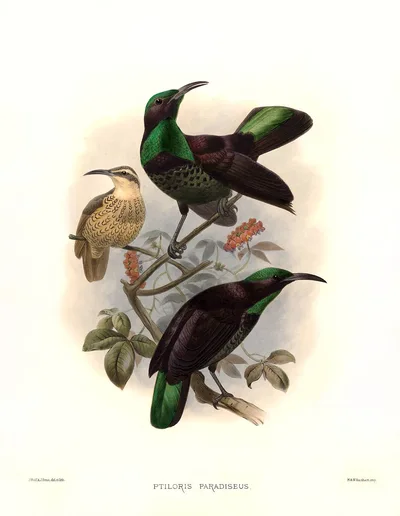
Paradise Riflebird
$225
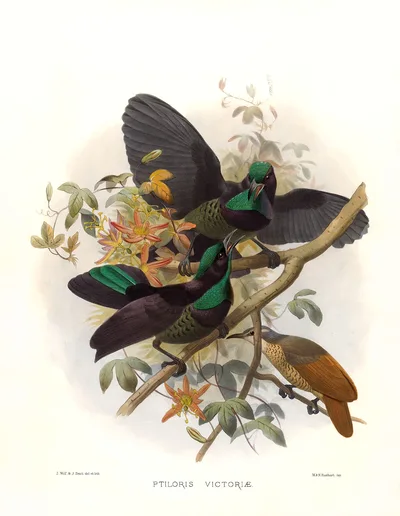
Victorias Riflebird
$225
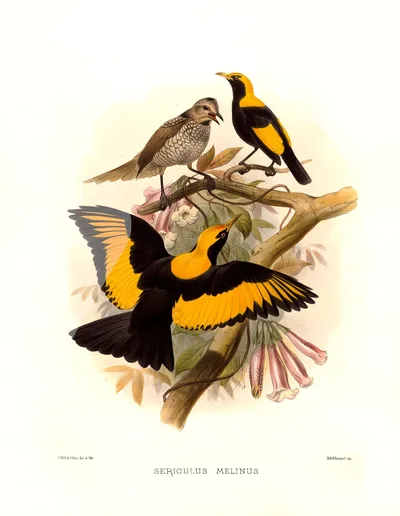
Regent Bird
$225
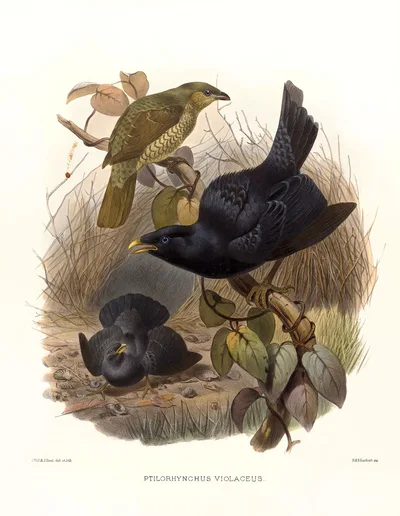
Satin Bowerbird
$225
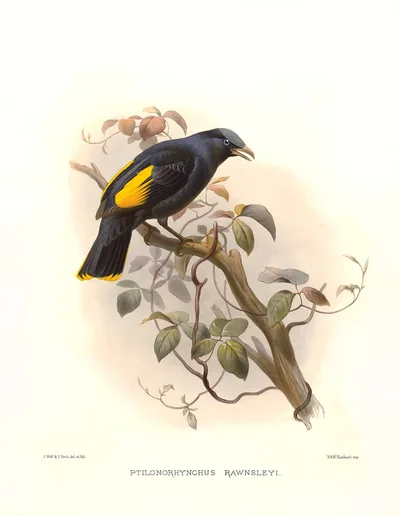
Rawnsley’s Satin Bird
$225
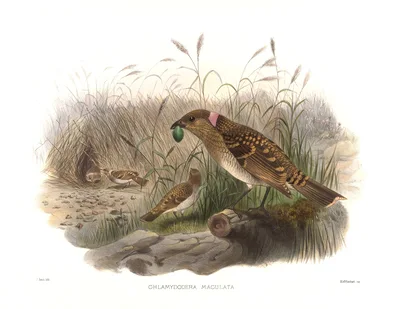
Spotted Bowerbird
$225
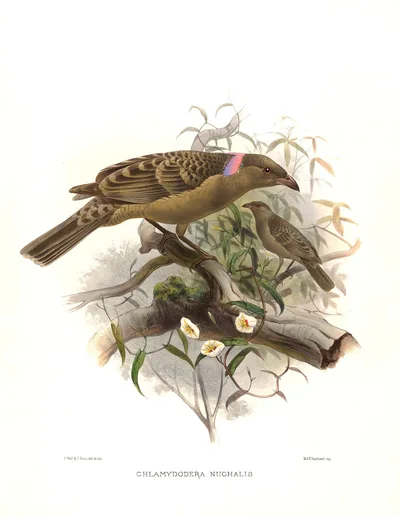
Great Grey Bowerbird
$225
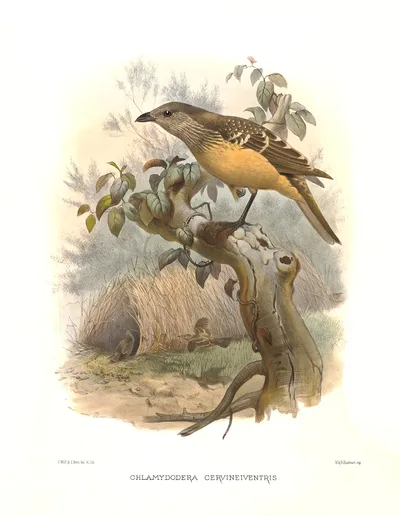
Buff-breasted Bower-bird
$225
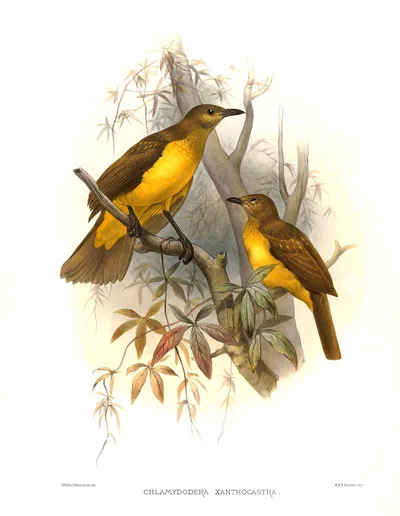
Yellow-breasted Bower-bird
$225
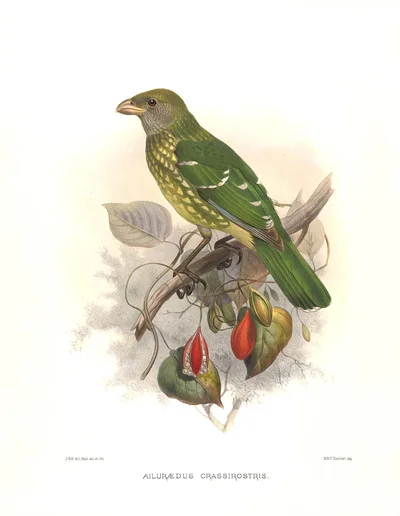
Green Catbird
$225
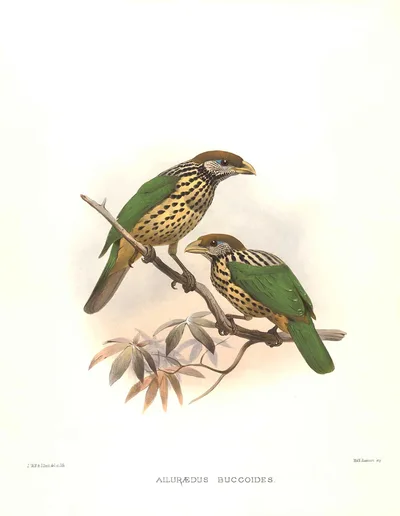
White-eared Catbird
$225
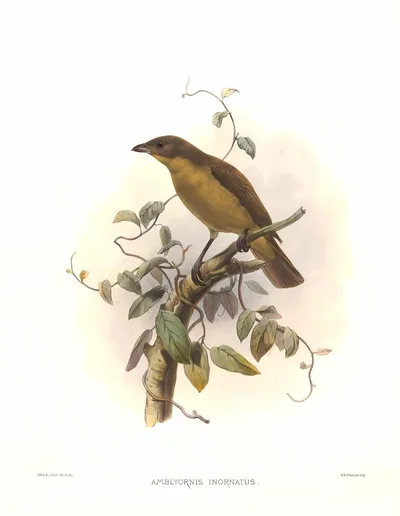
Vogelkop Bowerbird
$225
About birds of paradise prints
Few Europeans had seen a living bird of paradise when Daniel Giraud Elliot published his monograph. Joseph Wolf drew the plates, Joseph Smit put them on stone, and J. D. White coloured them by hand, rendering the metallic sheen of the plumage. Elliot dedicated the book to Alfred Russel Wallace, who had watched the birds display in the wild, and covered the riflebirds, manucodes, bowerbirds and catbirds too, as well as Elliot’s Sicklebill, named after him. What is Elliot’s Birds of Paradise? tells how the book was made.
John Gould set his birds in animated compositions with full backgrounds. He completed twelve of the 25 parts of The Birds of New Guinea before his death, and Richard Bowdler Sharpe finished the work. One bird appears three times on this page: the six-plumed bird of paradise, in Elliot’s plate 9, in Gould’s plate 25, and as Le Sifilet, painted by Jacques Barraband for François Levaillant between 1801 and 1806.