
The same picture, two different objects
The difference between a giclée print and a poster is in the ink, the paper and the care taken, not in the picture. A poster is printed with ordinary inks on thin, acidic paper, in large numbers and at speed; within years the colours fade and the paper turns yellow. A giclée is printed with archival pigment inks on heavy acid-free paper, one sheet at a time, and under good conditions it lasts more than 100 years. The word giclée is used loosely, and some posters are sold under it, so it helps to know what to look for. This guide takes the two apart, explains what a facsimile adds, and ends with five things you can check on any print, including ours.
What a poster is
A poster is a sheet of large-format paper printed with standard inks, usually on an offset press, in a run of thousands. The inks are dyes or cheap pigments that fade in daylight, and the paper is thin and acidic, which is why old posters go yellow and brittle at the edges. Because the process is simple and the run is long, a poster is cheap. It is not made to last, and it is rarely compared with the original it shows.
What a giclée is
A giclée is a print made by spraying very fine drops of pigment ink onto fine art paper. The name comes from the French gicler, to spray. The printer lays the ink down one sheet at a time, and the quality depends on three things: the inks, the paper and the file being printed.
For our prints all three are fixed. The inks are water-based archival pigment inks of the highest quality, laid down on Epson printers at 2,880 drops per inch. The paper is acid-free white etching paper of 270 grams per square metre, a heavy paper with a soft, slightly textured surface. A print made this way, hung out of direct sunlight, away from damp and framed with acid-free materials, lasts more than 100 years. How long will my print last? in our FAQ says the same in two lines.
What a facsimile adds
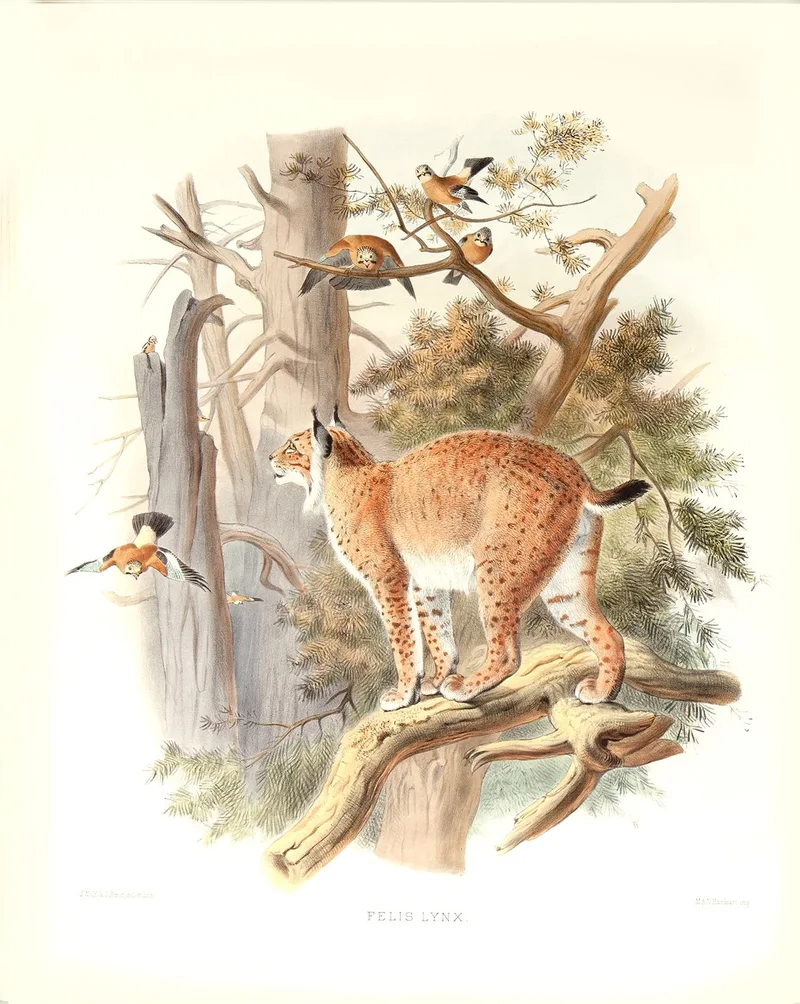
Giclée describes the technique. It says nothing about the source: a giclée can be made from a low-resolution file of a picture nobody has compared with the original. A facsimile is a copy made to match an original as closely as possible in size, colour and tone, and that is what every Heritage print is: a giclée, made as a facsimile of an original plate from the eighteenth or nineteenth century.
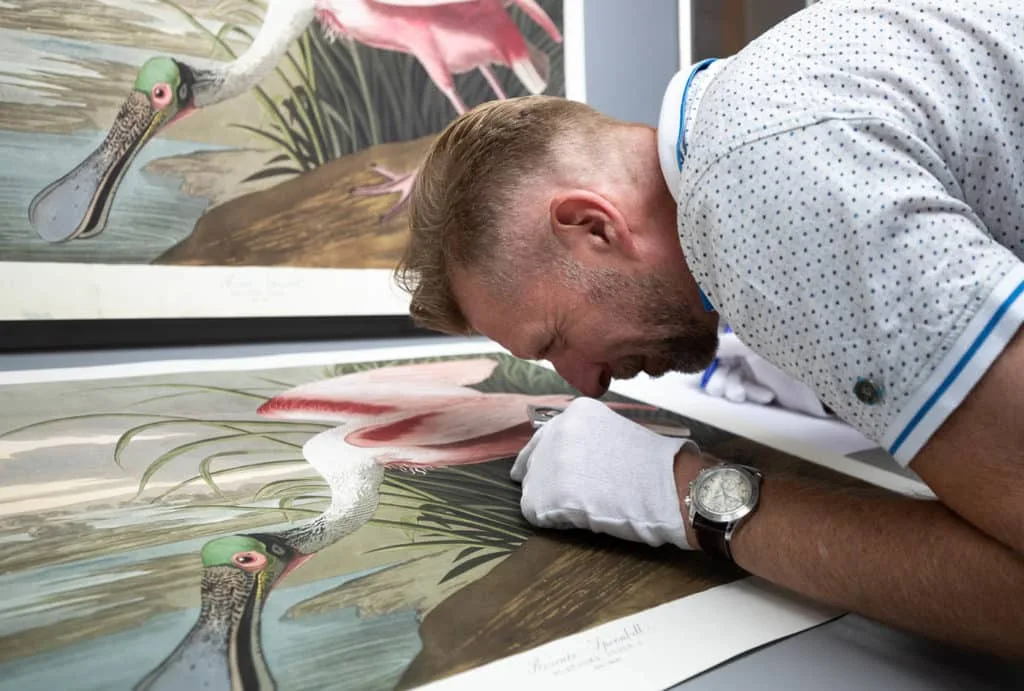
It starts with the original itself, in a museum such as the Teylers Museum in Haarlem or in a private collection. Re-Art Special Art Productions in Almere, who have made our prints since 2008, photograph each plate at 308 megapixels at the size it will be printed, retouch it by hand only where two centuries have left a spot or a crease, and proof it against the original under daylight until the colours match. Only then is the edition printed, at the size of the original sheet, with its margins and its printed lettering. Glazed and framed, the result is virtually indistinguishable from the original. How a facsimile is made shows the four steps.
A facsimile is also a limited edition. Each plate is printed in an edition of 250; every print is numbered in pencil, embossed with our blind stamp and comes with a certificate of authenticity. The prints are not signed.
Five things you can check
You do not need a laboratory to tell a poster from a giclée, or a giclée from a facsimile. Five checks, in the order you would make them with the print in your hands.
- The paper. A poster is thin, smooth and often glossy; a giclée on etching paper is heavy (ours is 270 g/m²), matt and slightly textured. Ask whether the paper is acid-free; a seller who knows will tell you the weight.
- The dots. Under a magnifying glass a poster shows the regular rosette of halftone dots of an offset press. A giclée shows a fine, irregular spray of ink with no pattern, and at 2,880 drops per inch you will struggle to see the dots at all.
- The edition marks. A limited edition carries a number in pencil in the margin and usually an embossed stamp, and comes with a certificate that names the plate and the edition. A poster has none of these; an open-edition print may have a printed number but no stamp or certificate.
- The size. A facsimile is printed at the size of the original sheet, with the margins and the printed title, plate number and engraver’s line. A poster or an open-edition print is usually cropped or scaled to a standard frame size. Compare the size on the product page with the size of the original.
- The source. Ask what the print was made from. A facsimile is photographed from an original in a museum or a collection and proofed against it; if the seller cannot say which original, it is a reproduction of a picture, not of a plate.
For Audubon in particular, Original, facsimile or reproduction? sets our facsimiles beside the original plates, museum editions and open editions, with the size, edition and price range of each. How is a giclée different from a poster? in the FAQ gives the short answer.
Two facsimiles to compare
Questions
Is a giclée print the same as a fine art print?
Usually, yes: fine art print and giclée both mean a print made with pigment inks on fine art paper. Neither word says what the print was made from, which is where a facsimile differs.
How long does a giclée print last?
Ours last more than 100 years under good conditions: out of direct sunlight, away from damp, and framed with acid-free materials.
Are giclée prints signed?
Ours are not. Each print is numbered in pencil, embossed with our blind stamp and comes with a certificate of authenticity, in an edition of 250 per plate.