
Thirty-four years of parts
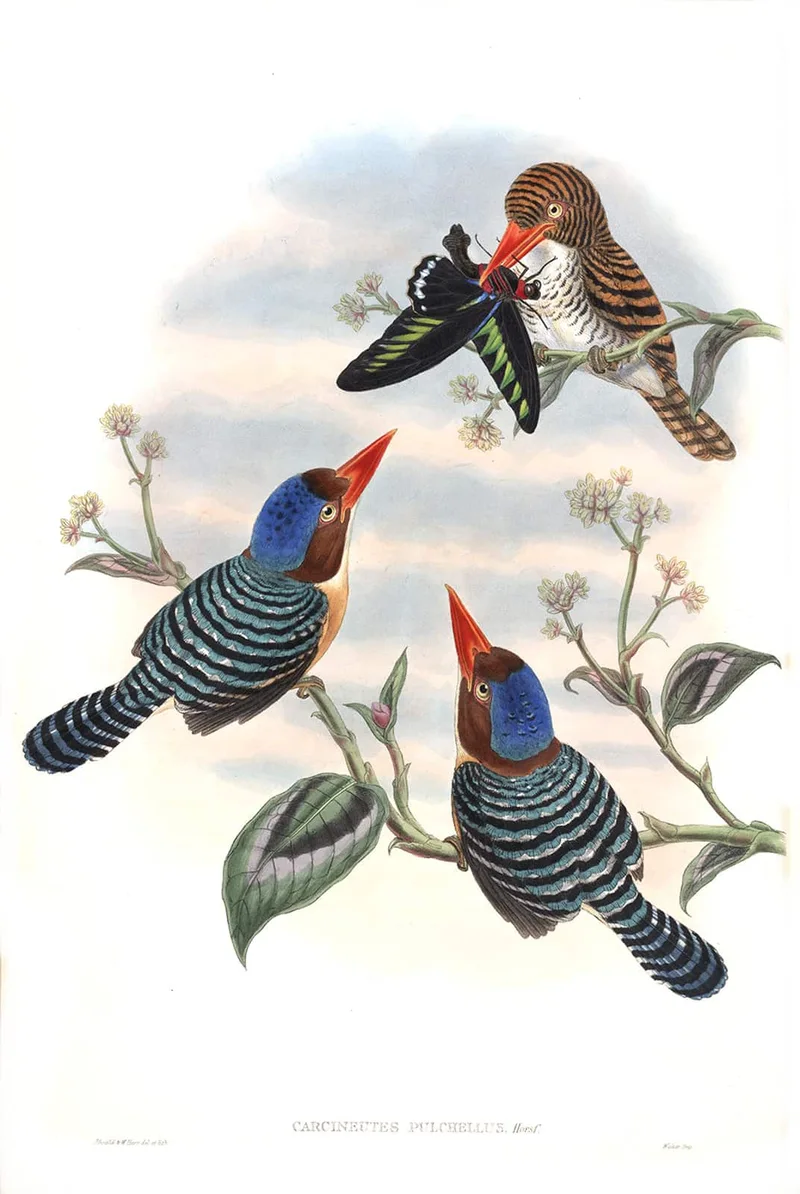
The first part of The Birds of Asia reached its subscribers in 1849, when John Gould was 45. The last appeared in 1883, two years after his death, under the hand of his assistant Richard Bowdler Sharpe. Thirty-five parts over thirty-four years: no other Gould book took so long, and none kept its quality so steadily from first plate to last.
The plates were not issued in order. Each part held whatever birds Gould had skins and drawings for, and only when the work was complete were the 530 plates sorted into seven volumes, following the classification Gould had used all his life.
The showiest birds Gould had handled
Asia gave Gould trogons, kingfishers, sunbirds, broadbills, pittas, pheasants, parrots and woodpeckers: the most colourful birds he had worked on, from the largest region he had tried to cover. No one had made so complete a picture of the birds of Asia before.
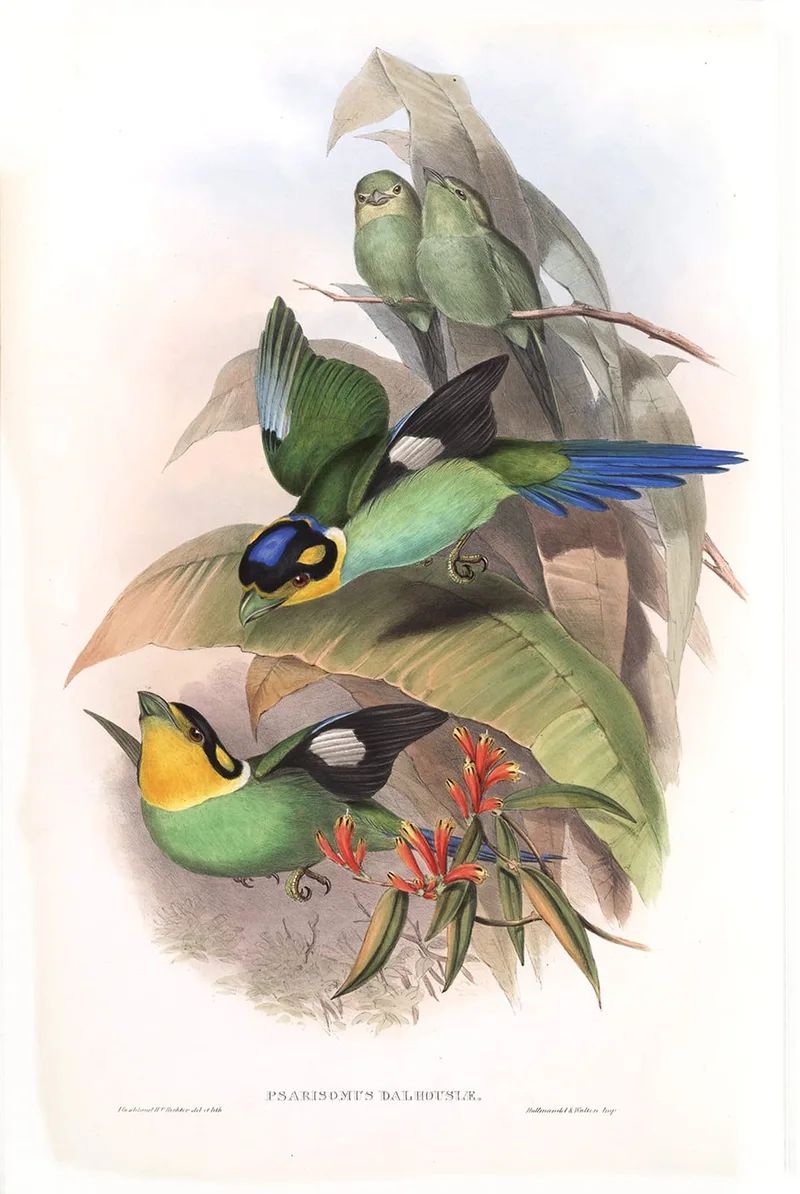
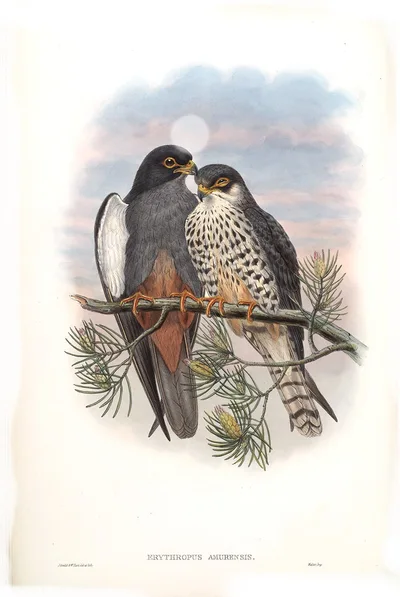
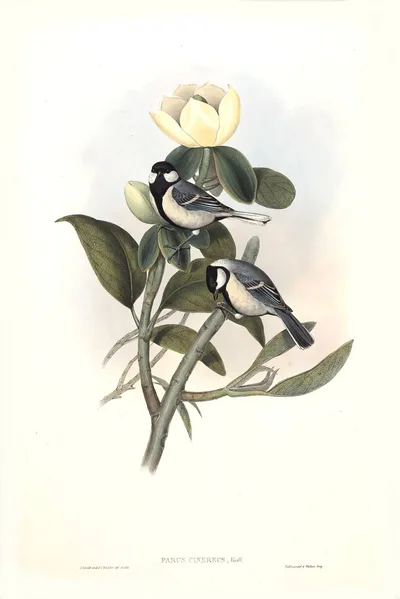
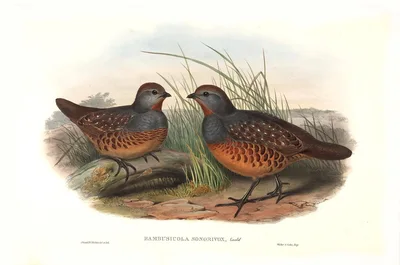
It also changed the look of his plates. In the early books the bird sits against a faint wash and little else. In The Birds of Asia the setting is drawn with as much care as the bird: the flowering branch, the bamboo, the insect it is about to take. Gould had become fascinated by the plants and wildlife of the region, and the lush backgrounds are the book's signature. Compare the plain ground of the Himalayan book of 1830.
The artists: Wolf, Richter and Hart
Gould sketched; others drew. For The Birds of Asia the team was Henry Constantine Richter (1821 to 1902), who had replaced Elizabeth Gould after her death in 1841 and stayed forty years, until Gould died; William Matthew Hart (1830 to 1908), who joined in 1851 and was chief artist and lithographer by 1870; and Joseph Wolf (1820 to 1899), the German-born painter who joined the team with this book. Richter and Hart also drew the plates on the stone. Wolf worked as a freelance and refused a place on the staff; he thought Gould shrewd and uncouth, and said he added too much colour, claiming that birds in the wild were brighter.
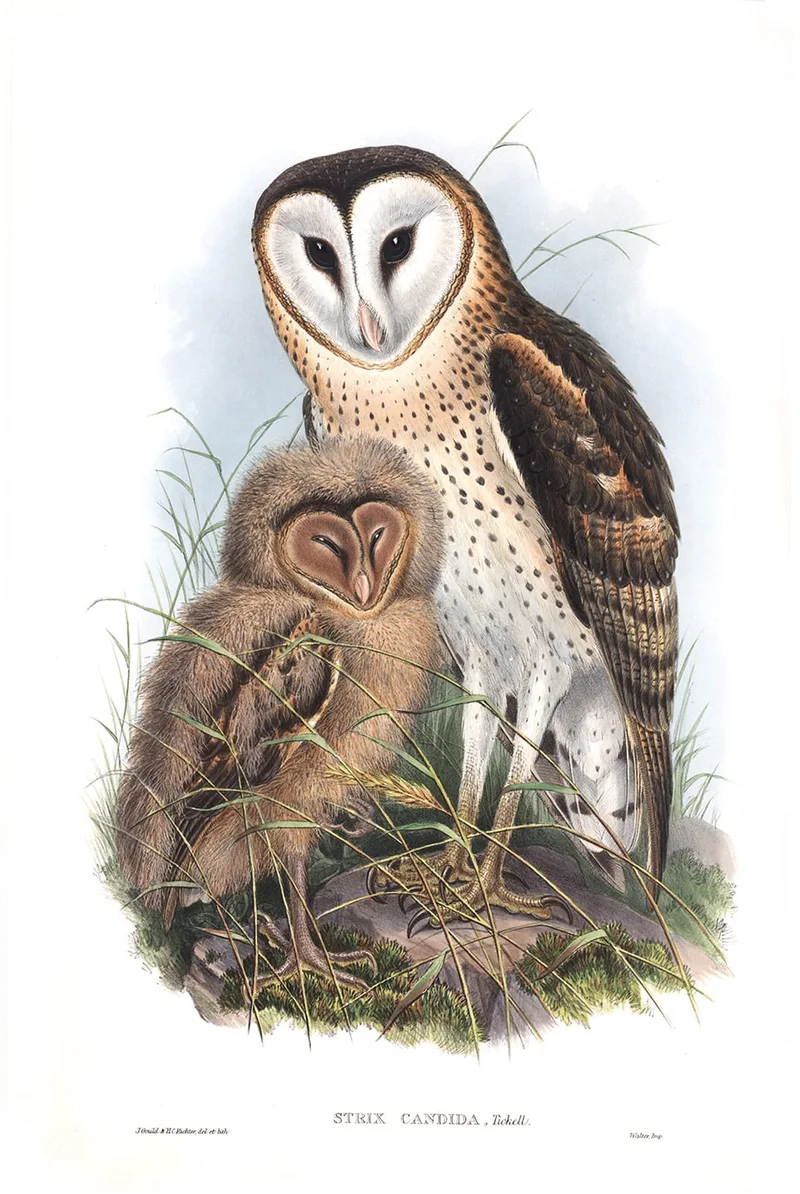
Every plate is a lithograph: drawn on limestone, printed in black and coloured by hand by a team of colourists working from the approved watercolour. How that works is explained in What is A Century of Birds from the Himalaya Mountains?
The seven volumes
For each volume we give the plates in the original and the prints we offer.
- Volume 1: 76 plates. Birds of prey and owls, swifts and swallows, bee-eaters, kingfishers, rollers, broadbills and trogons. We offer all 76.
- Volume 2: 75 plates. Minivets, paradise flycatchers, sunbirds, flowerpeckers, nuthatches, tits and orioles. We offer all 75.
- Volume 3: 78 plates. Thrushes and their relatives. We offer 10.
- Volume 4: 72 plates. Small songbirds: tesias, the Tailor-bird, bush chats, accentors and warblers. We offer 12.
- Volume 5: 83 plates. Mountain finches, buntings, sparrows and grosbeaks, blue pies and magpies. We offer 25.
- Volume 6: 75 plates. Parakeets, woodpeckers, piculets, barbets, cuckoos, pigeons, sandgrouse and partridges. We offer all 75.
- Volume 7: 71 plates. Pheasants, monals and snow partridges, quails and francolins, waders and waterbirds. We offer all 71.
Browse the plates by volume on The Birds of Asia.
The Teylers copy and our prints
The copy we work from is in the library of the Teylers Museum in Haarlem. Re-Art Special Art Productions in Almere photographed its plates one by one for us, at the size they are printed, retouched them only where time had left a mark, and proofed each against the original under daylight. Each print is the size of the original sheet, about 38 by 56 centimetres, on acid-free etching paper of 270 g/m² with archival inks, in an edition of 250, numbered in pencil, blind embossed and with a certificate of authenticity. Prints ship unframed, rolled in a tube; volume 1 is also available as a complete set.
For Gould's other books, see What books did John Gould publish?; for the man, Who was John Gould?
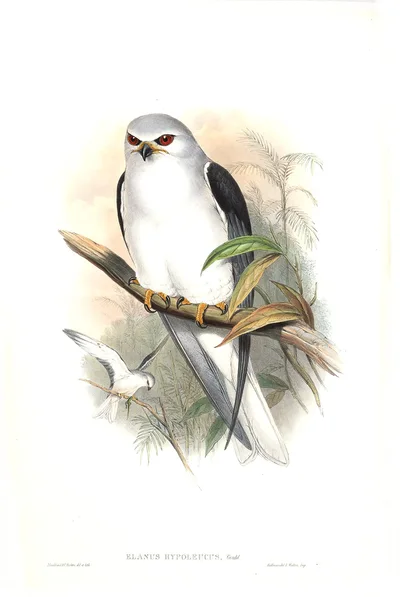
Four plates to start with
Questions
How long did The Birds of Asia take to publish?
Thirty-four years: 35 parts between 1849 and 1883. Gould died in 1881 and his assistant Richard Bowdler Sharpe finished the last parts.
How many plates are in The Birds of Asia?
530 hand-coloured lithographs, sorted into seven volumes after publication. We offer 344 of them.
Who drew the plates of The Birds of Asia?
Gould made the sketches; Joseph Wolf, Henry Constantine Richter and William Matthew Hart worked them up, Richter and Hart drew them on stone, and the printed plates were coloured by hand.