
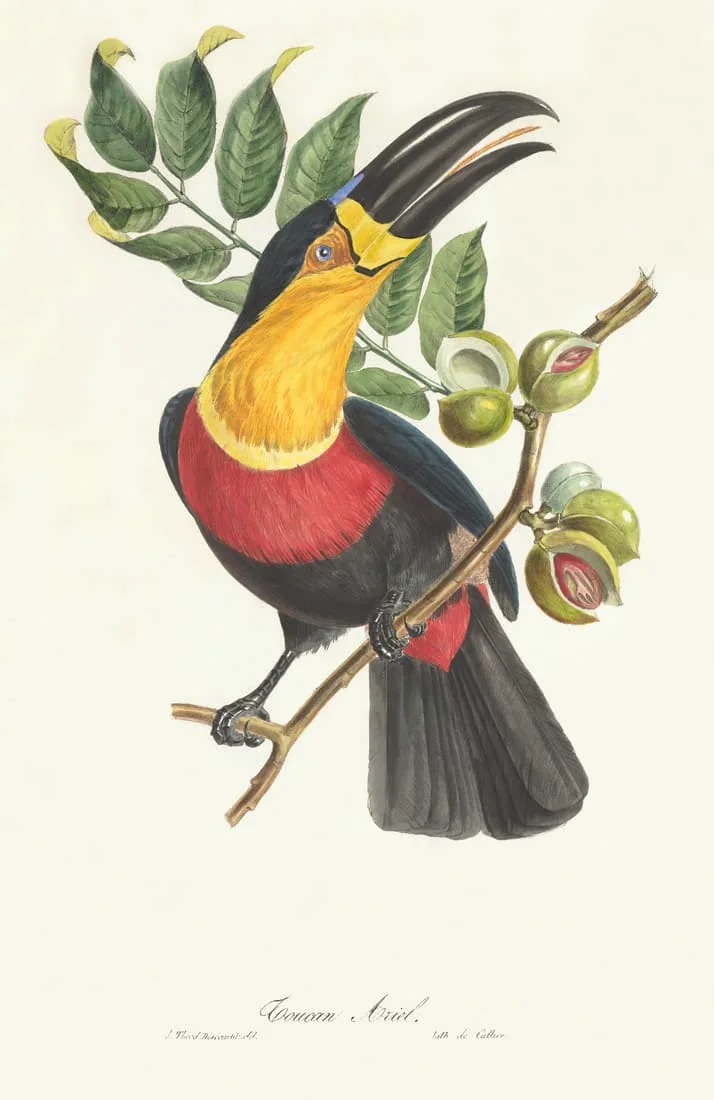
A toucan on a fruiting branch
The ariel toucan of plate 14 sits on a branch heavy with fruit, and the fruit is not decoration: it is what the bird eats. That is the idea of the whole book. Jean Théodore Descourtilz (about 1796-1855), a French doctor, painter and ornithologist, had lived in Brazil since about 1826, watching birds in the forest, and when he drew them he put them where he had found them, with the fruit, flowers and leaves they fed on.
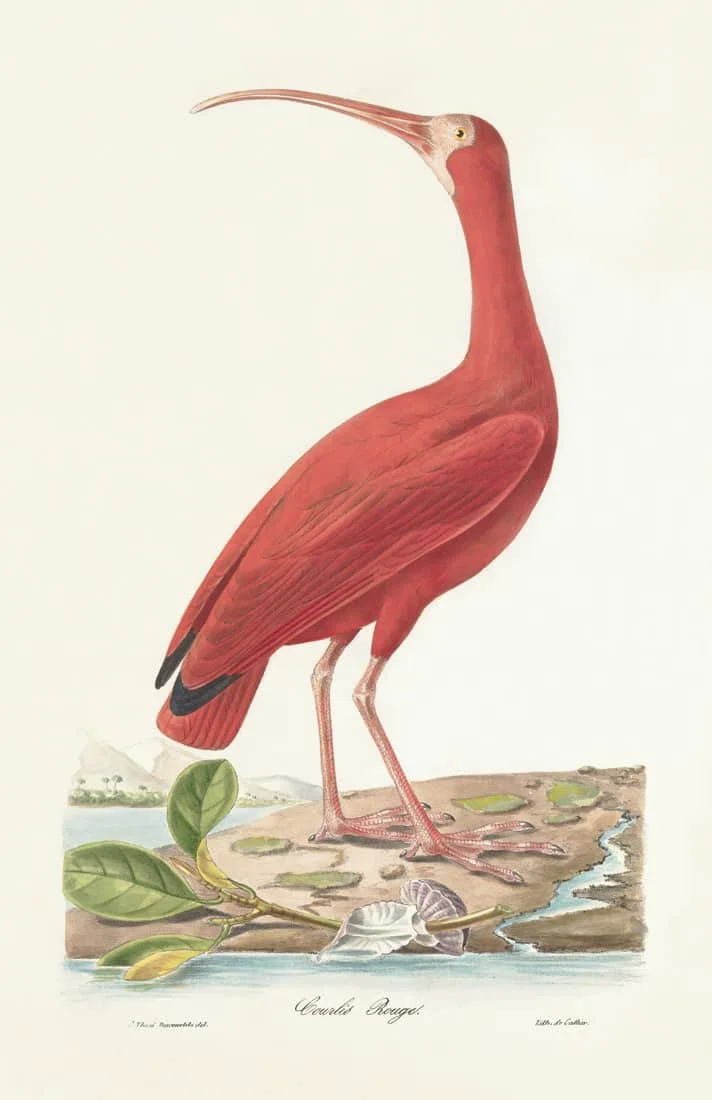
Oiseaux brillans du Brésil was published in Paris in 1834, his first bird book: 60 lithographs, printed in folio and coloured by hand, most of them showing a single species. The birds are the small, bright ones of the Brazilian forest, tanagers, manakins, cotingas, hummingbirds, trogons, euphonias and parrots, with a toucan, a scarlet ibis and a spoonbill among the larger.
Birds with their plants
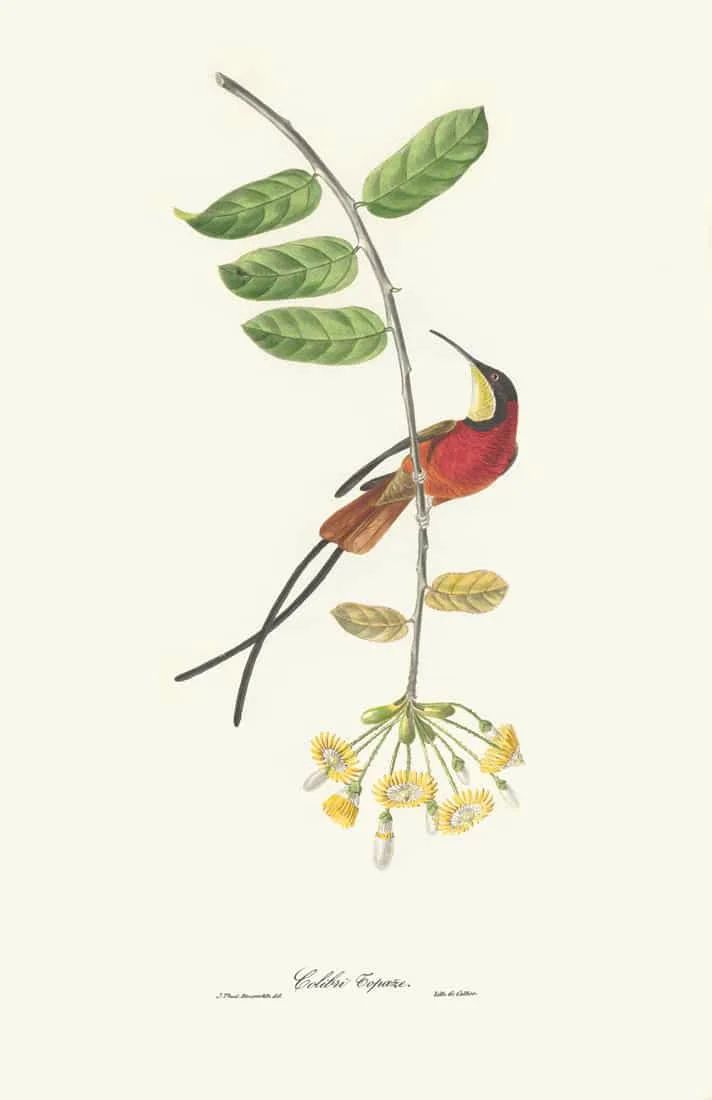
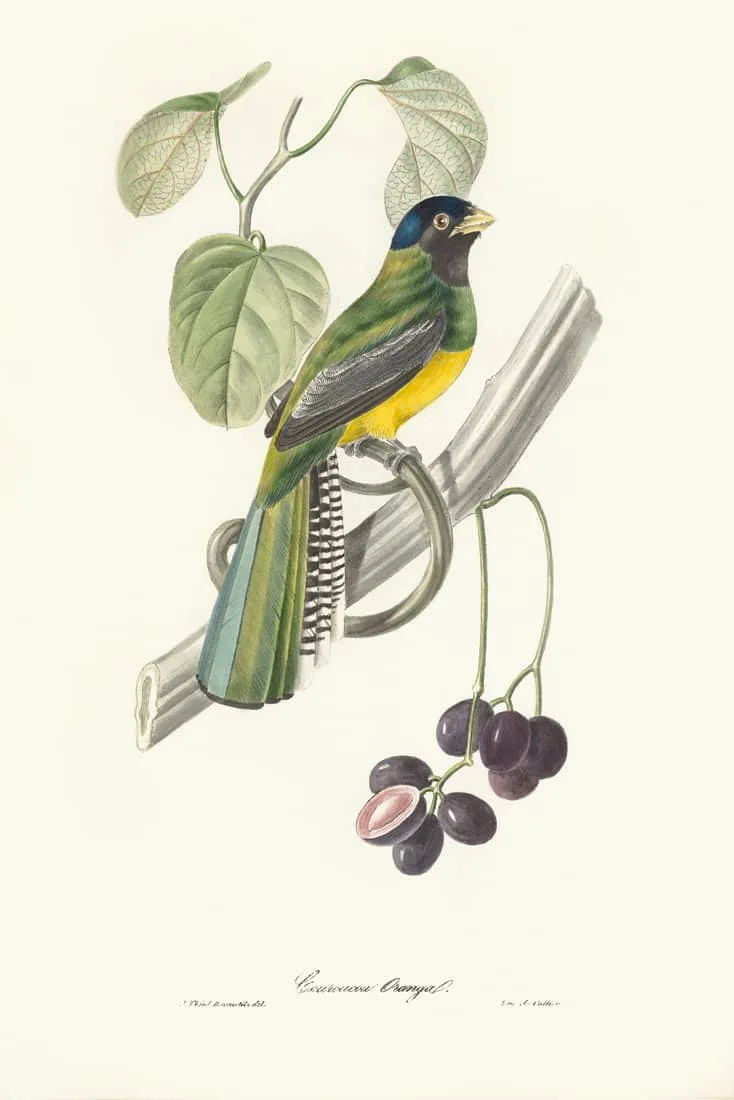
Most bird books of the 1830s showed a specimen on a bare perch. Descourtilz, who had drawn some 600 plates for his father's Flore pittoresque et médicale des Antilles, could paint a plant as well as a bird, and he knew from the field which plant went with which bird. So the hummingbirds hang at their flowers, the fruit-eaters sit in fruiting trees, and each plate is a small piece of the Brazilian forest.
He observed closely and kept notes. In a manuscript on the hummingbirds of Rio de Janeiro and São Paulo, presented to the National Museum in Rio in 1831, he writes of a species so rare that in five years he found only two. That patience is in the plates.
Lithography coloured by hand
Lithography was still young in 1834. The drawing is made with a greasy crayon on a flat limestone; the stone is wetted and inked, and the ink takes only where the crayon went. The print carries the grain of the crayon, softer than an engraved line. Colour was added afterwards by hand, in watercolour, impression by impression. So few copies of the book were made that Descourtilz is thought to have coloured the plates himself.
One of the rarest bird books
The book is one of the rarest on the birds of South America: very few complete copies are known. Descourtilz published two more books on Brazilian birds, and all three are rare. He joined the National Museum in Rio in 1854 and died in 1855 of the arsenic used to preserve bird skins. Who was Jean Théodore Descourtilz?
The copy in Haarlem and our prints
The library of the Teylers Museum in Haarlem holds a copy, and all 60 plates of our series are photographed from it by Re-Art Special Art Productions in Almere, retouched only where time has left a mark, proofed against the original and printed at the size of the sheets, 44.8 by 28.9 cm, on acid-free etching paper. Each plate is in an edition of 250, numbered in pencil, blind embossed and with a certificate of authenticity.
See Brilliant Birds of Brazil, the complete set of 60 and Jean Théodore Descourtilz.
Four plates from the book
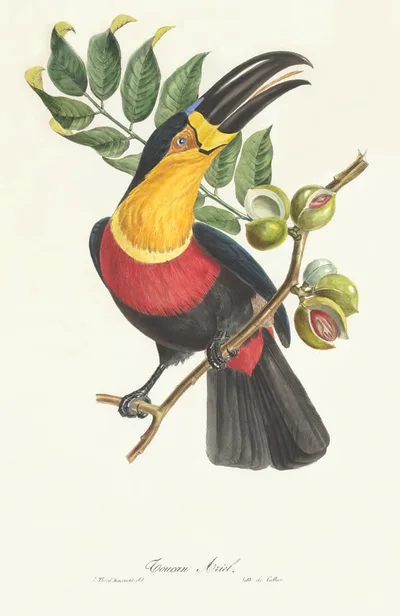
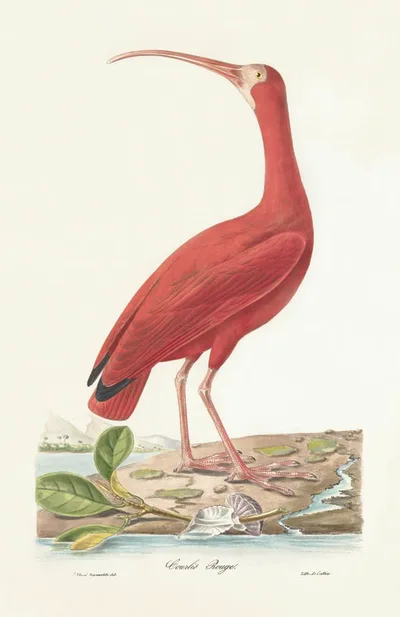
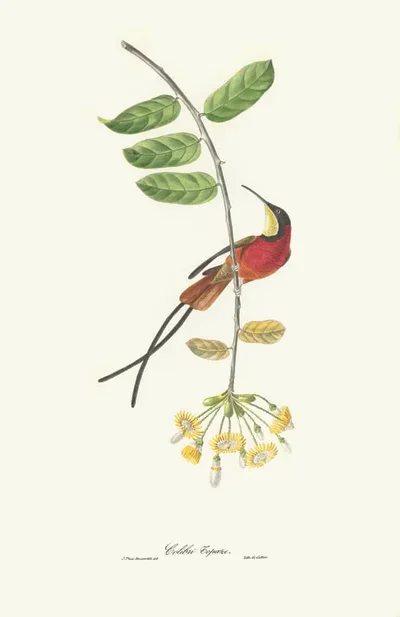
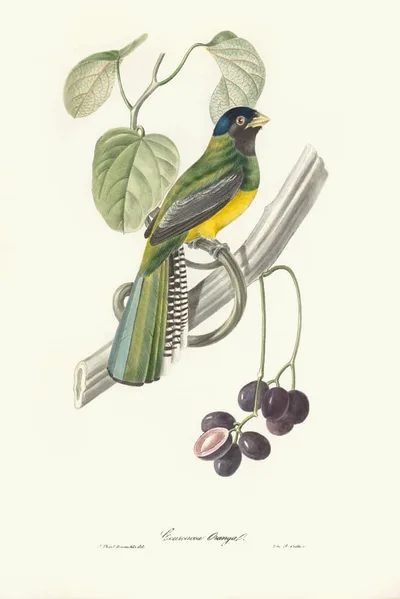
Questions
What does Oiseaux brillans du Brésil mean?
Brilliant Birds of Brazil. It is the French title of Jean Théodore Descourtilz's first bird book, published in Paris in 1834.
How many plates are in Oiseaux brillans du Brésil?
Sixty hand-coloured lithographs in folio, most showing a single species with the plants it feeds on. All 60 are in our series, printed at the size of the original sheets.
Did Descourtilz colour the plates himself?
He is thought to have. So few copies were made that hand-colouring by the artist is likely, but there is no document that proves it.