
Six hundred plates for his father
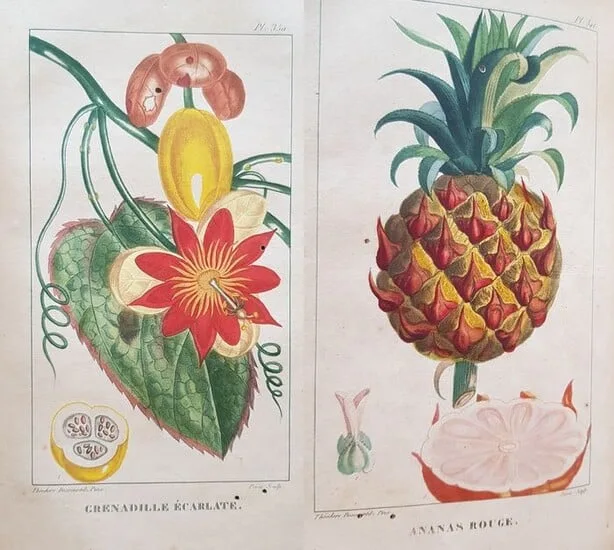
Jean Théodore Descourtilz was born in France around 1796, one of eight brothers, the son of Michel Étienne Descourtilz, a doctor and botanist. The father wrote; the son drew. For the Flore pittoresque et médicale des Antilles (1821-1829), his father's book on the plants of the Caribbean and their uses in medicine, Jean Théodore drew some 600 coloured plates. That was his apprenticeship, and it taught him to paint a plant as well as a bird.
He had seen the tropics early: documents suggest he was taken to Haiti at the age of three. But it was Brazil that made him.
Hummingbirds of Rio and São Paulo
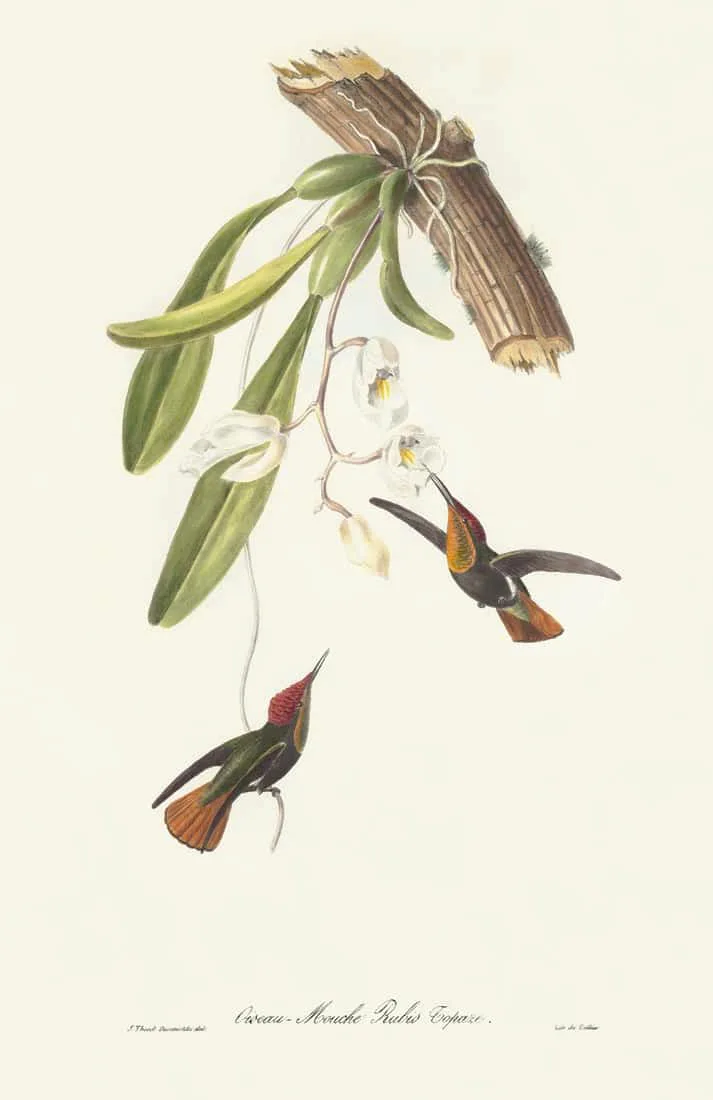
He arrived in Brazil around 1826. By 1831 he had presented a manuscript on the hummingbirds of São Paulo and Rio de Janeiro to the National Museum in Rio, the museum he would later work for. In it he describes one species so rare that in five years of looking he collected only two specimens. He watched his birds for hours, kept notes on their habits and appearance, and painted them with the plants they fed on.
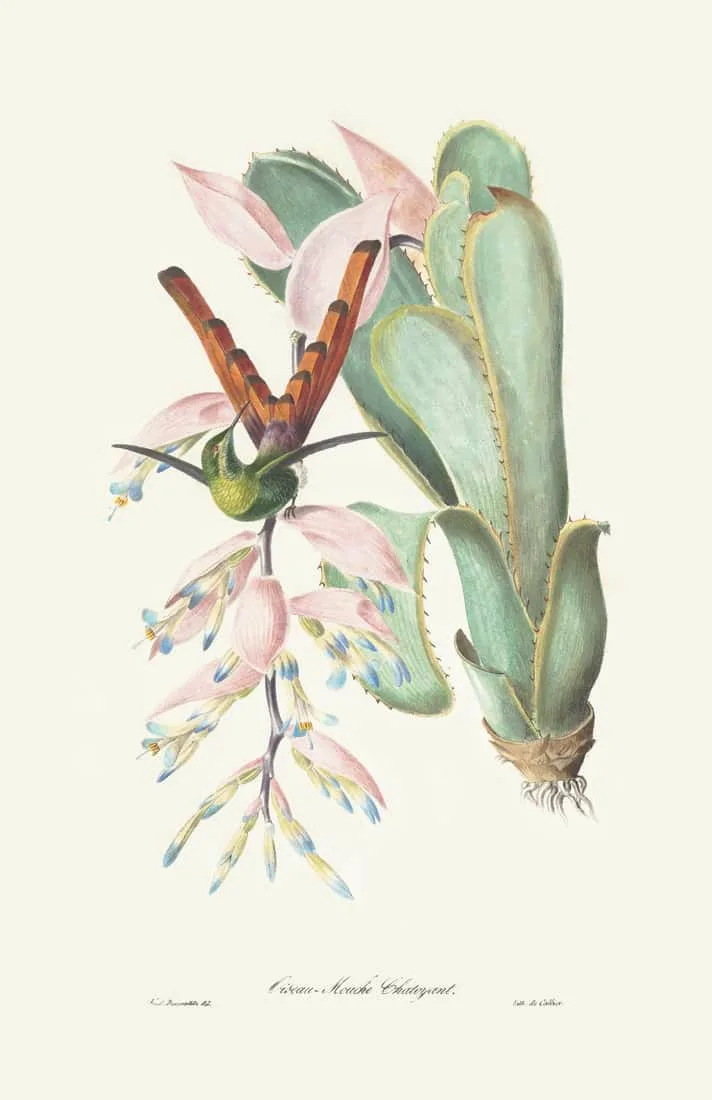
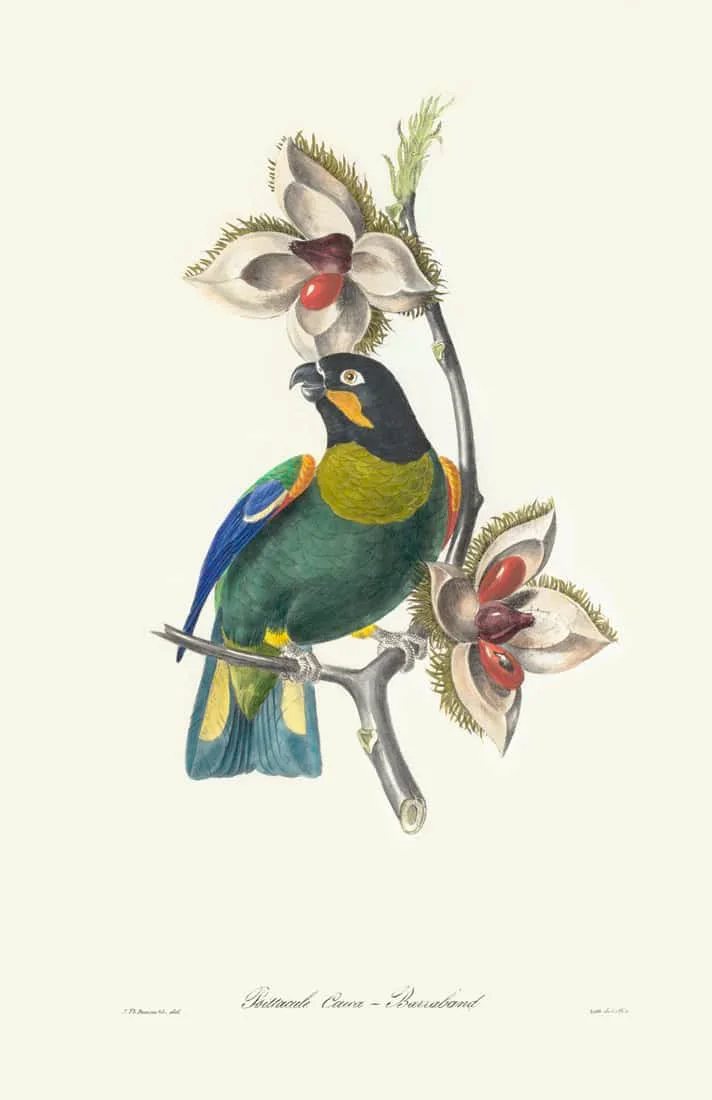
His first bird book, Oiseaux brillans du Brésil, came out in Paris in 1834: 60 hand-coloured lithographs, most showing a single species. Two more books on Brazilian birds followed; all three are rare. What is Oiseaux brillans du Brésil?
The National Museum and a death by arsenic
In the early 1850s the Brazilian government sent him to Espírito Santo, a province on the coast north of Rio, to report on its animal life and its minerals. He explored its villages and towns and sent minerals and crystals back to the National Museum. In 1854 he joined the museum's staff.
He died the next year, 1855, of arsenic poisoning. Arsenic was the preservative every naturalist of the day used on bird skins, and years of handling it killed him. He is buried near Aracruz, on the coast of Espírito Santo, in the country whose birds he painted.
Descourtilz at Heritage Prints
All 60 plates of Oiseaux brillans du Brésil are in our collection, photographed from the copy in the library of the Teylers Museum in Haarlem by Re-Art Special Art Productions in Almere and printed at the size of the original sheets, 44.8 by 28.9 cm (17½ by 11½ inches), in an edition of 250 per plate, numbered in pencil, blind embossed and with a certificate of authenticity.
See Jean Théodore Descourtilz, the Brilliant Birds of Brazil or the complete set of 60.
Four birds of Brazil
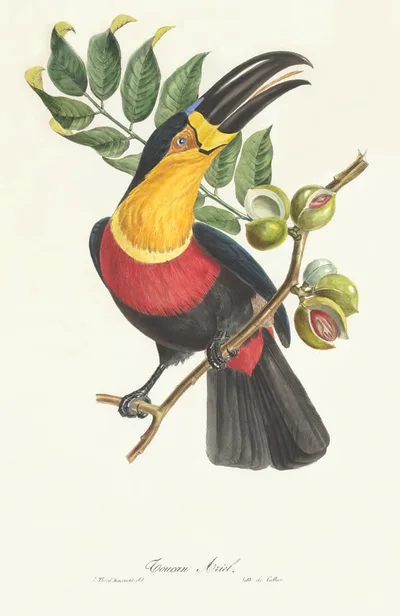
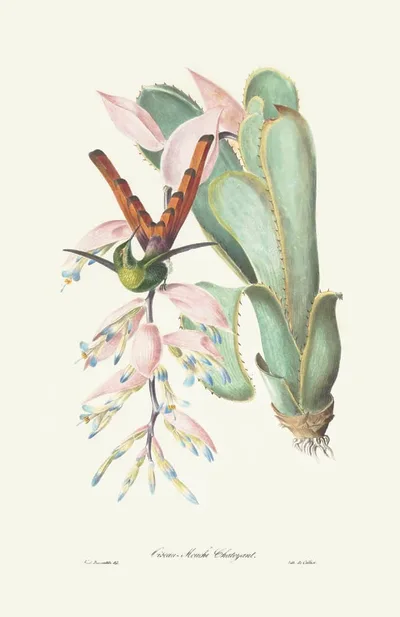
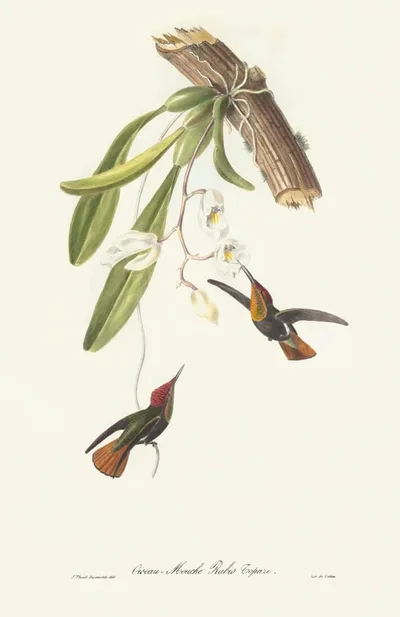
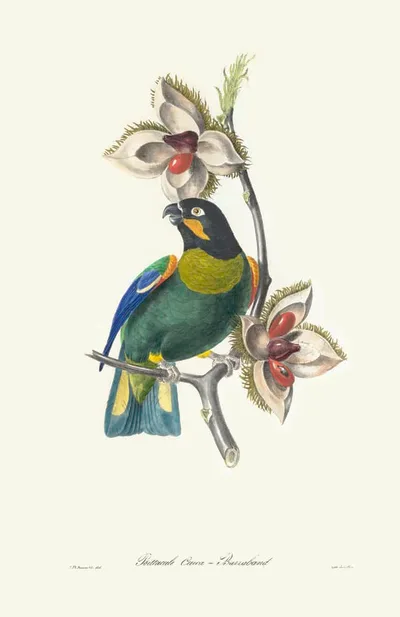
Questions
What is Jean Théodore Descourtilz known for?
For Oiseaux brillans du Brésil (Paris, 1834), 60 hand-coloured lithographs of Brazilian birds shown with the plants they feed on, and for two later books on the birds of Brazil. Before that he drew some 600 plates for his father's Flore pittoresque et médicale des Antilles.
How did Descourtilz die?
Of arsenic poisoning, in 1855, a year after joining the National Museum in Rio de Janeiro. Arsenic was used to preserve bird skins, and years of handling it killed him. He is buried near Aracruz in Espírito Santo.
When was Descourtilz born?
About 1796, in France. The exact year is not known, which is why we write 'about'.