
A rose with nothing behind it
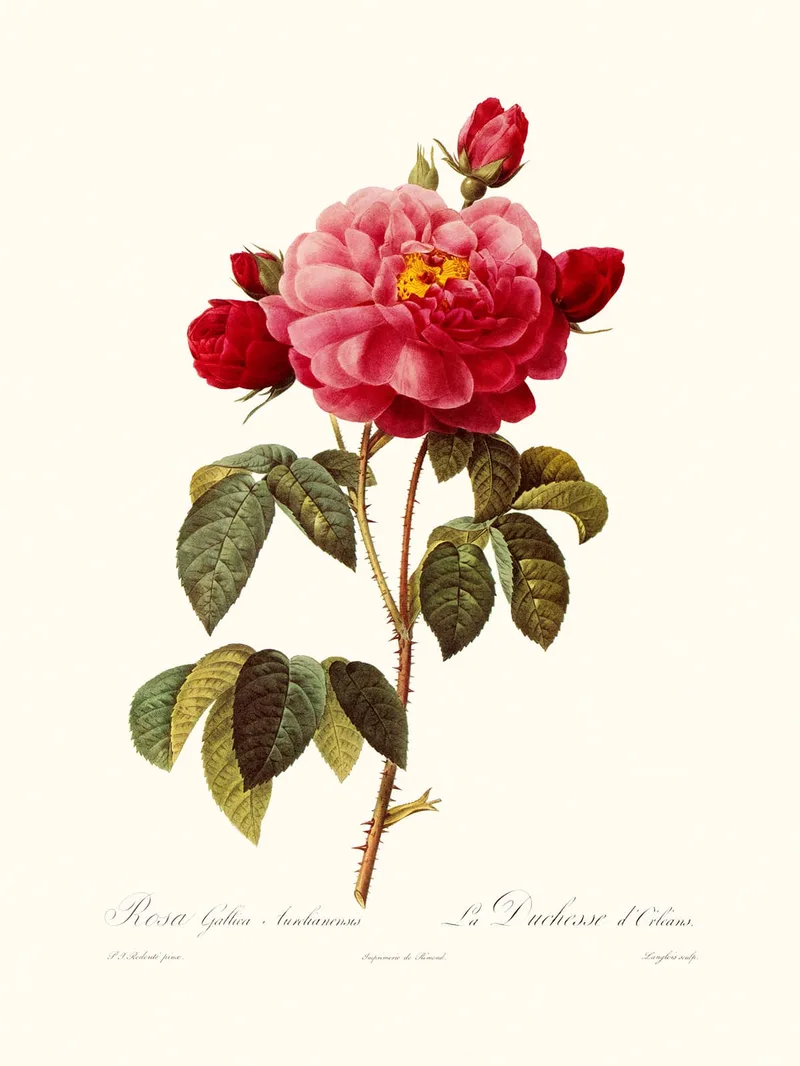
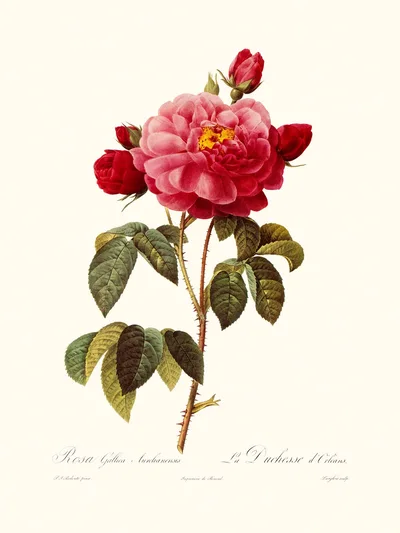
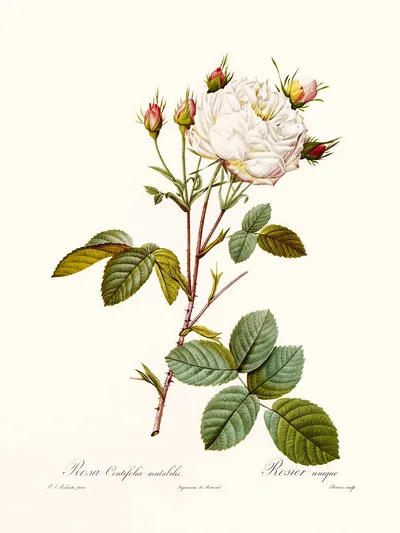
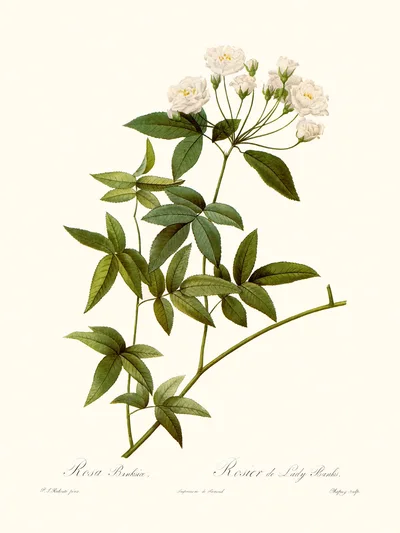
One stem, cut and laid on white paper. A flower open, a bud about to open, the leaves turned to show both sides, and a thorn or two to tell you which rose it is. No vase, no garden, no sky. Redouté painted his roses the way a portrait painter paints a face, and the plain page is the reason you look at nothing but the flower.
Les Roses is a book of 170 plates of roses by Pierre-Joseph Redouté (1759 to 1840), published in Paris in thirty instalments between 1817 and 1824 and bound in three volumes, with a description of each rose by the botanist Claude-Antoine Thory. The plates are stipple engravings, printed in colour and finished by hand, and they are the most famous pictures of roses there are.
Where the roses came from
Many of them grew at Malmaison, the house west of Paris where the Empress Joséphine gathered roses from everywhere her husband’s armies and her own correspondents could reach. Redouté was her painter, and he had drawn her garden for years. But Les Roses was not made for her: she died in 1814, three years before the first instalment, and the book was Redouté’s own venture, with roses from Malmaison and from the nurseries and gardens of Paris.
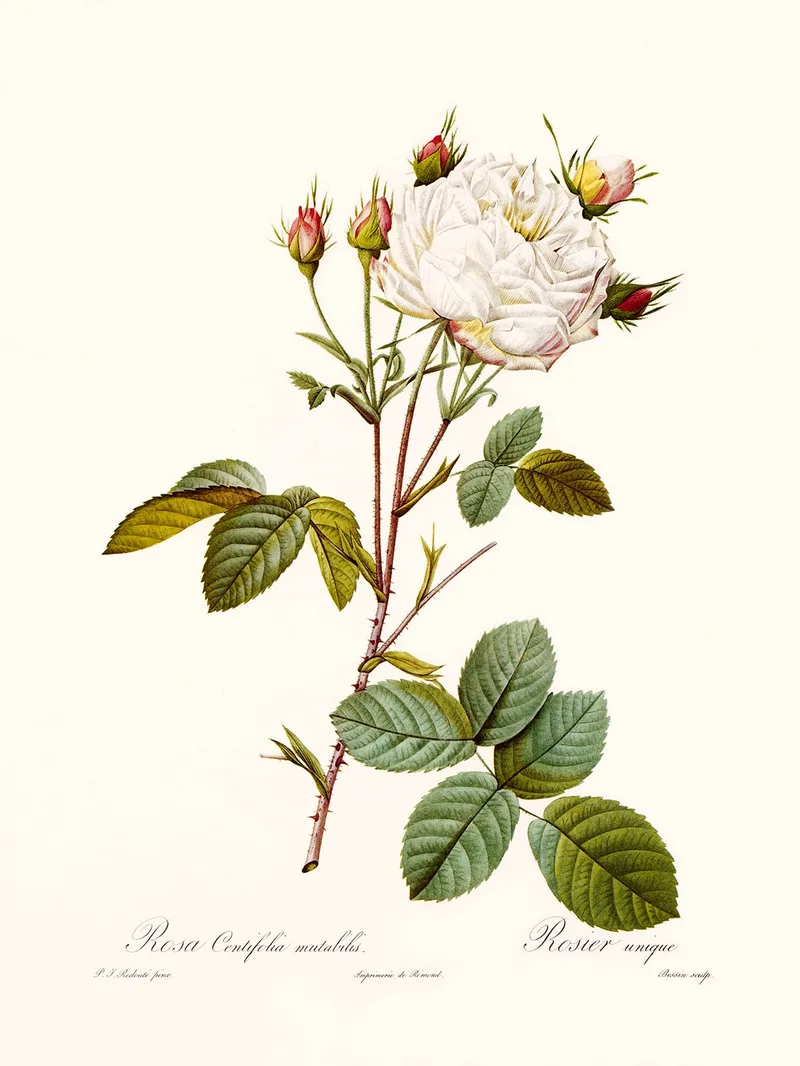
The range is wide. There are the old European roses, the cabbage rose Rosa centifolia in its many forms and the gallicas and damasks; the yellow Rosa sulfurea; the moss roses; the China roses, Rosa indica, newly arrived from the East and about to change rose-growing for good; and oddities such as Rosa berberifolia, with a single leaf where a rose should have five.
How the plates were made
Redouté painted each rose in watercolour on vellum. The painting went to an engraver, who built the image on a copper plate not from lines but from dots: stipple engraving, in which closer and larger dots make a darker tone, so that a petal can shade from white to crimson without a single edge. The best engravers in Paris were engaged for the work.
Then the colour. Before every impression the printer dabbed inks of different colours onto the plate with a small pad of cloth, ‘à la poupée’, so that the print came off the press in colour in one pull. This was a method Redouté had refined since 1796. Finally each impression was finished by hand in watercolour, which is why no two copies of a plate are quite alike. The large folio edition was expensive and printed in small numbers; a smaller octavo edition followed for those who could not afford it.
The plates people single out
Three plates from the third volume are often named as the finest roses Redouté ever painted and engraved: Rosa gallica aurelianensis, the Duchess of Orléans rose, with its full, striped flower; Rosa indica sertulata, a China rose; and Rosa muscosa anemone flora, a moss rose with anemone-like flowers. They share one quality: nothing distracts from the plant, and the tone and colour of the flower do all the work.
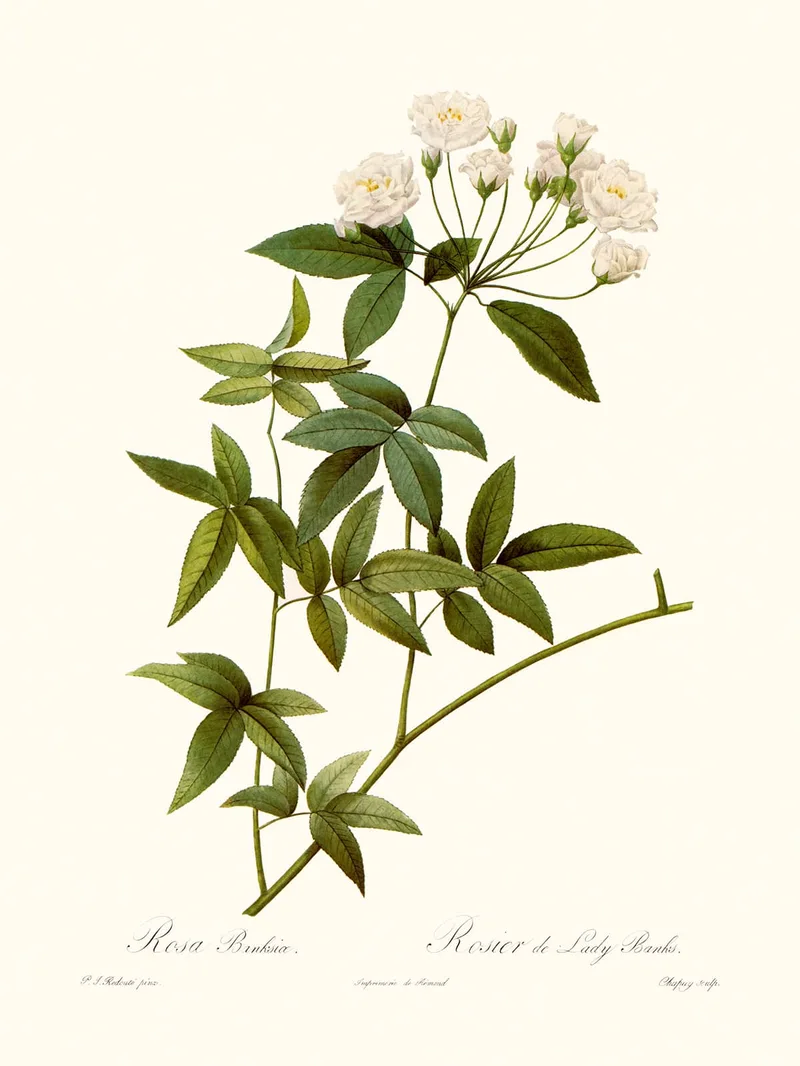
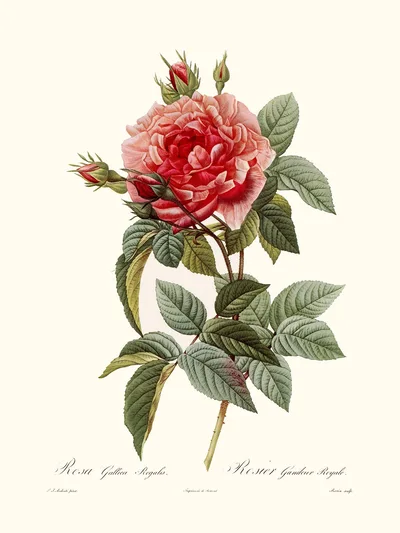
Others are loved for the rose itself: the Banksian rose Rosa banksiae, a climber with clusters of small flowers; Rosa gallica regalis; Rosa damascena aurora; the cabbage roses of the first volume. Which to choose depends on the wall and the rose you grow.
Les Roses at Heritage Prints
Our 99 plates are facsimiles of the copy of Les Roses in the library of the Teylers Museum in Haarlem: 37 from the first volume, 27 from the second and 35 from the third. Each is photographed at the size it is printed, retouched by hand only where two centuries have left a mark, proofed against the original under daylight and printed for us by Re-Art Special Art Productions in Almere on acid-free etching paper of 270 g/m² with archival inks. The sheets measure 36 by 54.5 centimetres (14.2 by 21.5 inches), with their margins and lettering. How a facsimile is made.
Every print is numbered in pencil, embossed with our blind stamp and comes with a certificate, in an edition of 250, and lasts more than 100 years under good conditions. Browse the roses by volume on Les Roses, or ask about the complete set in its Solander boxes. Who was Pierre-Joseph Redouté? tells the painter’s story.
Four roses to start with
Questions
How many plates are in Les Roses?
170, published in thirty instalments between 1817 and 1824 and bound in three volumes. Heritage Prints offers 99 of them as facsimiles, from the copy in the Teylers Museum in Haarlem.
Were the plates of Les Roses coloured by hand?
Partly. The stipple-engraved plates were inked in several colours before each impression, ‘à la poupée’, and the print was then finished by hand in watercolour.
Did the Empress Joséphine commission Les Roses?
No. Redouté had been her painter at Malmaison and many of the roses came from her garden, but she died in 1814, before the book began to appear.