
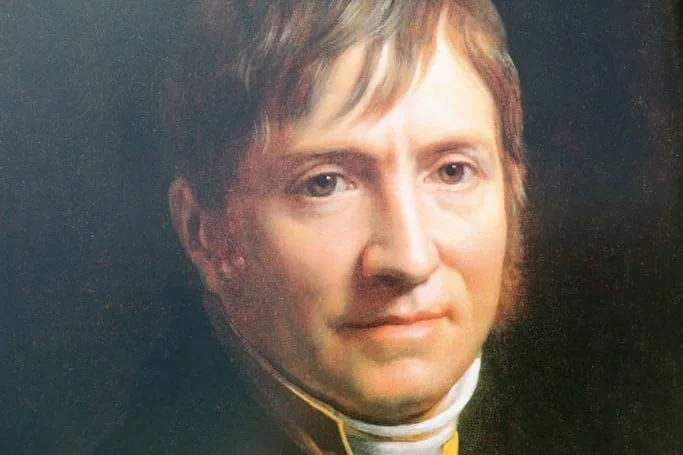
The painter who outlived his empress
When the first instalment of Les Roses appeared in Paris in 1817, the woman whose garden had grown most of its flowers had been dead for three years. The Empress Joséphine died at Malmaison in 1814; her painter went on working for another twenty-six years, and the book he made from her roses is the one his name still stands for.
Pierre-Joseph Redouté (1759 to 1840) is the best-known botanical painter of any era, a reputation that rests above all on Les Roses. He was born in the Ardennes, worked in Paris for the whole of his career, painted for Marie-Antoinette and for Joséphine, and perfected a way of printing his watercolours in colour that no one has bettered.
From Saint-Hubert to the Jardin du Roi
Redouté was born in 1759 at Saint-Hubert, a small town in the Ardennes that then belonged to the Prince-Bishopric of Liège and is now in Belgium. His father and grandfather were painters, and so were his two brothers; he left home at thirteen to earn his living with a brush, painting portraits and church decorations wherever he found work.
In 1782 he joined his elder brother in Paris, who painted scenery for the theatre. Between jobs he drew flowers in the Jardin du Roi, the royal botanic garden, and there he was noticed by two men who made him. The botanist Charles-Louis L’Héritier de Brutelle taught him to look at a plant as a botanist does and gave him his first plates to draw; the Dutch flower painter Gerard van Spaendonck, who taught at the garden, showed him how to paint in watercolour on vellum. Redouté was soon drawing for the royal collection, and Marie-Antoinette made him painter to her cabinet.
Painter to Joséphine at Malmaison
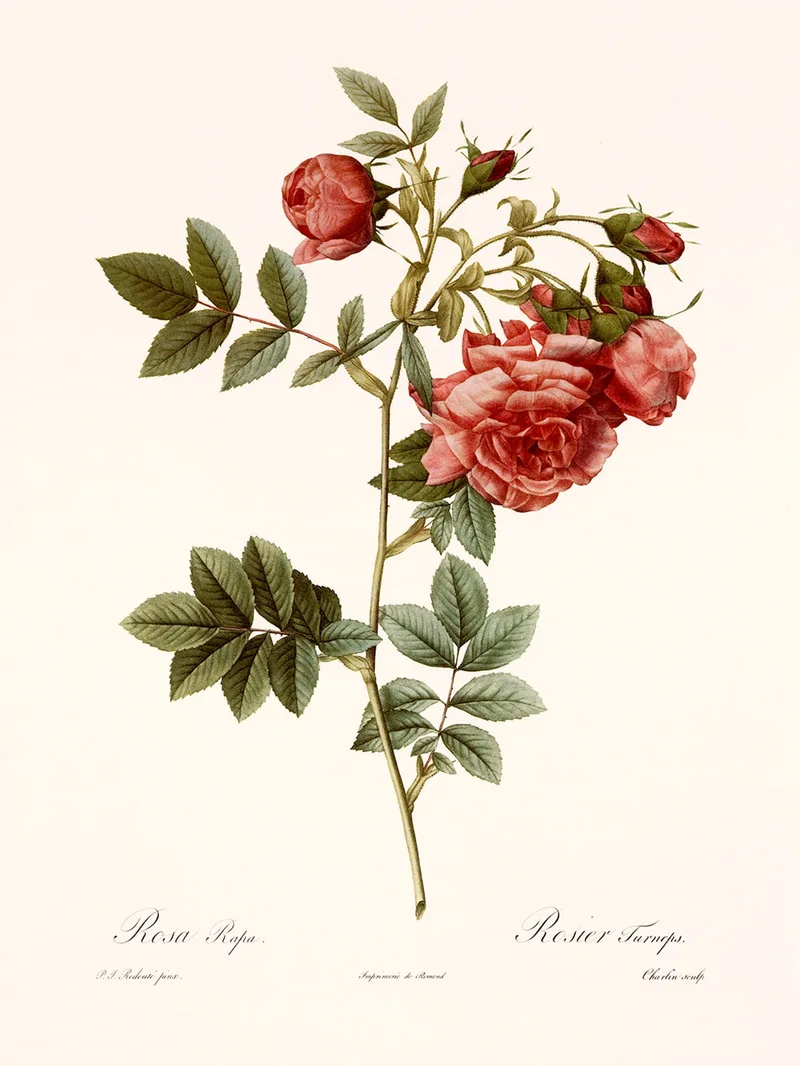
The Revolution cost him his royal patron but not his work: he went on drawing for the botanists of the new Muséum, and in 1799 Joséphine, Napoleon’s wife, bought the château of Malmaison, west of Paris, and set about filling its gardens with every plant she could obtain. Redouté became her painter. For her he painted Les Liliacées, eight volumes of lilies and their relations published between 1802 and 1816, and the flowers of her garden for Jardin de la Malmaison. He was still at work on the roses when she died in 1814.
His method: stipple engraving printed in colour
What sets Redouté’s prints apart is the way his watercolours were turned into them. The best engravers of the day translated his paintings into stipple engravings, in which the image is built up from thousands of small dots rather than lines, so that a petal shades from light to dark without any visible edge. Redouté helped refine the process so that it would keep the luminosity and depth of the paintings.
Then came the colour. By a method he developed in 1796 the inks were applied to the plate in several colours before every impression, ‘à la poupée’, with a small pad of cloth, so that the print came off the press already coloured. Each impression was finished by hand in watercolour. The result, Redouté wrote, gave his prints “all the softness and brilliance of a watercolor”.
Les Roses, 1817 to 1824
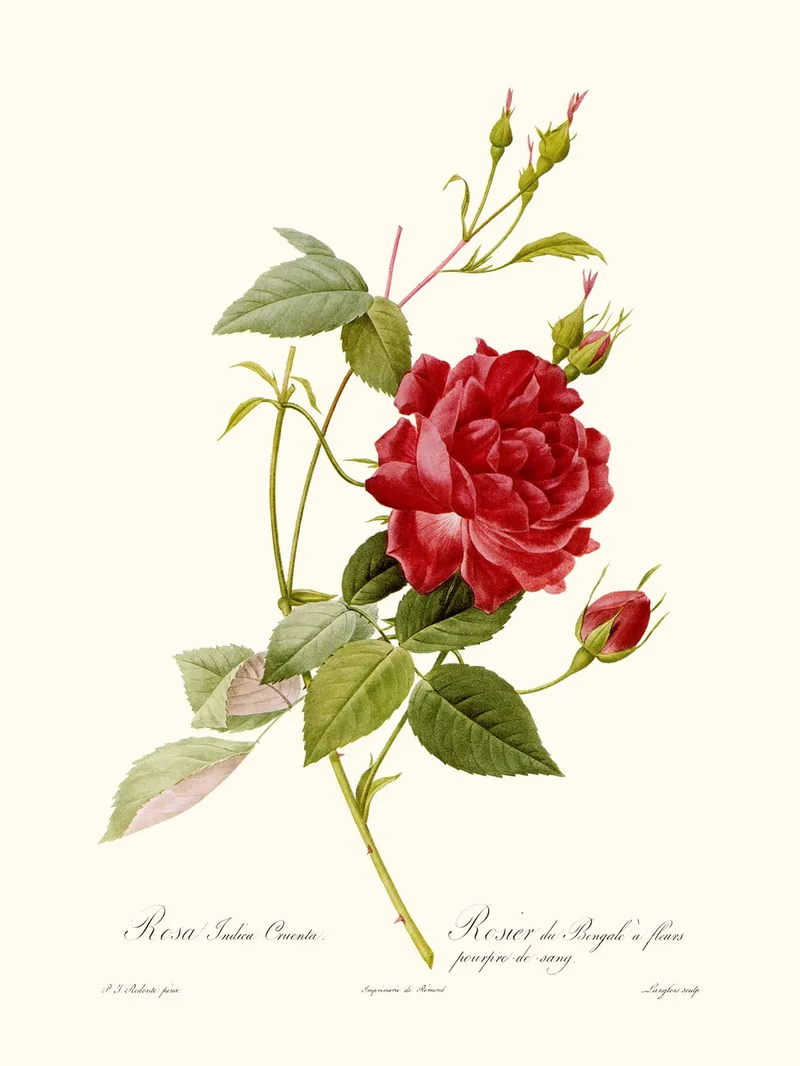
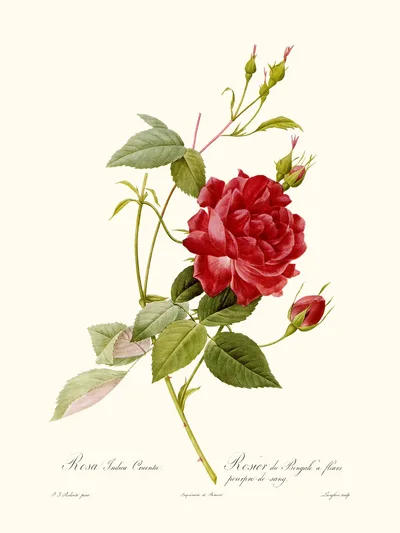
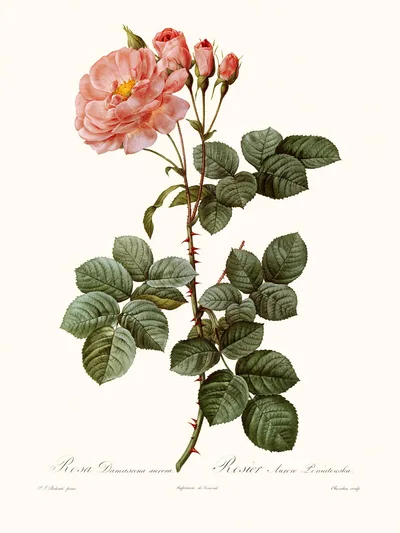
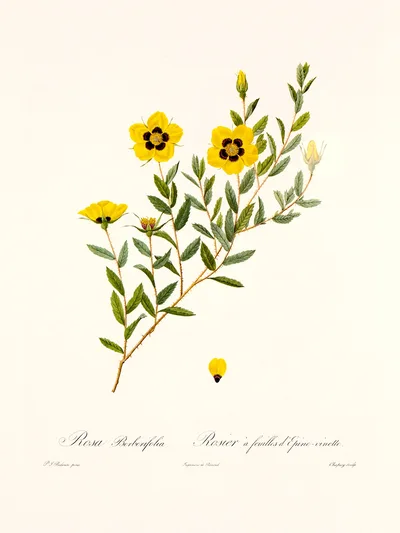
Les Roses was published in Paris in thirty instalments between 1817 and 1824 and bound in three volumes: 170 plates, many of them roses from Malmaison, each shown as a portrait on a white page. It was not made under Joséphine’s patronage, as is often said; she had died before it began. But it is her garden, drawn by the man she employed to draw it. What is Les Roses? describes the book plate by plate.
Redouté taught drawing to the end of his life, outlived the Empire and the Restoration, and died in Paris in 1840.
Redouté at Heritage Prints
We offer 99 plates from Les Roses, in its three volumes, as facsimiles of the copy in the library of the Teylers Museum in Haarlem. Each is photographed at the size it is printed, retouched by hand only where the paper has suffered, proofed against the original and printed for us by Re-Art Special Art Productions in Almere on acid-free etching paper of 270 g/m² with archival inks. The sheets measure 36 by 54.5 centimetres (14.2 by 21.5 inches).
Every print is numbered in pencil, embossed with our blind stamp and comes with a certificate, in an edition of 250, and lasts more than 100 years under good conditions. The roses are on Les Roses and the artist’s page is Pierre-Joseph Redouté.
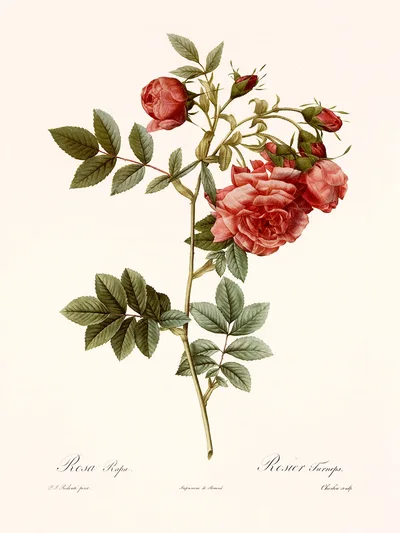
Four roses to start with
Questions
Where was Pierre-Joseph Redouté born?
At Saint-Hubert in the Ardennes, in 1759. The town then belonged to the Prince-Bishopric of Liège and is now in Belgium. He worked in Paris from 1782 until his death in 1840.
Did Redouté paint Les Roses for the Empress Joséphine?
Not quite. He was her painter at Malmaison and many of the roses came from her garden, but Les Roses appeared between 1817 and 1824, after her death in 1814.
How were Redouté’s prints made?
As stipple engravings, built up from dots rather than lines, inked in colour ‘à la poupée’ before each impression and finished by hand in watercolour.