
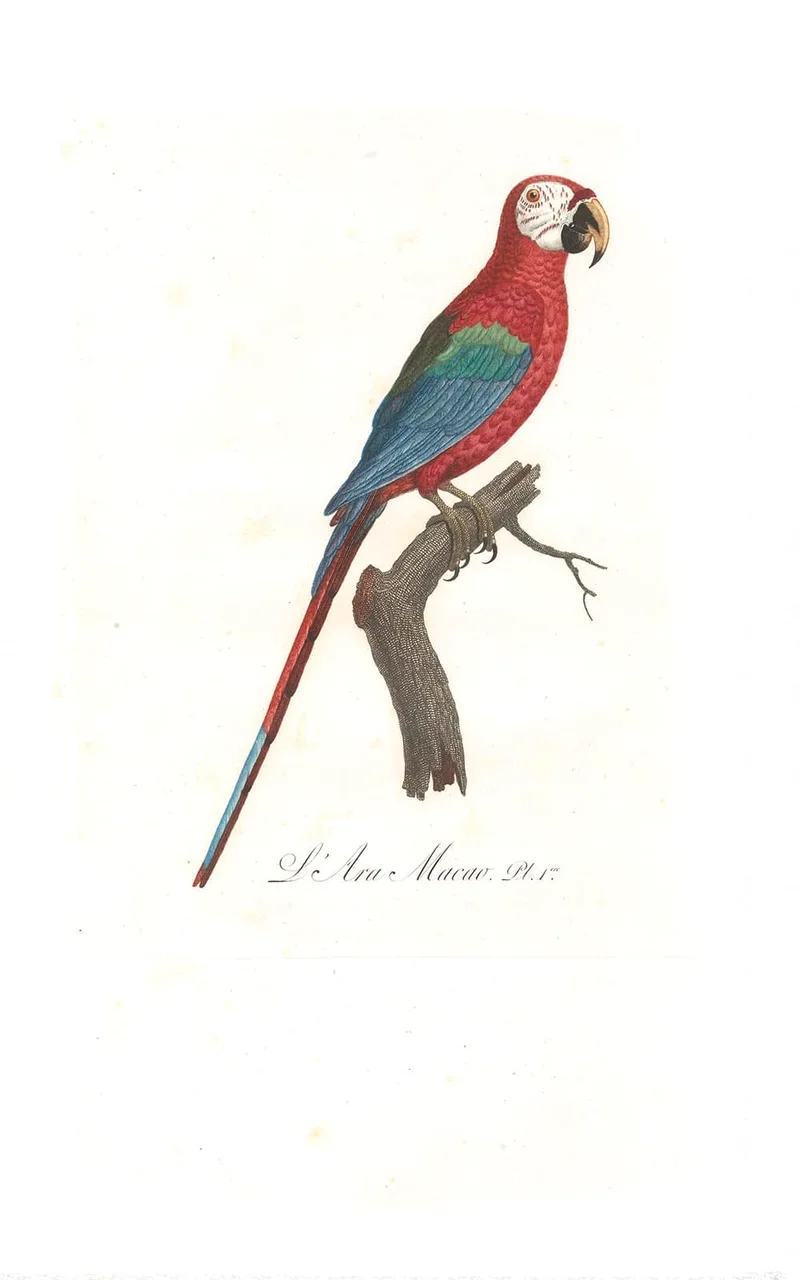
Parrots for Paris
François Levaillant (1753 to 1824) was born in Paramaribo, in Surinam, travelled through the Cape Colony between 1781 and 1784, and became famous in France with the account of his travels. He spent the rest of his working life on large, lavish bird books, and between 1801 and 1805 he published the Histoire naturelle des perroquets: two volumes with 145 plates of parrots from the Americas, Africa, Asia and Australia.
The birds were painted by Jacques Barraband (1767 to 1809), trained at the Gobelins tapestry works and at Sèvres, and counted the finest bird painter of his time in France. Levaillant wrote the text and gave the birds French names, as he always did, rather than the Latin names of Linnaeus. Who was François Levaillant? and Who was Jacques Barraband? tell their stories.
Stipple, colour and a touch of gold
The plates were engraved in stipple, by Bouquet and Langlois among others: tone was built up from fine dots rather than lines, which could follow the soft gradations of a watercolour. Each copper plate was inked à la poupée, with the different colours dabbed onto the one plate, so that a single pull of the press printed the bird in colour. The impression was then finished by hand, and on some plates the cheeks and shoulders were touched with gold to suggest the sheen of the feathers.
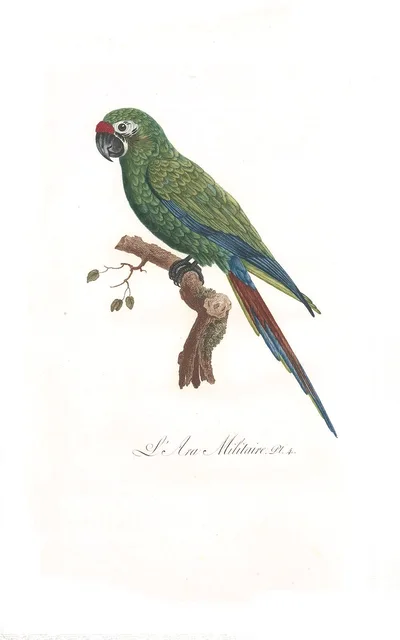
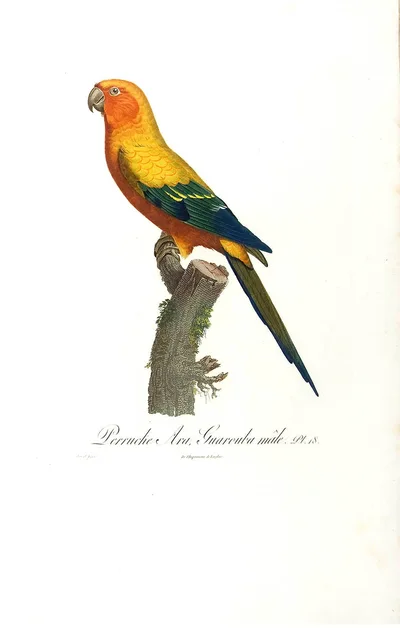
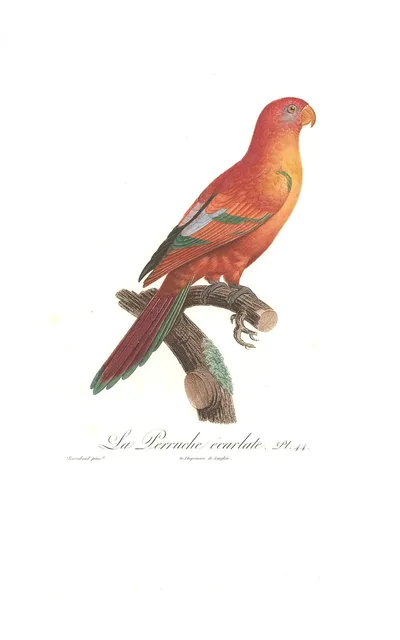
Barraband described each feather with fine parallel strokes, and the engravers kept them. Most birds stand alone on a branch against the blank paper, seen close up, with the French name engraved below.
Our facsimiles reproduce the plates as they are in the Teylers copy, in ink, so the touches of gold appear as their colour, without a metallic shine.
Macaws, a cockatoo with a trunk, and a macaw that is gone
Our 45 plates are the opening of volume 1, in Levaillant's order. First come the macaws, the aras: the great red, blue-and-yellow and green macaws of Central and South America, and the smaller maracanas.
Then a surprise: two birds Levaillant called macaws 'with a trunk', a grey and a black Ara à trompe, and a third plate for the head of the black one alone. The black one is the Palm Cockatoo of New Guinea and northern Australia, a crested black cockatoo with bare red cheeks, which Levaillant counted among the macaws.
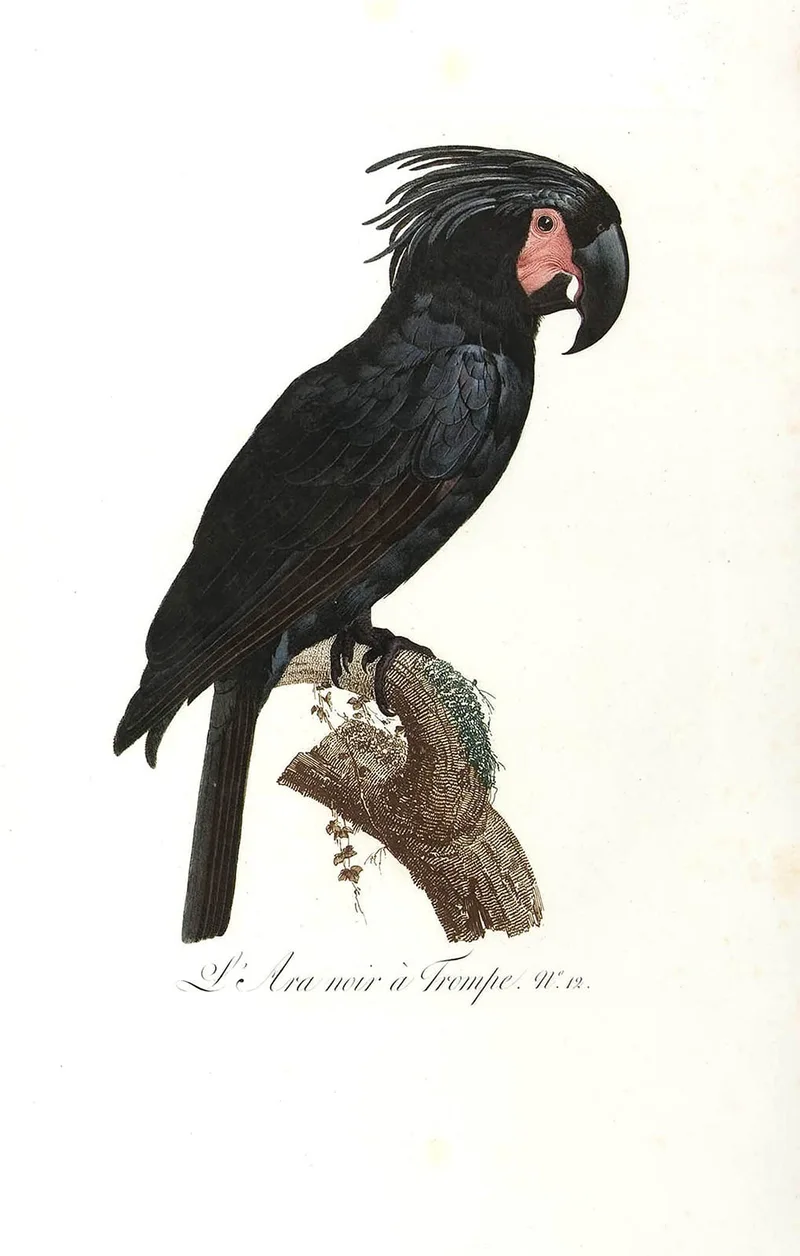
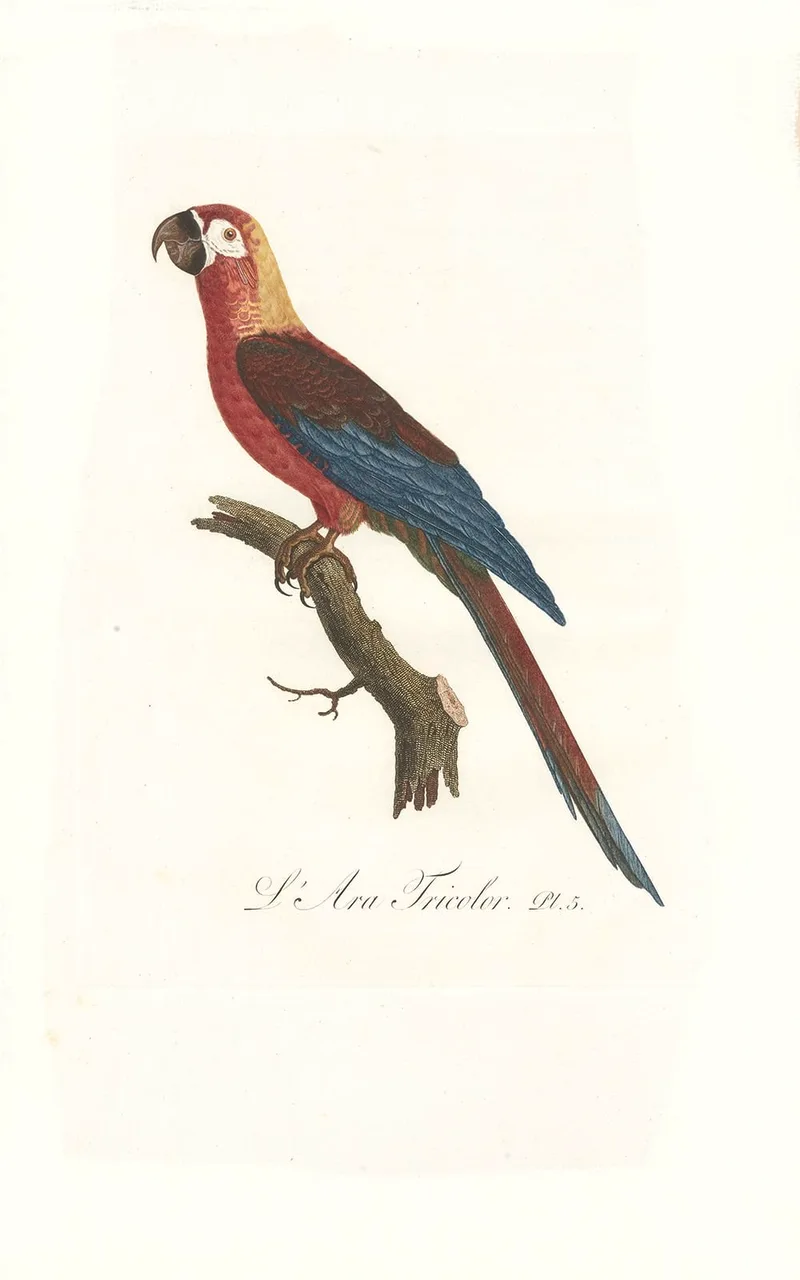
Plate 5, L'Ara Tricolor, shows a red macaw with a yellow nape and blue wings: the Cuban Macaw, which lived only on Cuba and the Isla de la Juventud and was extinct by the end of the nineteenth century. Its scientific name, Ara tricolor, comes from Levaillant's French one.
After the macaws come the perruches-aras, long-tailed parakeets, among them three plates of the Golden Parakeet of Brazil: the male, the female and the young bird. Then the perruches, the parakeets proper, among them the parakeets with a rose collar and La Perruche Omnicolore, 'the parakeet of all colours'.
Levaillant wanted to show how a parrot changes with sex and age, and the titles say so: mâle, femelle, dans son jeune âge (when young), première and seconde variété. Two titles add the word tapiré. It is usually explained by tapirage, a practice of Indigenous peoples in South America, who plucked young parrots and treated the skin so that the feathers grew back in other colours, often yellow or red. If so, those two plates show birds whose colours had been changed by people.
Levaillant's names and today's
The French names are on the plates, and our titles follow them. A few, with the birds as they are known today:
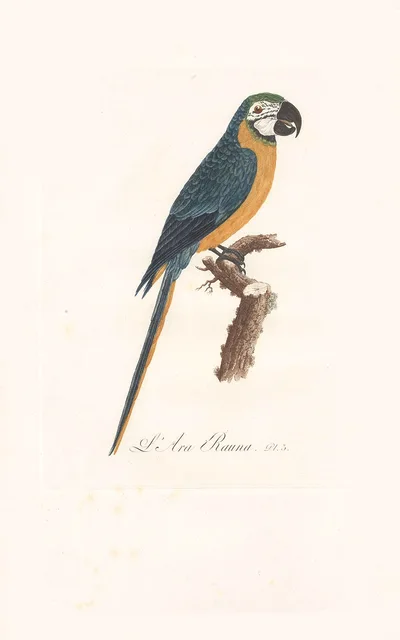
- L'Ara Rauna: the Blue-and-yellow Macaw, Ara ararauna.
- L'Ara Militaire: the Military Macaw, Ara militaris.
- Le grand Ara militaire: the Great Green Macaw, Ara ambiguus.
- L'Ara Tricolor: the Cuban Macaw, Ara tricolor, extinct.
- L'Ara noir à Trompe: the Palm Cockatoo, Probosciger aterrimus.
- Perruche Ara, Guarouba mâle: the Golden Parakeet, Guaruba guarouba.
The Perroquets at Heritage Prints
We offer the first 45 plates of volume 1, made from the copy in the library of the Teylers Museum in Haarlem. Each is a facsimile at the size of the original sheet, 33.5 by 51.5 centimetres (13¼ by 20¼ inches), photographed and printed for us by Re-Art Special Art Productions in Almere on acid-free etching paper of 270 g/m² with archival inks, in an edition of 250, numbered in pencil, blind embossed and with a certificate of authenticity.
All 45 are on Histoire naturelle des Perroquets. The toucans that Levaillant and Barraband published next are on Histoire naturelle des Toucans, and everything by Levaillant is on François Levaillant.
Four parrots to start with
Questions
How many plates are in Levaillant's Histoire naturelle des perroquets?
145, in two volumes published in Paris between 1801 and 1805. We offer the first 45 plates of volume 1, from the copy in the Teylers Museum in Haarlem.
Who painted Levaillant's parrots?
Jacques Barraband (1767-1809). His paintings were engraved in stipple, by Bouquet and Langlois among others, printed in colour and finished by hand, which is why the plates are often called Barraband's parrots.
Which parrots are in the plates?
Volume 1 opens with the macaws, among them the extinct Cuban Macaw and the Palm Cockatoo, which Levaillant counted among the macaws. Then come the parakeets, such as the Golden Parakeet of Brazil, shown as male, female and young bird.