
Rose prints by Redouté
Pierre-Joseph Redouté published Les Roses in three volumes between 1817 and 1824: 170 stipple engravings, many of them of roses from the Empress Joséphine’s garden at Malmaison. Our facsimiles are made from the copy in the Teylers Museum, Haarlem, each at the size of the original sheet, about 14¼ × 21½ in, limited to 250.
98 prints
About rose prints by Redouté
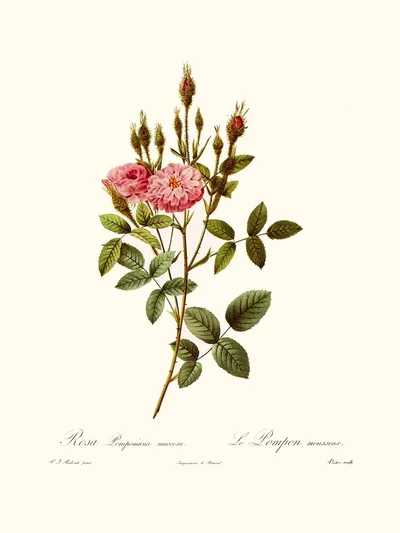
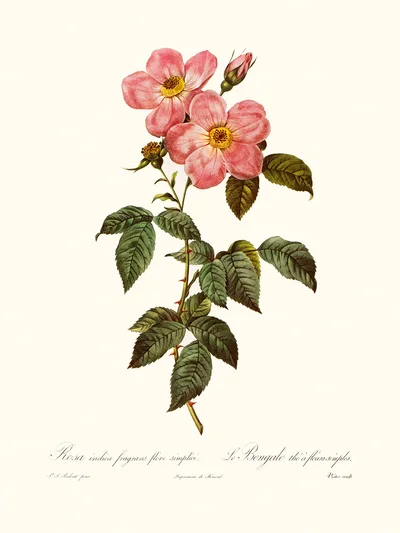
Redouté painted each rose in watercolour on vellum, as a portrait: one stem, a flower open and a bud about to open, a thorn or two to tell you which rose it is, and nothing behind it. Engravers translated the paintings into dots on copper, and before every impression the printer dabbed several colours onto the plate, ‘à la poupée’, so that each sheet came off the press in colour and was then finished by hand. The botanist Claude-Antoine Thory wrote the descriptions.
Our roses come from all three volumes of Les Roses. Three plates from the third are often named as Redouté’s finest: Rosa gallica aurelianensis, Rosa indica sertulata and Rosa muscosa anemone flora. Others are loved for the rose itself, like the Banksian rose, Rosa banksiae, or for an oddity, like Rosa berberifolia, with a single leaf where a rose should have five. What is Redouté’s Les Roses? explains the method, and Who was Pierre-Joseph Redouté? the painter.