
Botanical prints
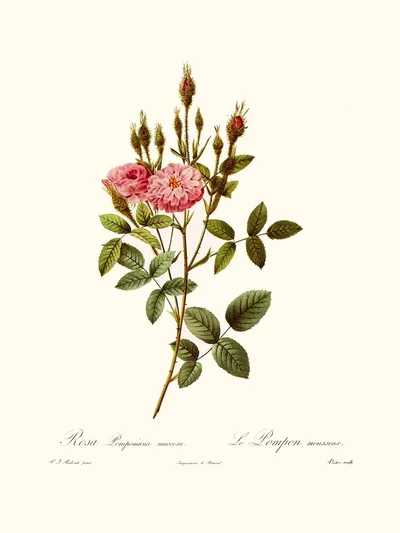
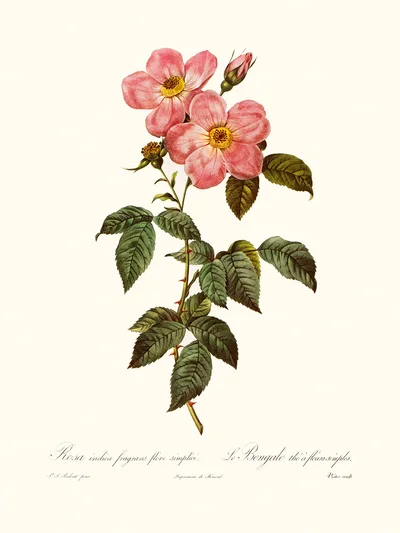
Roses from Pierre-Joseph Redouté’s Les Roses (1817–1824) and the flower pieces of Robert John Thornton’s The Temple of Flora (1799–1807), both made from the copies in the Teylers Museum in Haarlem. Every print is a facsimile giclée at the size of the original sheet, limited to 250.
About botanical prints
Two ways of picturing a flower hang side by side here. Redouté shows one stem on white paper, a flower, a bud and the leaves turned to show both sides, with nothing behind it; his roses were engraved in dots, printed in colour from a single plate and finished by hand. Robert John Thornton, a London physician who painted none of his plates himself, did the opposite. His artists, Philip Reinagle, Peter Henderson and Sydenham Edwards among them, set each flower in a landscape that evokes its country, and the plates mix mezzotint, aquatint, stipple and line engraving.
Compare Thornton’s Roses, a bank of roses with a nest and a classical temple behind, with any plate from Redouté’s Les Roses. Or choose The Night Blowing Cereus from The Temple of Flora: a white cactus flower opening in the dark while a church clock shows the hour past midnight. What is Thornton’s The Temple of Flora? tells how the book ruined its maker.