
Hunting at Het Loo
In 1838 Hermann Schlegel began to hunt near Het Loo, the royal palace at Apeldoorn, and there he caught an interest in falconry. In his autobiography he describes how he and his friend and hunting companion Abraham Hendrik Verster van Wulverhorst (1796-1882) talked about it for hours. Van Wulverhorst had already written a small book on the subject. Schlegel wanted more: to recover the secrets of an art that had almost been forgotten in Europe, its history and its language.
The Traité de fauconnerie was the result: a treatise on falconry, in French, issued in parts in Leiden and Düsseldorf between 1844 and 1853. Schlegel put Van Wulverhorst's name beside his own on the title page. He also valued the book for a personal reason: it was the work that led him to discover Joseph Wolf, whom he called an 'unsurpassed animal painter'.
Joseph Wolf's life-size hawks
The finest work on falconry which has ever been produced, not only on account of the beauty of the plates, wherein the hawks are depicted life-size and of the natural colour but also for the general accuracy of the letterpress.
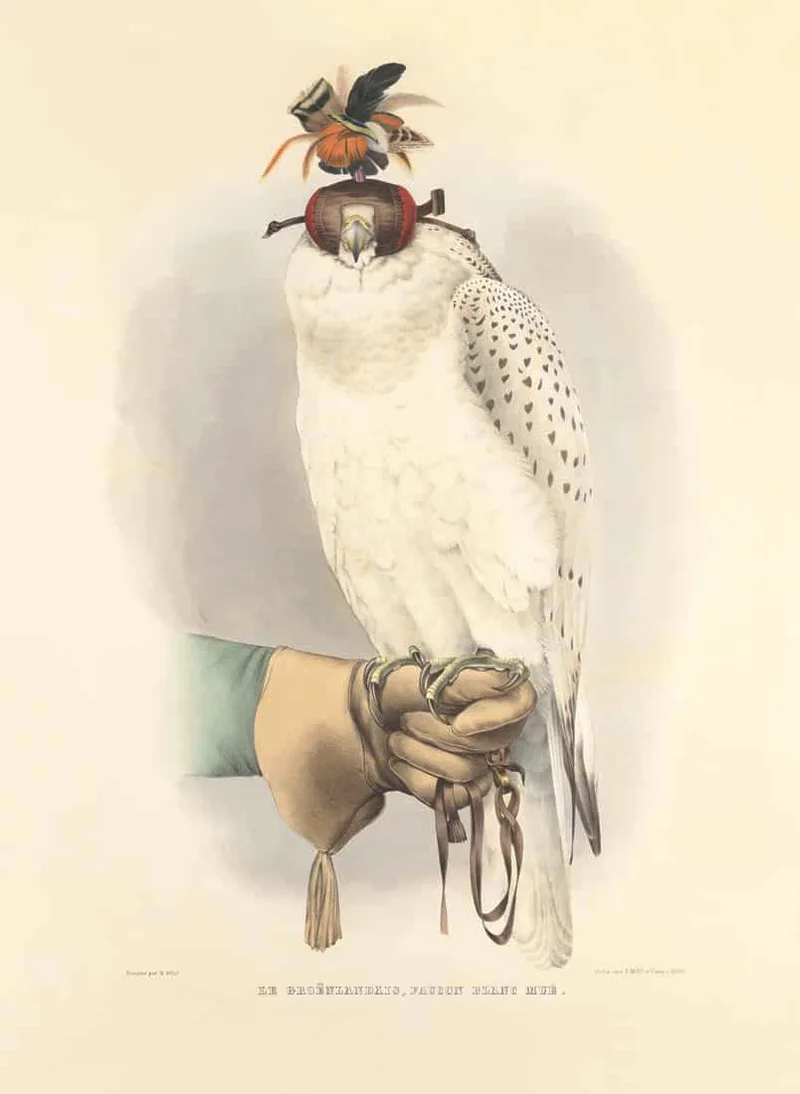
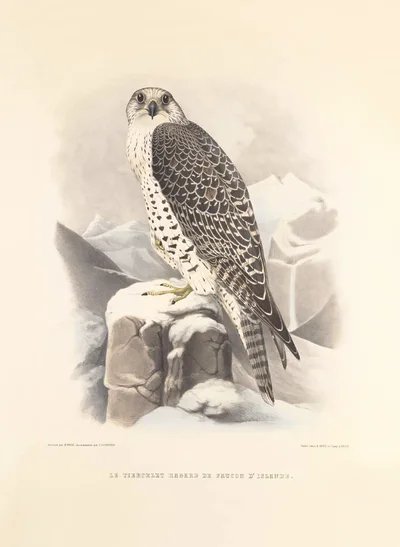
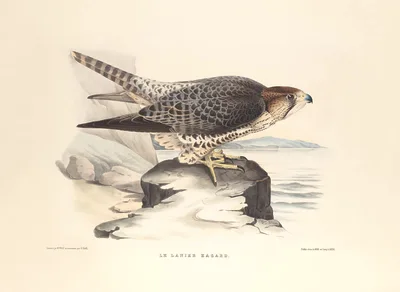
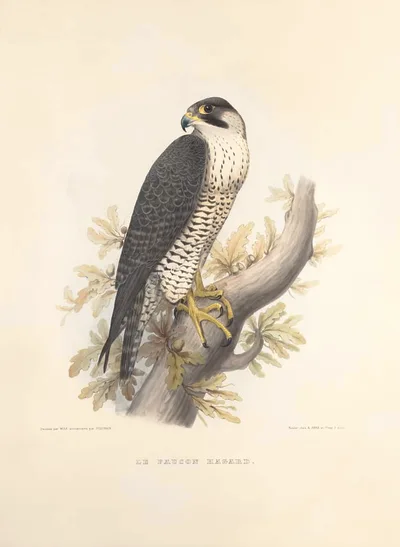
The plates of the birds are mainly by Joseph Wolf (1820-1899), then a young German artist; Harting also names J. B. Sonderland. Wolf drew from life after long study of the anatomy of his animals, and the hawks of the Traité launched his international career: Gould and Elliot soon commissioned him too.
There is an indescribable feeling of life and movement attained by no other wildlife artist.
Sir Edwin Landseer went further and called Wolf 'without exception, the best all-round animal painter that ever lived'.
What the plates show
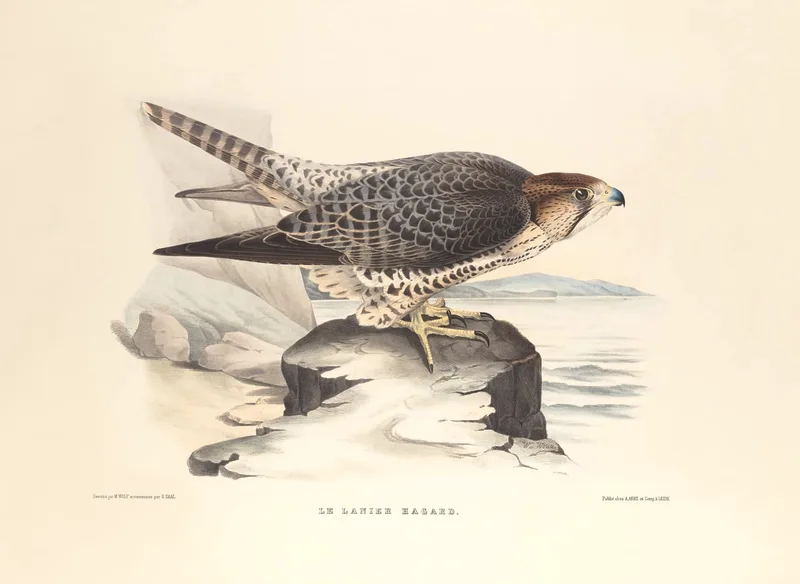
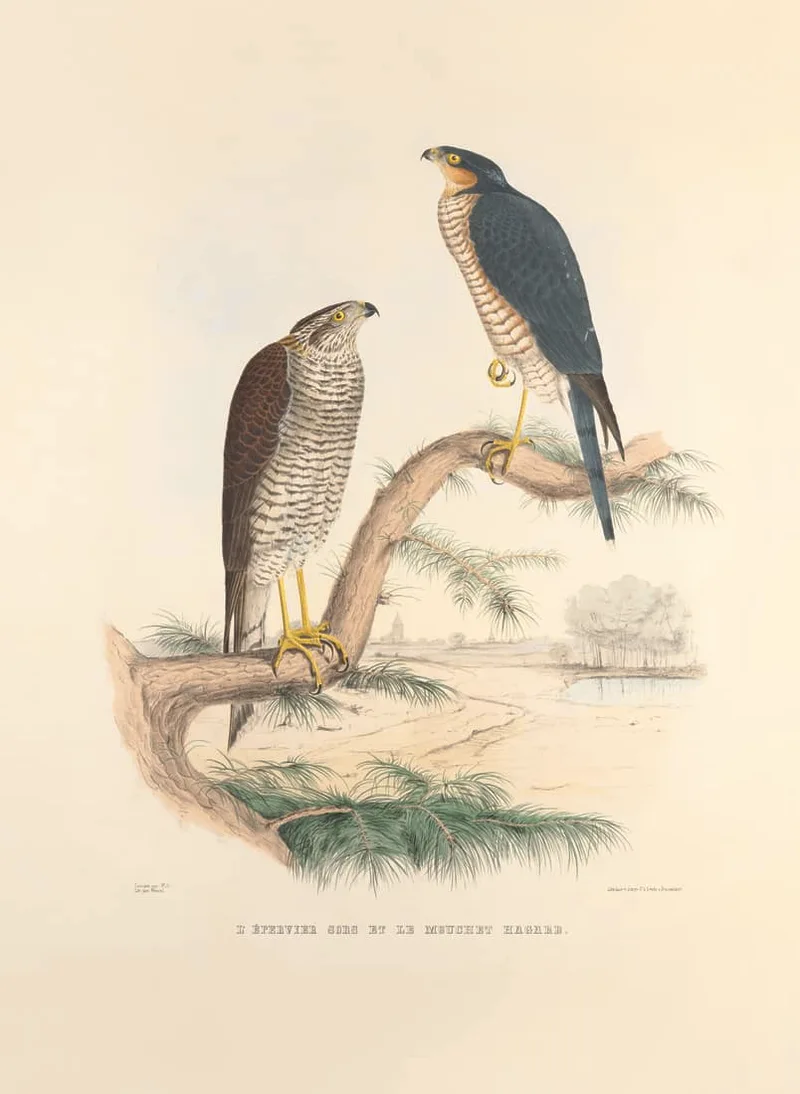
Every hawk is drawn at life size, which is why the sheets are so large. Among the birds are the white falcon of Greenland, the Iceland falcon, the gyrfalcon, the saker and the lanner, the peregrine, the merlin, the goshawk and the sparrowhawk. The falconer's terms are in the titles: sors is a bird of the year, hagard a bird caught wild in adult plumage, and a tiercelet the smaller male.
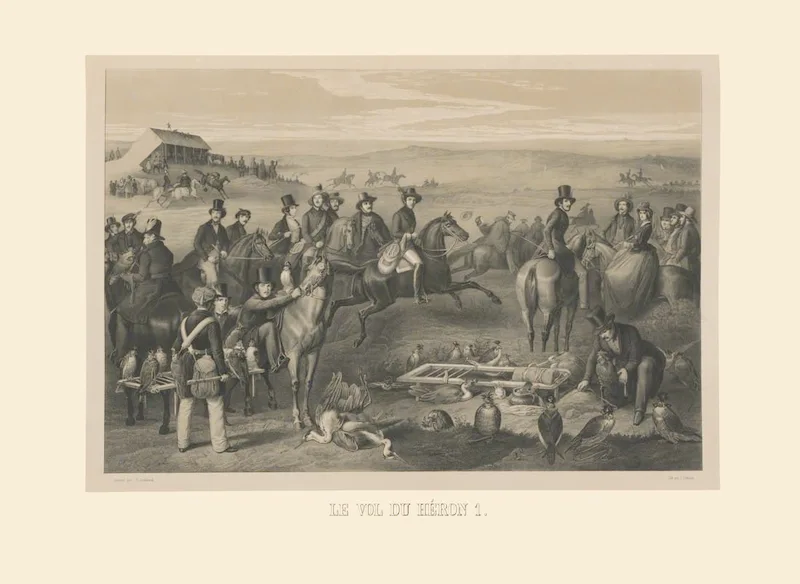
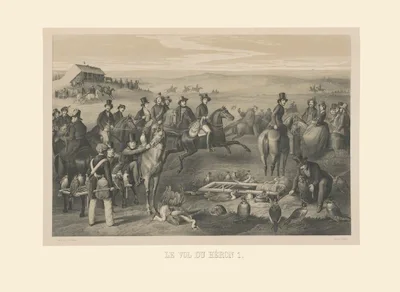
Two plates show heron hawking at Het Loo in 1844, with portraits of the falconers of the day. Two others show the equipment: hoods, jesses, lures and the rest. The text covers the history of falconry and its vocabulary, which is why Harting praised the letterpress as well as the plates.
The copy in Haarlem and our prints
Fewer than 100 copies were printed, and the Teylers Museum in Haarlem has one. Our facsimiles are photographed from it by Re-Art Special Art Productions in Almere and printed at the size of the original sheets, in an edition of 250 per plate, numbered in pencil, blind embossed and with a certificate of authenticity. The series holds 24 prints: 18 after the hand-coloured plates and 6 after plates that were issued uncoloured.
The six uncoloured plates can be coloured by hand on request, by our colourist Jane Niebling: see Custom coloring. The whole series is at Traité de fauconnerie, also as a complete set. More about the author: Who was Hermann Schlegel?.
Four hawks from the Traité
Questions
Who wrote the Traité de fauconnerie?
Hermann Schlegel (1804-1884), director of the natural history museum in Leiden, with his friend Abraham Hendrik Verster van Wulverhorst (1796-1882), whose name is on the title page beside his. The hawks were drawn mainly by Joseph Wolf.
Are the hawks in the Traité de fauconnerie life-size?
Yes. Each hawk is drawn at its true size, which is why the book was printed in atlas folio. Our prints are the size of the original sheets, 72.5 by 53 cm.
Why are some of the plates uncoloured?
The book has both coloured and uncoloured plates. Our series holds 18 prints after the hand-coloured plates and 6 after the uncoloured ones; the six can be coloured by hand on request through our Custom coloring service.