
A boy sent away from a war
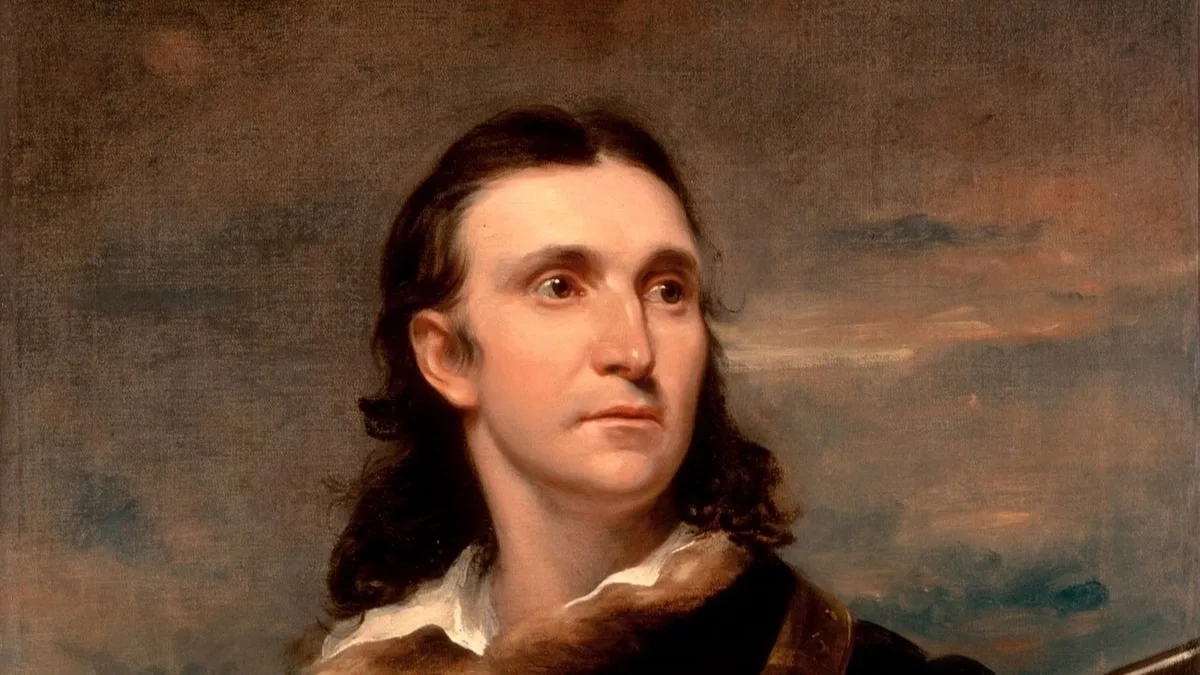
John James Audubon (1785 to 1851) was a French-American painter and naturalist who set himself one task: to find, observe and draw every bird of North America at its real size. The result, The Birds of America, holds 435 hand-coloured plates issued between 1827 and 1838, and it made him the best-known bird painter there has been.
He was born in 1785 on his father’s sugar plantation in Saint-Domingue, now Haiti. His mother died soon after his birth, and his father, a French sea captain, took the boy home to France, where he was raised by his father and his French stepmother. In 1803, with Napoleon’s wars calling up young men, his father sent the eighteen-year-old to America to keep him out of the army. He was given a farm near Philadelphia to look after, and he spent his days in the woods instead.
Kentucky, a failed business and a plan
In 1808 Audubon married Lucy Bakewell and moved west to Kentucky, first to Louisville and then to Henderson on the Ohio, where he kept a store and later a mill. Trade bored him; birds did not. It was on the road out of Henderson, in the autumn of 1813, that he watched a flight of Passenger Pigeons darken the sky for hours, a scene he later described in print. The birds that exist only in Audubon’s book tells that story.
The business failed in the crash of 1819 and Audubon was declared bankrupt. He kept his family by drawing portraits and teaching, and out of the wreck came the plan that would occupy the rest of his life: a complete book of American birds, every one shown life-size, drawn from the living bird rather than from a skin in a cabinet.
How he drew: wires, not stuffing
Audubon was self-taught, and his method was his own. He watched a species for days, sometimes for seasons, and filled his journals with what it ate, how it flew and how it behaved with its mate and young. Then he shot a specimen, pinned it with wires to a board in the attitude he had seen in the field, and drew it at once. Other artists of his day drew stuffed birds in stiff profile. Audubon drew birds feeding, fighting and flying.
I felt an intimacy with them bordering on frenzy.
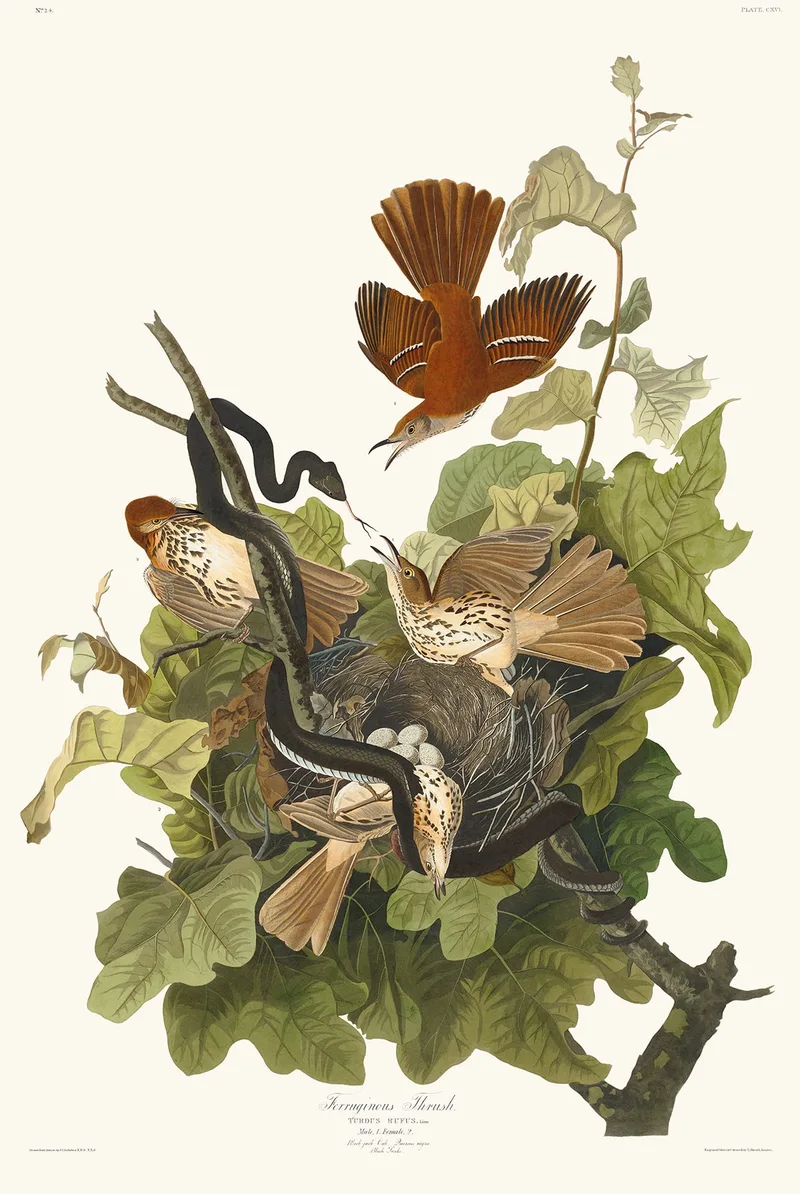
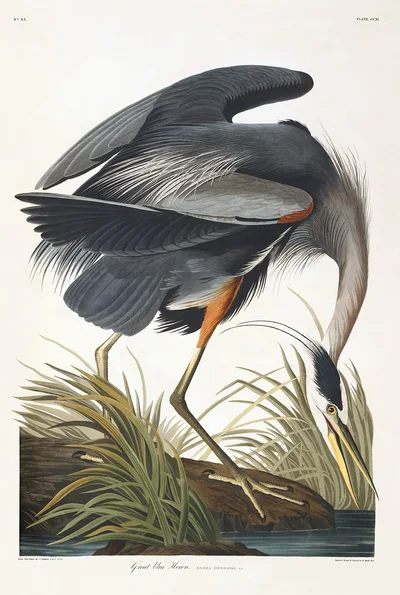
He drew in watercolour over a graphite sketch, added pastel for the softness of owls and herons, and on three plates laid a metallic gold paint under the colour. Every bird was shown at its true size on a sheet of about 100 by 67 centimetres, which is why his flamingo bends to drink and his herons fold their necks. Audubon’s herons shows how he fitted the big birds on the page.
No publisher in America, a welcome in Britain
His ambition and his unorthodox ways did not endear him to the American art world of the 1820s, and he found no engraver or publisher who would take the project on. So in 1826 he sailed for England with his drawings. The British liked them at once, and liked the backwoodsman in the fur collar who had made them. In London the engraver Robert Havell Jr. took the work in hand, and Audubon toured England and Scotland selling subscriptions to pay for it. What is The Birds of America? tells how the plates were made.
In 1829 he returned to America to draw the birds he still lacked. The expeditions of the 1830s took him to Florida and the Keys, to Labrador and to the Gulf coast, and gave the later parts of the book their herons, pelicans and flamingo.
New species, ringed birds and the last years
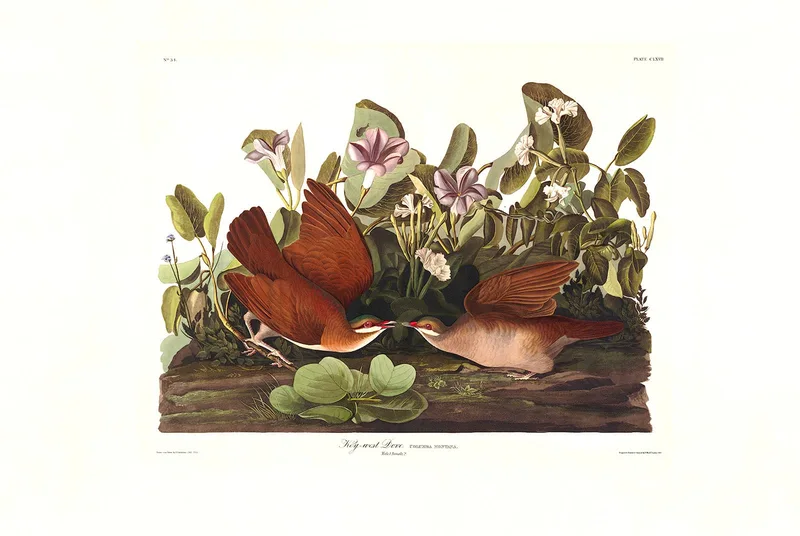
Audubon is credited with describing some 25 species new to science, and he is thought to be the first person in America to ring birds: as a young man he tied threads of yarn to the legs of a brood of phoebes near his farm and found, the next spring, that the same birds had come back to the same nest. The text that goes with his plates, the Ornithological Biography, was published separately in five volumes and still reads well, partly because he could write as vividly as he drew.
In 1841 he bought an estate of about twenty acres on the Hudson in northern Manhattan and settled there with his family. By 1848 his health and his sight were failing, and he died at home in January 1851. His sons Victor and John Woodhouse carried on the business of the books.
Audubon and Heritage Prints
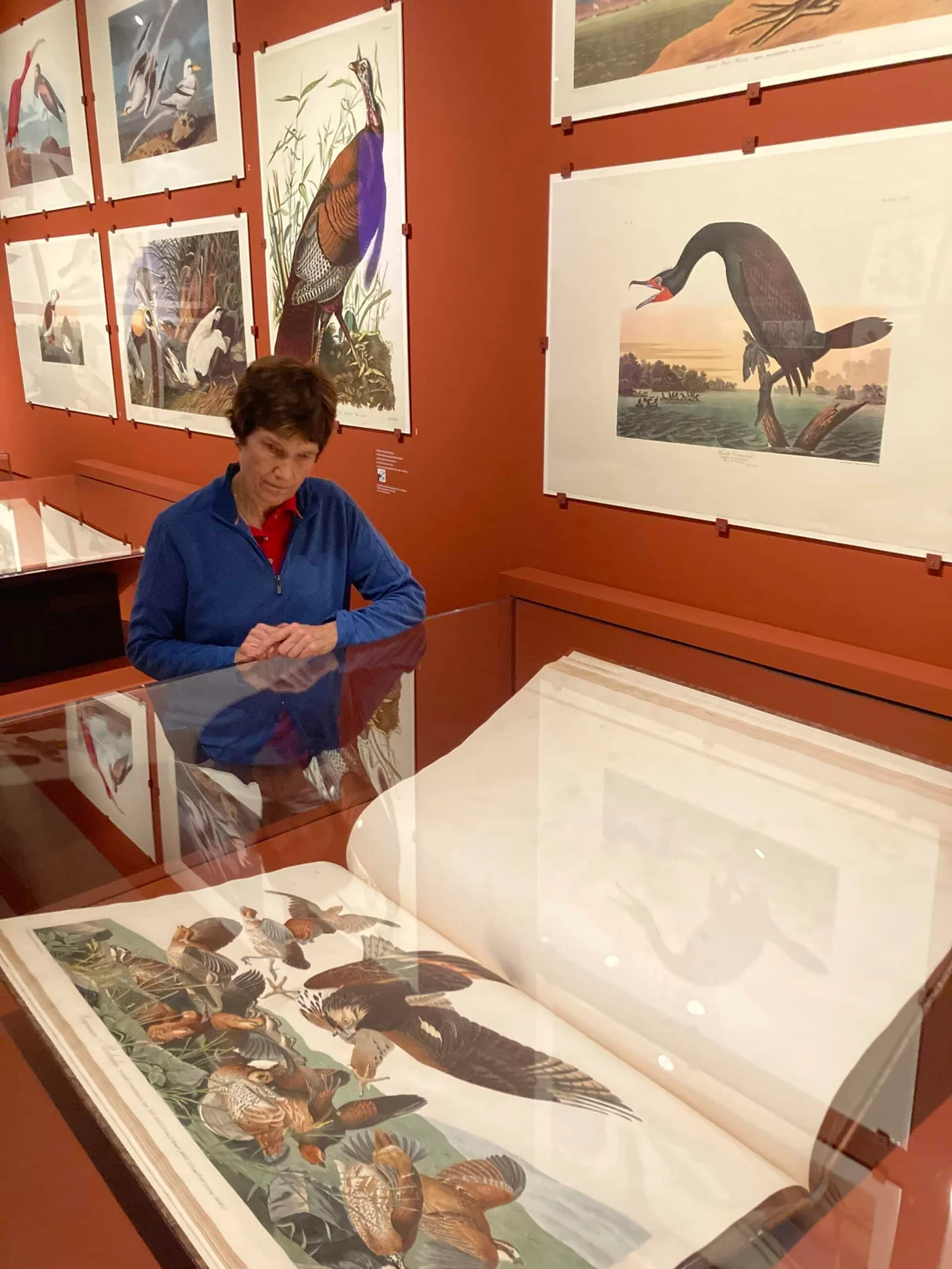
On 26 August 1833, while the book was still being issued, Audubon’s son Victor Gifford Audubon sold a set to the Teylers Museum in Haarlem. The museum has kept it ever since, and it is from this copy, photographed plate by plate with the museum’s cooperation, that every Audubon facsimile we sell is made. You can browse the plates by number on The Birds of America, and Original, facsimile or reproduction? explains what you are looking at when you buy one.
Audubon’s name lives on in other places too: in the Audubon societies of the United States, and in the Audubon House in Key West, whose museum shop sells our facsimiles. Our visit to the Audubon House.
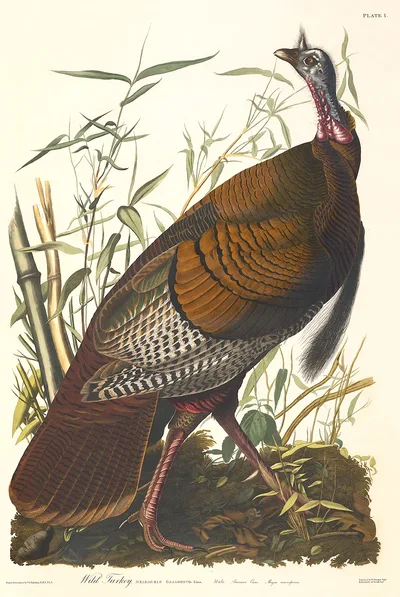
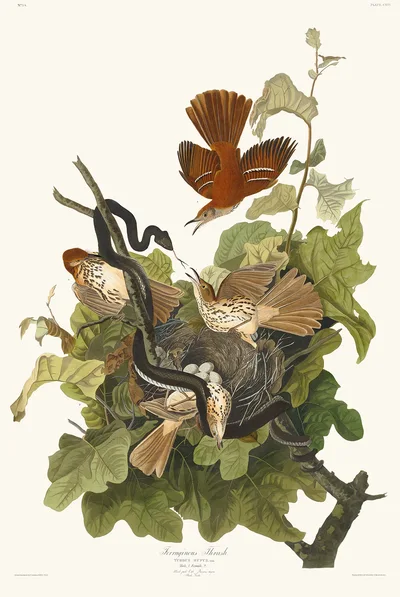
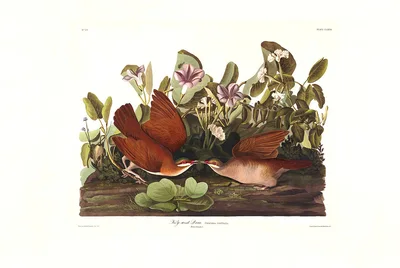
Four plates by Audubon
Questions
When was John James Audubon born and when did he die?
He was born in 1785 in Saint-Domingue, now Haiti, and died in January 1851 at his home in northern Manhattan, New York.
Was Audubon American?
He was born in the French colony of Saint-Domingue and raised in France, and he became an American citizen after his father sent him to the United States in 1803. He is usually called a French-American painter and naturalist.
Why is Audubon famous?
For The Birds of America, 435 hand-coloured plates of North American birds at life size, published between 1827 and 1838, and for drawing birds alive and in action when others drew stuffed specimens.